Designing Corporate Interiors with Luxury Wood Flooring

​The modern workplace is no longer just a site of productivity. It is a curated environment designed to foster human connection. As architects and interior designers move away from the sterile and cold palettes of the past decade, luxury wood flooring has emerged as the essential bridge between commercial durability and residential warmth. It serves as the tactile soul of the office and acts as a natural element that grounds high-tech spaces in high-touch comfort.

This article explores how to balance high-end aesthetics with the technical demands of a commercial environment. You will discover the latest shifts in corporate finishes and the critical best practices for specifying materials that endure. By the end, you will have a clear roadmap for integrating custom wood elements that elevate both employee experience and brand identity.

​The Aesthetic of Corporate Luxury

​A corporate office serves as the face of a company, offering a rare opportunity to leave a powerful first impression on clients and talent alike. The materials selected for these environments do more than fill a space; they communicate a brand’s values and long-term stability.

Integrating luxury wood flooring is a strategic way to anchor a high-end interior. It can provide a sense of heritage and premium quality that synthetic alternatives simply cannot match. Unlike disposable commercial materials, it is a generational investment that matures alongside the building. The organic warmth of the grain softens the cold glass and steel of modern architecture, creating an environment that feels both professional and welcoming.

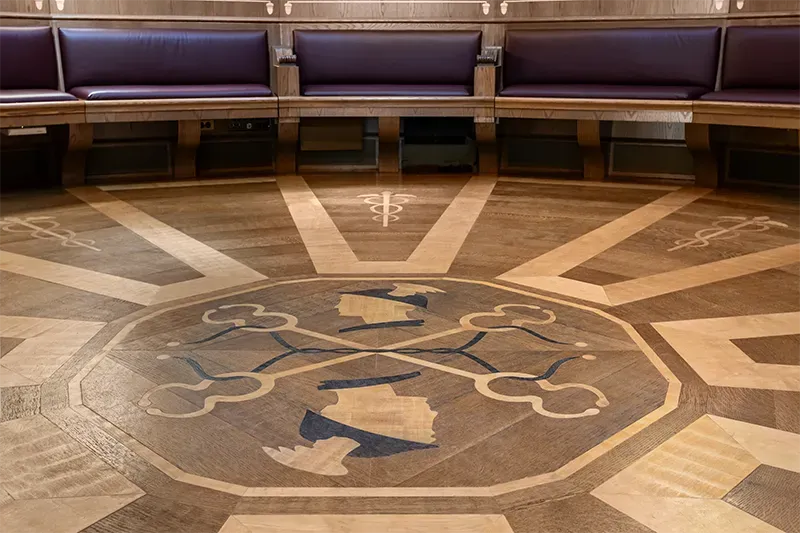
Aside from choosing high-end lumber, architects these days also rely on custom wood flooring to deliver more sophisticated designs. After all, when every project is made to order, designers have the freedom to specify exact species and grades to bring their vision to life.

​Emerging Design Trends in Luxury Wood Flooring

​Modern corporate interiors are shifting toward a more human-centric aesthetic that prioritizes comfort and organic beauty. Designers are increasingly looking for materials that bridge the gap between high-performance commercial requirements and the welcoming feel of a high-end residence. This evolution has led to several trends in wood flooring that define the contemporary workspace.

This is photo of the McLaren HQ with a car appearing in the center of the image. The foreground is surrounded by wooden interiors.
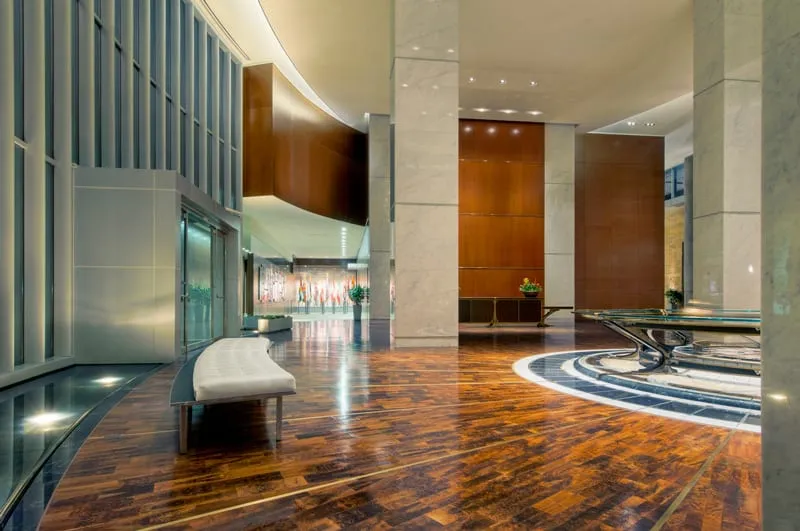
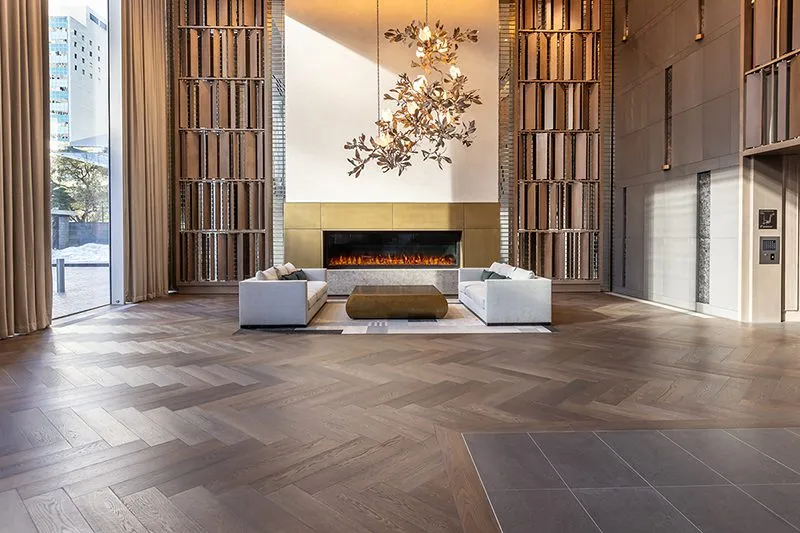
Corporate Office Lobby

​The current design landscape emphasizes the following shifts in high-end corporate environments:

  • Warmth Over Grey: There is a significant transition away from cool greys toward honey, amber, and mid-brown tones. These palettes create a grounded and welcoming atmosphere that helps reduce the clinical feel of traditional office towers, making them feel more inhabited and authentic.
  • Geometric Pattern Play: We are seeing a resurgence of Herringbone, Chevron, and Basket-weave layouts. These patterns are being used on a larger scale to define breakout zones. This subtly guides foot traffic while adding a sophisticated, rhythmic structure to expansive open-office floor plates.
  • Ultra-Matte Finishes: Designers are opting for low-sheen surfaces that mimic the appearance of raw, untreated wood. These ultra-matte coatings are highly practical for the corporate sector because they effectively reduce glare from intensive overhead lighting and conceal daily scuffs or footprints better than reflective finishes.
  • Biophilic Integration: Utilizing natural grain patterns has become a critical wellness tool for connecting staff with the outdoors. Incorporating these organic elements into the built environment is proven to reduce workplace stress, improve air quality perceptions, and can increase overall productivity.

By incorporating these elements, architects can transform a standard floor plate into a restorative environment. Utilizing luxury wood flooring in these ways ensures that the office remains a place where employees feel inspired and connected. When the foundation of a room reflects the natural world, it serves as a powerful anchor for the rest of the architectural vision.

​Considerations When Designing Corporate Spaces

​Integrating wood into corporate spaces requires a balance of high-end aesthetics and technical foresight. As these areas are subject to heavy foot traffic and rigorous climate controls, the selection process must prioritize long-term performance.

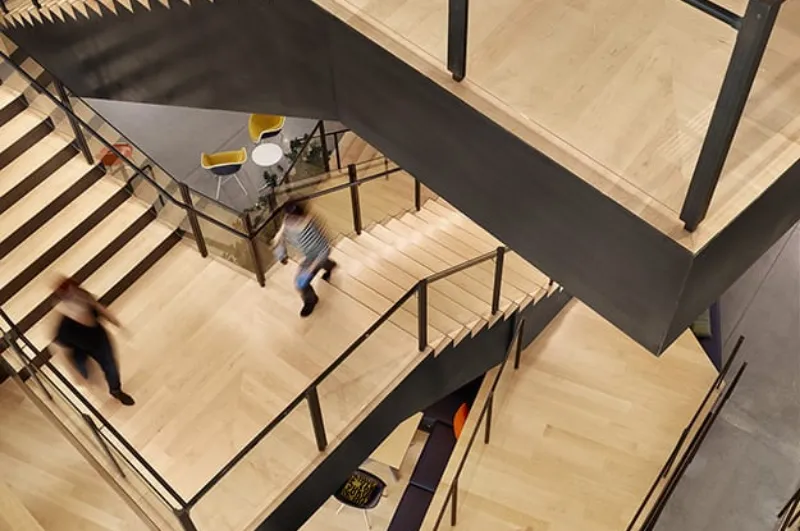
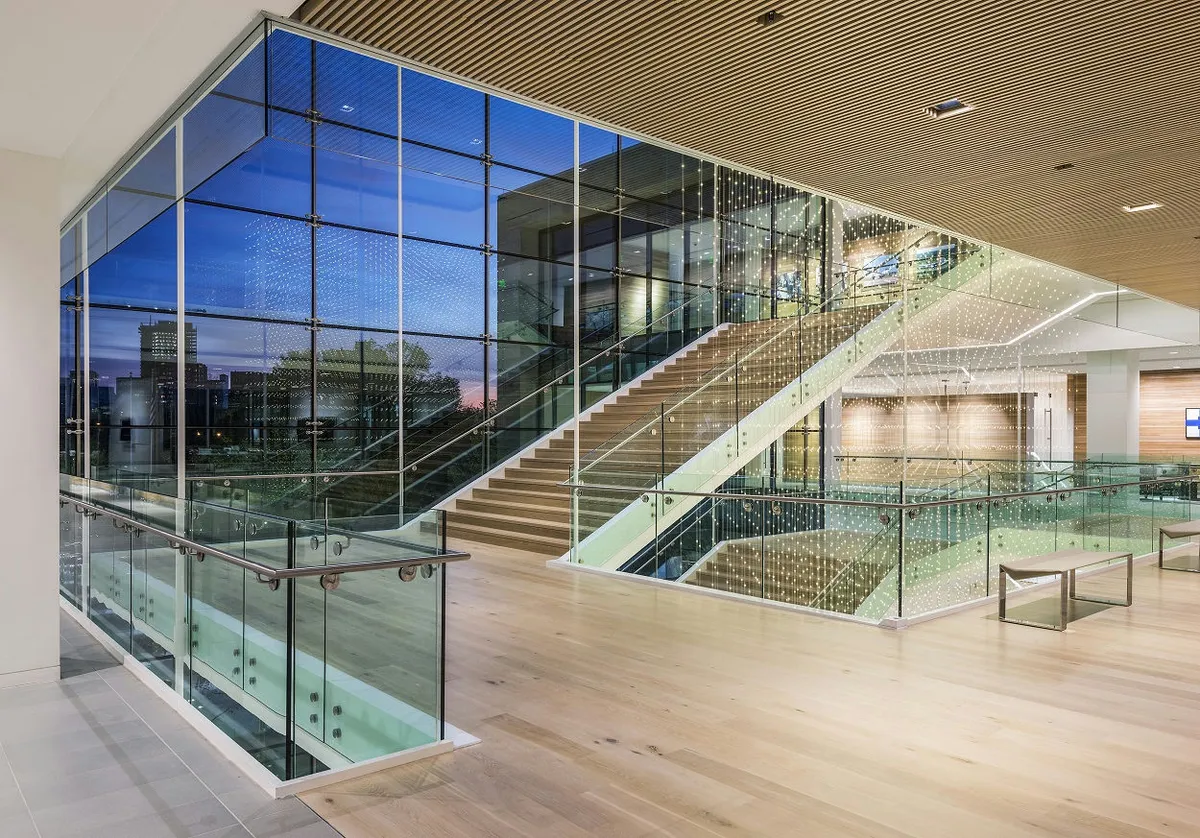
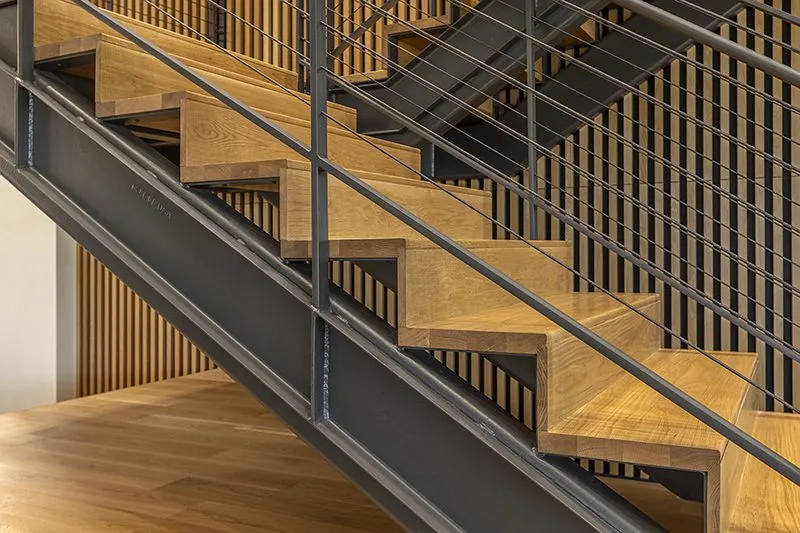
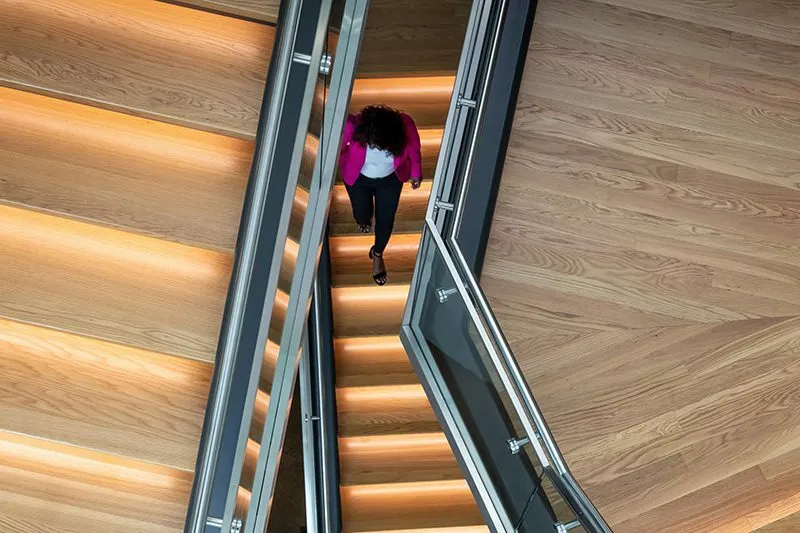
The image shows a grand spiral staircase.
Large Scale Corporate office space

So, when specifying luxury wood flooring for a large-scale project, architects should consider several factors to ensure the design remains as functional as it is beautiful:

  • Engineering for Stability: Engineered wood is the commercial gold standard. It provides the same aesthetic as solid planks but with the dimensional stability required to handle fluctuating HVAC systems without warping.
  • Single-Source Accountability: Managing multiple vendors often leads to communication gaps. Choosing a partner that handles both manufacturing and full-service installation minimizes risk and ensures a streamlined process from start to finish.
  • Reframing Maintenance: Modern UV-cured oils have debunked the myth that wood is difficult to maintain. These advanced coatings are as easy to clean as synthetic alternatives while allowing for simple, localized repairs.
  • Life Cycle ROI: High-quality wood supports corporate ESG goals with a 50-year life cycle. Unlike materials that require replacement every decade, wood can be refinished multiple times, offering a superior long-term investment.

By focusing on these technical details, designers can specify a floor that stands up to the demands of a modern workspace.

Define Workspaces with Luxury Wood Flooring

Choosing luxury wood flooring is a strategic investment in employee wellness and brand longevity. By balancing modern biophilic trends with technical best practices, designers create corporate interiors that are as resilient as they are beautiful. A professionally installed floor matures with the building, offering a timeless quality that synthetic alternatives cannot duplicate.

Looking to kickstart your project? Get in touch with an architect and design consult at Woodwright to discuss specifications or request samples for your next commercial project.