Designing Flexible Workspaces with Engineered Wood Floors

​Modern offices have evolved into modular hubs that prioritize adaptability, employee wellness, and seamless technology integration. These open-concept plans feature heavy rolling furniture and underfloor power systems, which require stable, low-profile surfacing materials. This is where engineered wood floors come in as a top choice for architects and designers.

By choosing these materials, you can provide the structural integrity that is required to support modern workspace needs without the risks of warping or gapping. In this guide, we’ll explore how to leverage the versatility of this flooring option so you can create spaces that remain functional and beautiful over time.

Define Zones Using Different Wood Grain Patterns

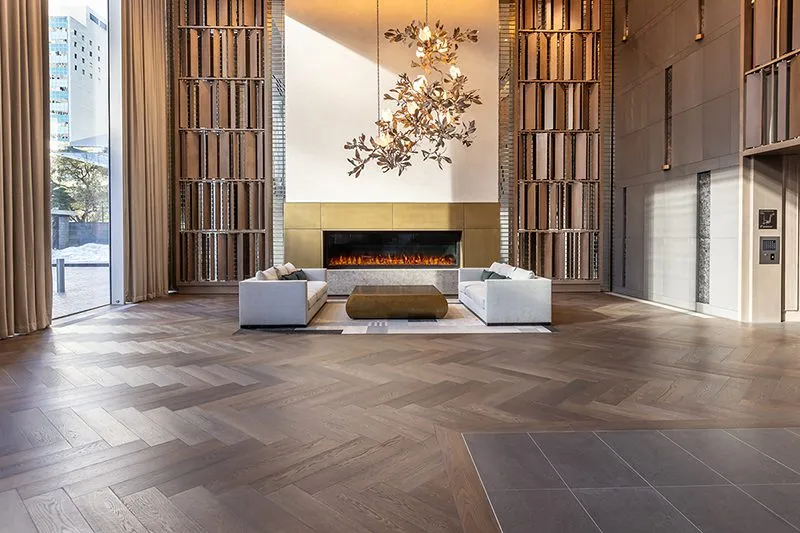
Flexible office spaces typically rely on open floor plans, but large areas still need visual boundaries to define their purpose. Instead of using physical partitions, you can specify engineered wood floors to create distinct zones for collaboration or focused work.

By rotating plank directions or using made-to-order wood floor, you can create subtle transitions that feel intentional rather than accidental. For example, here’s how different patterns can be used to signal how a specific area should be utilized:

  • Herringbone or Chevron: Use these rhythmic patterns to highlight central gathering hubs where collaboration is encouraged.
  • Linear Planking: Run planks parallel to corridors to naturally guide foot traffic through the office toward exits.
  • Perpendicular Transitions: Change the orientation of the planks to mark the entrance to private meeting rooms or quiet zones.

This method separates high-energy lounges from quiet workstations. Moreover, it allows you maintain openness while defining specific areas.

Coordinate Flooring with Matching Stair Treads and Wall Planks

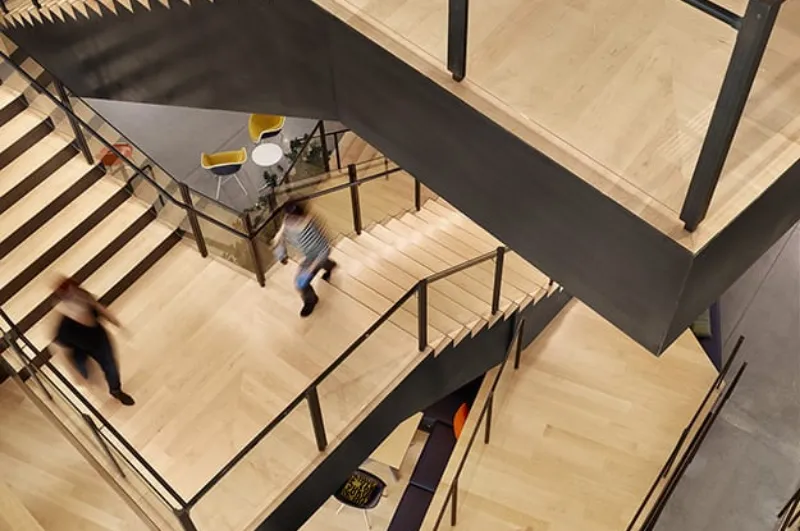
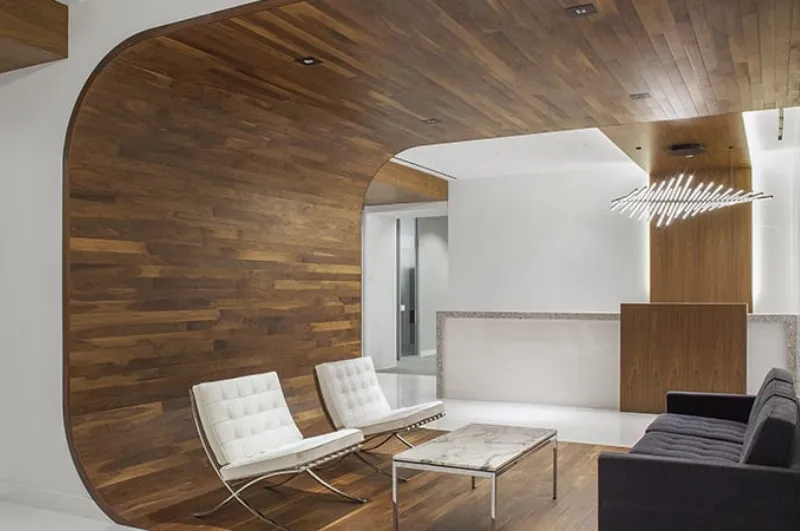
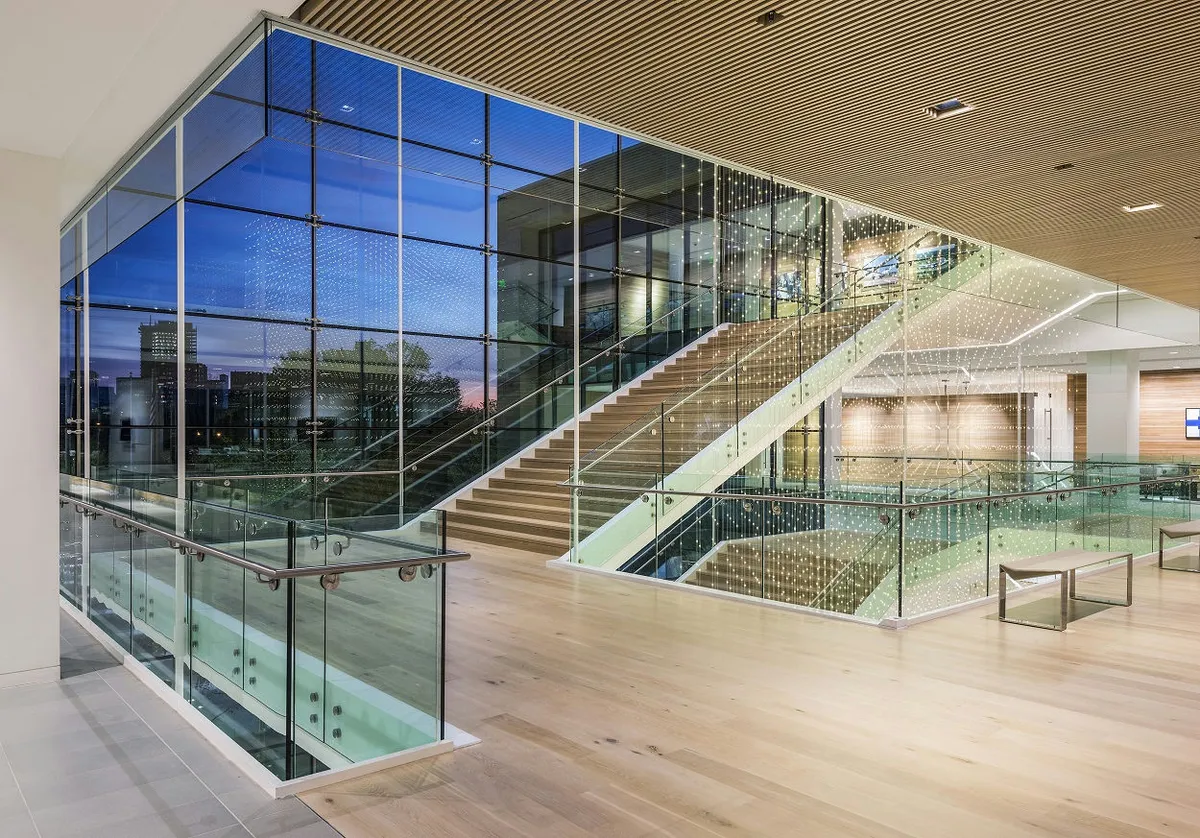
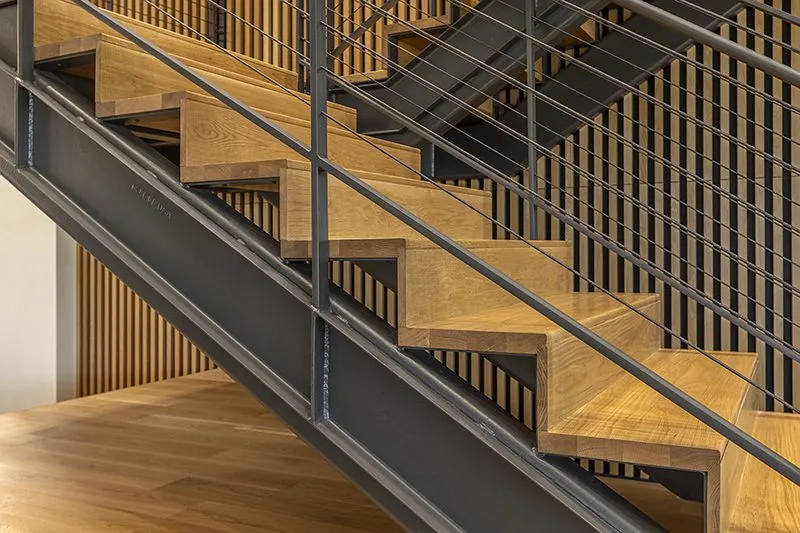
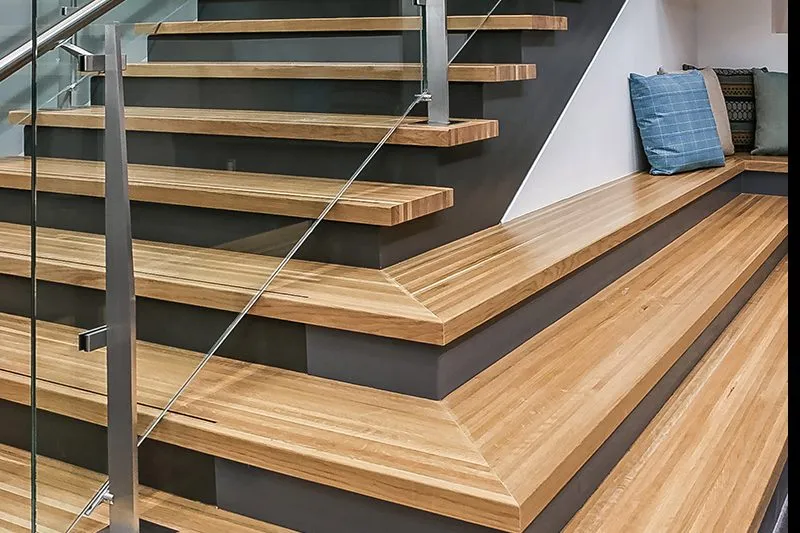
Achieving a unified aesthetic across different architectural levels makes a flexible workspace feel like a cohesive, professional environment. In large commercial projects, this harmony prevents the design from feeling fragmented as users move between open lounges, transition zones, and multi-level collaborative areas.

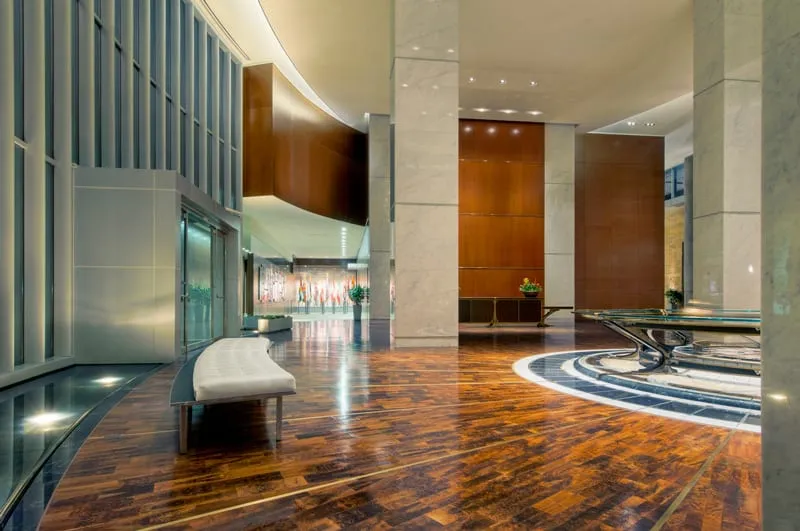
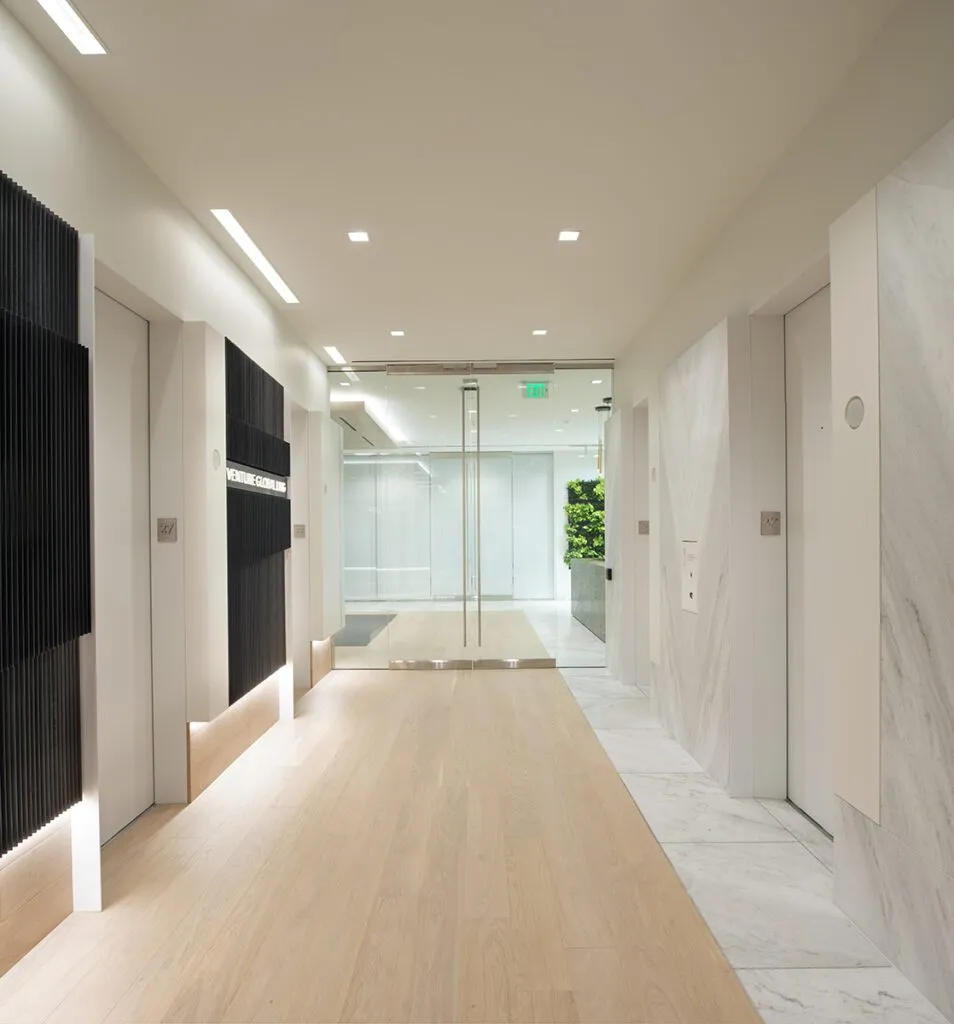
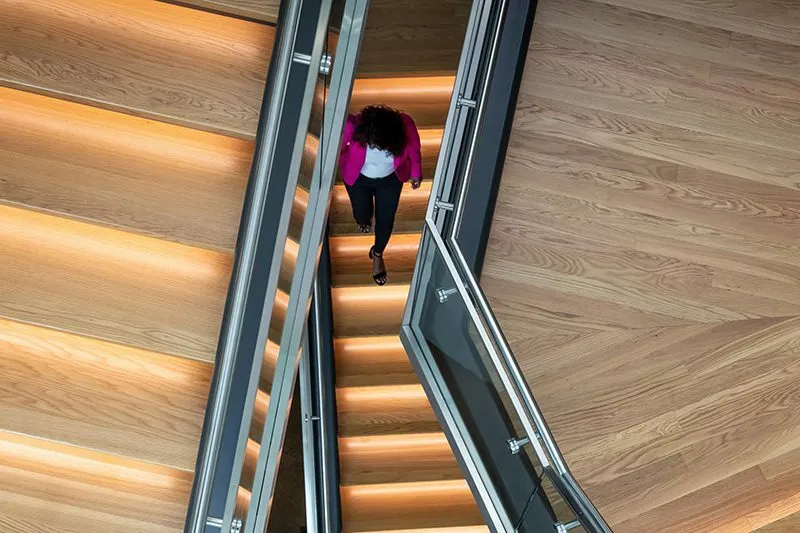
This photo features an office lobby with engineered wood floors that come with matching wall planks
Rift White Oak – site finished smooth

Using engineered wood floors as the anchor for these surfaces ensures the design language remains intentional throughout the building. Consider these strategies to streamline your coordination:

  • Opt for single-source manufacturing: Source your engineered wood floors and stairs from one facility to guarantee an exact finish match.
  • Be consistent with species selection: Use the same wood, such as Rift Cut White Oak or Maple, to ensure grain patterns remain uniform across all surfaces.
  • Specify unified sheen levels: Specify a consistent finish across all wood elements to ensure light reflects identically on both floors and walls.

Choose the Right Janka Rating for High-Traffic Zones

Offices experience constant movement, from rolling lounge chairs to the constant reconfiguration of modular workstations. To ensure the space remains beautiful under these conditions, architects and designers must select a wood species that offers the appropriate hardness and stability for the task.

Understanding how species perform in a commercial setting is the first step toward a successful specification. You can use these benchmarks to select the best engineered wood floors for your project:

  • White Oak (Janka 1360): As the industry gold standard for commercial use, White Oak balances a modern aesthetic with the durability needed for active collaborative hubs. Its high cellular density and tannin content make it the most specified species for high-traffic zones.
  • Sapele (Janka 1510): This species offers excellent hardness and a distinct grain, making it a reliable option for corporate lobbies and hallways.
  • Pecan/Hickory (Janka 1820): These are among the hardest domestic hardwoods available. Their superior hardness makes them a premier choice for extreme-traffic environments like hospitality corridors or stadiums.

Selecting the right hardness ensures your design can handle the physical demands of a modern office without losing its premium feel.

Customize Engineered Wood Floors to Reflect Brand Identity

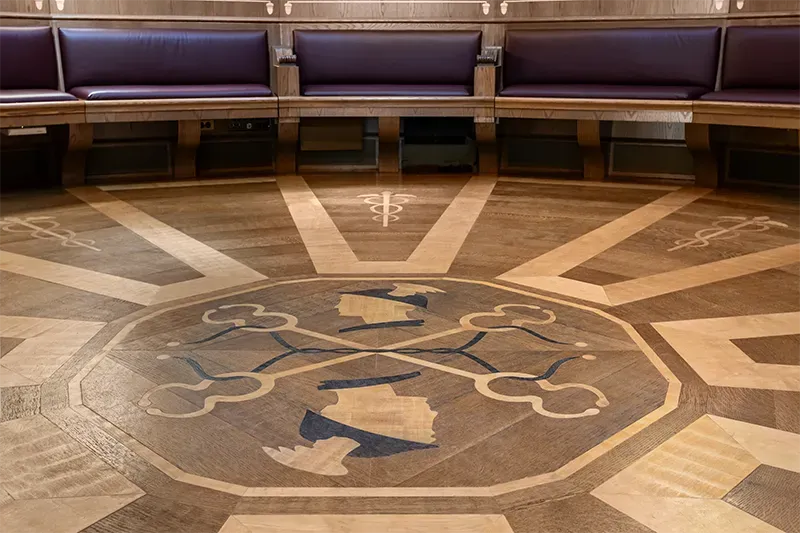
The workspace serves as a living representation of a company's culture and brand values. Architects and designers can use engineered wood floors to move beyond standard, off-the-shelf colors and create a bespoke environment that aligns with a client’s specific aesthetic. Custom finishes allow you to tailor the light reflectivity, texture, and tone of the wood to match the unique energy of different zones.

This photo shows a courtroom with a custom medallion
Hand scraped European Oak Herringbone pattern

Specifying unique colors or textures helps define the mood of a space as it transitions from a high-energy lobby to a focused executive suite. Consider these ways to utilize engineered wood floors for brand-specific designs:

  • Custom color matching: Work with a manufacturer to develop a signature stain that coordinates with corporate brand colors or specialized furniture palettes.
  • Textured surfaces: Utilize wire-brushing or hand-scraping to add a tactile element that hides scuffs in high-activity areas while adding organic warmth.
  • Low-VOC matte finishes: Choose high-performance, sustainable finishes that protect the wood without the distracting glare often found in commercial lighting environments.

Aside from these, you can also consider customized decorative elements to spruce up your space. By integrating these tailored details, you ensure the workspace feels intentional and high-end, regardless of the layout.

Plan for Easy Maintenance in Multi-Use Environments

In busy workplaces, the durability of the floor finish and ease of repair are just as important as the structural stability of the wood. Layouts in these spaces are never permanent, so you have to consider how the floor will look once heavy rugs or modular partitions are moved after months of use.

By selecting the right surface treatments, you can protect the project investment against the unique stresses of an adaptable floor plan. Consider these maintenance-focused strategies for your next project:

  • Select UV-resistant finishes: Choose engineered wood floors that resist fading so the wood looks consistent even when furniture is shifted and previously covered areas are exposed to light.
  • Specify top-coat compatible surfaces: Use finishes that allow for a simple screen and recoat, providing a fresh surface without the need for a full, disruptive renovation.
  • Incorporate subtle textures: A wire-brushed texture helps hide the microscopic dings and scratches caused by moving heavy modular units.

A proactive approach to material selection ensures the workspace remains beautiful regardless of how it is utilized. To ensure your design stands up to long-term wear, it is essential to select the correct finish that aligns with the specific traffic and maintenance needs of your project.

Elevate Your Workspace with Engineered Wood Floors

Designing for flexibility requires materials that balance aesthetic luxury with technical performance. By specifying high-quality engineered wood floors, you provide a stable, adaptable foundation that supports the evolving needs of the modern office. From custom zoning patterns to high-traffic durability, these manufacturing solutions ensure your project remains beautiful and functional for the long term.

Ready to specify the perfect surface for your next project? Contact us at Woodwright today for solutions.