Understanding How Hardwood Flooring Grades Impact Commercial Design Outcomes

​Specifying the right materials for a high-traffic commercial project is always a balancing act between aesthetics, durability, and budget. While species and finish get a lot of attention, hardwood flooring grades play a massive role in how a space ultimately performs and feels. Misunderstanding these distinctions can lead to unexpected visual surprises or costly budget overruns on the job site.

This guide breaks down how different grading scales work across solid and engineered profiles. We’ll also go over how they impact design outcomes and how to choose the right option for your next project.

The Grading Scale for Hardwood Flooring

When it comes to navigating hardwood flooring grades, it’s important to note that solid and engineered products follow different rulebooks. Understanding how these structural differences impact the actual hardwood flooring grades specified is essential for keeping a design vision on track.

Solid Wood Benchmarks: Standardized NOFMA Grading

For solid wood, the National Oak Flooring Manufacturers Association (NOFMA) sets the official industry standards. These strict benchmarks ensure that a specific grade looks and performs the same regardless of the mill producing it.

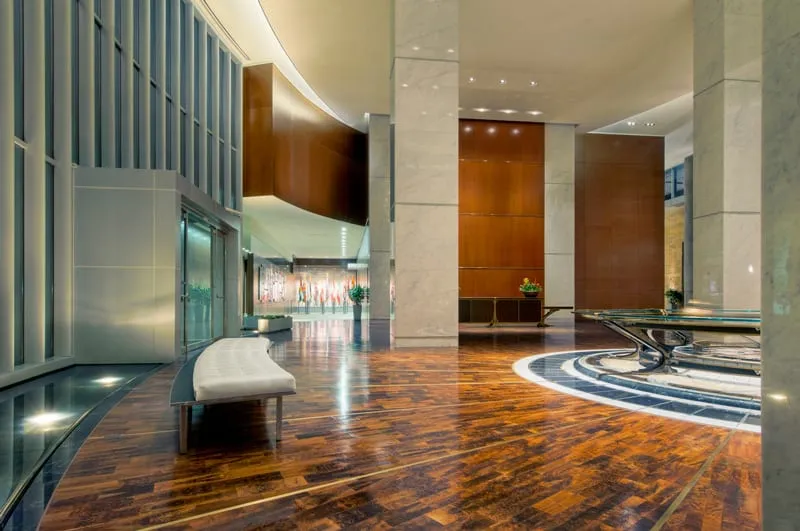
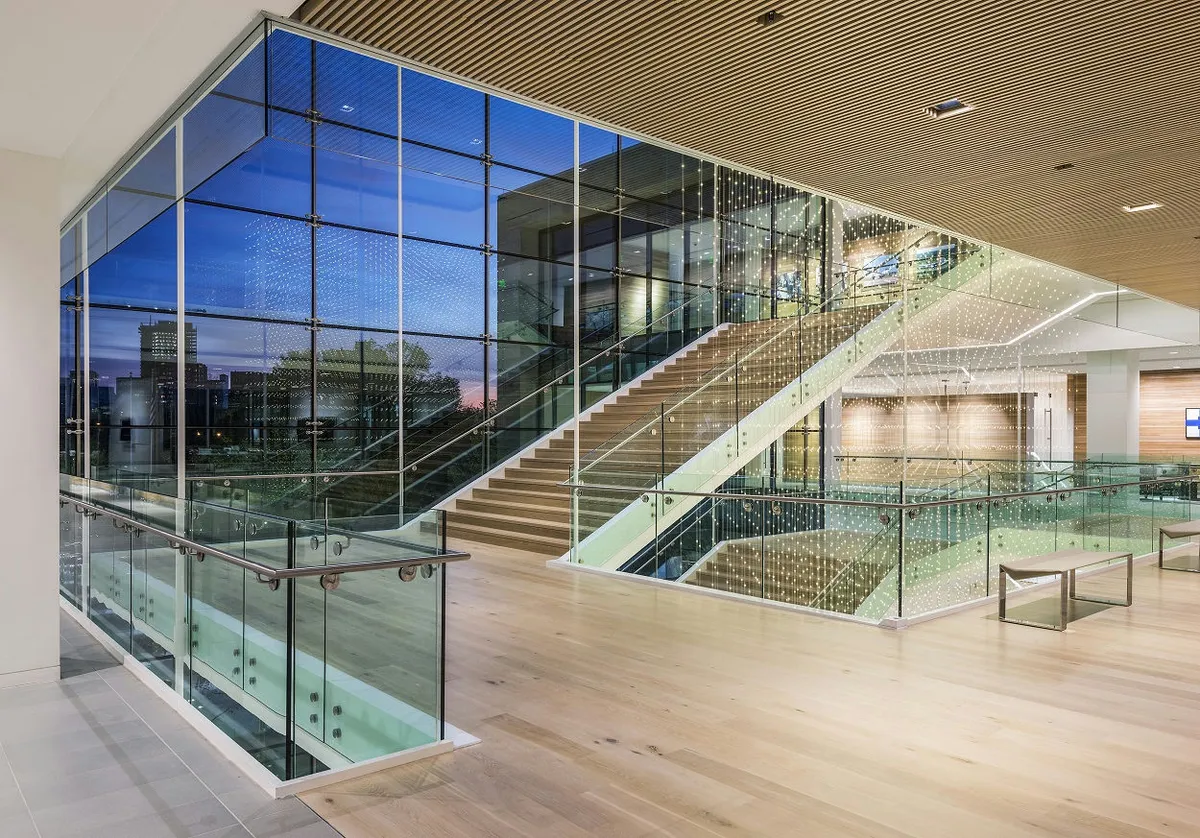
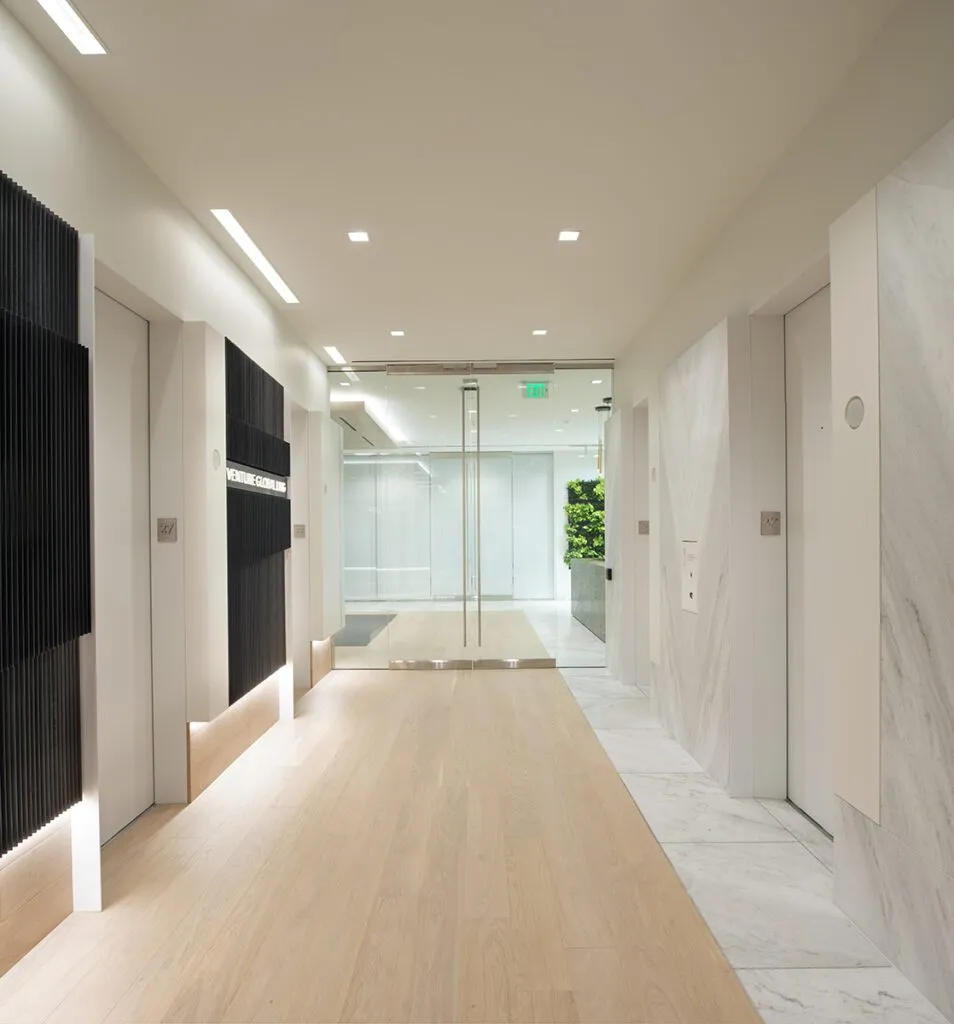
This photo features a car showroom that uses a Clear/Prime Hardwood Flooring Grade
McLaren HQ at Dallas, TX | Prime Grade White Oak Flooring

When specifying solid options, these are the standardized hardwood flooring grades that designers and architects can choose from:

  • Clear/Prime. The absolute top of the cleanliness scale, requiring a pristine face completely free of defects, sapwood, and character marks for an ultra-consistent aesthetic.
  • Select. The standard clean visual option available, featuring uniform color with minimal natural variations, tight grain patterns, and almost no knots or markings.
  • #1 Common. A lighter rustic look that introduces moderate color variations, small sound knots, and light mineral streaks to add subtle warmth and texture to a space.
  • #2 Common. A highly character-forward grade packed with prominent knots, dramatic color contrasts, and visible wormholes that create a rustic, organic atmosphere.

These distinct tiers allow designers to dial in the exact level of natural character required for the commercial footprint. Evaluating these precise baseline options is particularly critical when you need to choose solid hardwood flooring for signature spaces that demand absolute architectural uniformity.

Engineered Wood Grading: Manufacturer-Specific Classifications

Understanding the grade of engineered wood is a little more difficult as manufacturers are not bound by a single, universal regulatory framework. Because of this lack of standardization, proprietary definitions can fluctuate wildly across the supply chain. This means a visual profile must be verified directly with the source. However, project specifiers can generally look to three distinguishable hardwood flooring grades to serve as a baseline for engineered products:

  • Select. The most uniform and premium tier, designed to be nearly free of knots while limiting pin knots and natural character markings to keep the focus on clean lines.
  • Light Rustic. A balanced option that introduces a moderate amount of knots and character markings along with a minimal amount of sound splits or cracks.
  • Rustic. A highly organic tier featuring an unlimited amount of knots, dramatic character markings, and a limited amount of sound splits or cracks.

Because Light Rustic and Rustic options feature natural openings, they require factory-applied fillers before shipping. It is worth noting that filler colors vary significantly across the industry, meaning close coordination with the manufacturer is required to ensure the filled cracks and knots match the design expectations.

Impact of Hardwood Flooring Grades on Design

Selecting the right material tier directly dictates how a commercial space performs financially, visually, and structurally over its lifespan. The choice of hardwood flooring grades should never be treated as a purely aesthetic decision, as it influences multiple layers of the project execution:

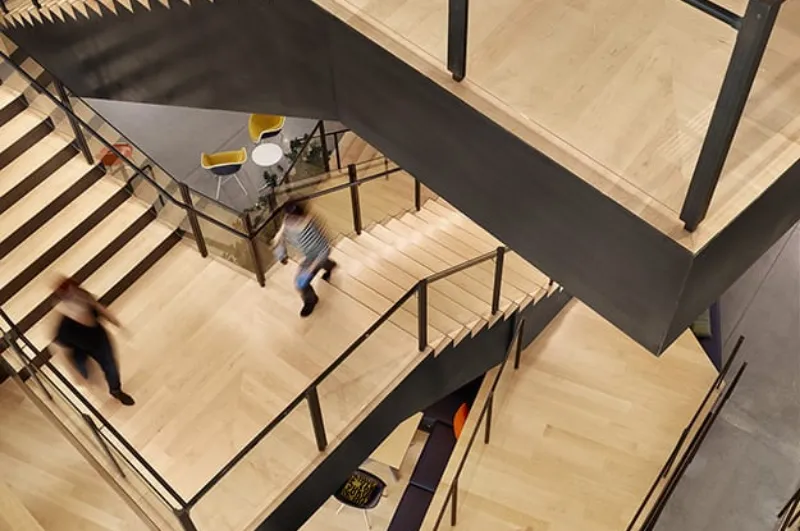
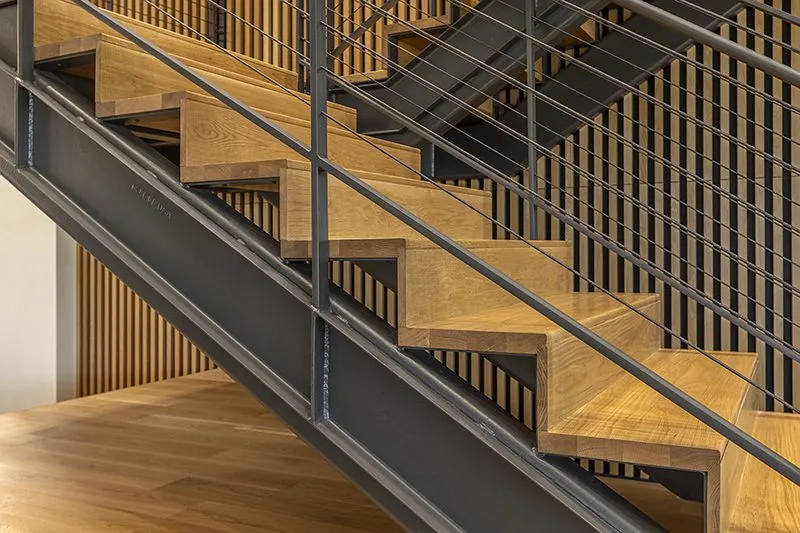
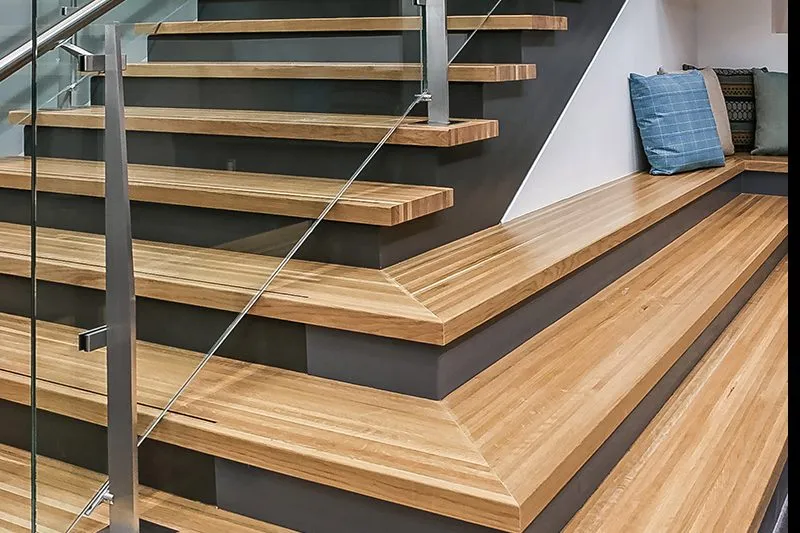
The image shows an elegant stairway, a posh reception desk, and a neatly installed hardwood flooring
Select Grade Red Oak Flooring and Stairs in Corporate Office
  • Aesthetic Intent. The specified visual tier sets the entire atmosphere, functioning as a quiet canvas or adding rich texture. To ensure absolute visual cohesion across massive planes, consider matching the grade of the flooring to any adjacent vertical elements, stairs or wooden ceiling planks.
  • Stability. Wood pricing is highly proportional to plank width, but wider boards require strict grading parameters to ensure optimal width stability. Clean, wide-plank profiles are cut from specific parts of mature logs, meaning the specified hardwood flooring grades directly dictate how well the wide boards manage natural expansion and contraction.
  • Wearability and Maintenance. High-traffic zones demand realistic long-term planning before a floor ever needs to be refinished. While high-quality prefinished coatings handle surface wear, one of the reasons why designers choose quality hardwood flooring for long-term durability because lower grades and natural color variations beautifully mask the deep scratches, scuffs, and heavy foot traffic that commercial spaces inevitably endure.
  • Value Engineering Flexibility. When budgets tighten, an understanding of available hardwood flooring grades allows for strategic cost adjustments without losing design intent. Project teams can easily hit a financial sweet spot by pivoting to quick-ship, economical alternatives that offer a clean or rustic aesthetic but carry specific limitations on color and width options.
  • Budget Allocation. Material procurement costs scale directly based on log yield realities. Premium, clean lumber and cuts of wood such as Rift Sawn are far scarcer than character-rich ones, meaning pristine hardwood flooring grades command a higher financial investment compared to high-yield rustic options.

Choose the Right Hardwood Flooring Grades for Your Next Project

Successfully navigating hardwood flooring grades is the definitive way to ensure a commercial project bridges the gap between initial design intent and long-term durability. With 40 years of experience, Woodwright specializes in high-quality, made-to-order wood flooring, stair treads, and matching tongue-and-groove plank applications for walls and ceilings. We ensure complete material cohesion across your entire footprint. Partner with us to bring your exact visual specifications to life on your next commercial build.