

Engineered Wood vs. Plywood: Comparing Their Uses in Commercial Flooring
Many project teams treat the comparison of engineered wood vs plywood as an either-or decision when building out a commercial floor. That framing suggests a commercial floor must use one material instead of the other. In practice, the two overlap in how the industry defines them and how manufacturers build them.
Plywood is itself an engineered wood product, and most quality engineered floors sit on a plywood backer. This guide explains what each material is and how the two relate. That clarity makes it easier to see the role each one plays in a commercial floor specification.
Engineered Wood vs Plywood: Why the Line Isn’t Clear-Cut
Engineered wood is a broad family of manufactured products made by bonding wood veneers, strands, or lumber together with adhesives. According to The Engineered Wood Association, plywood belongs to that family alongside oriented strand board, glued laminated timber, and I-joists. Plywood is therefore a type of engineered wood, not a separate alternative.
The flooring industry, however, uses the term far more narrowly. To flooring suppliers and specifiers, engineered wood flooring means a finished plank with a hardwood wear layer bonded to a core, usually plywood. The National Wood Flooring Association classifies it as wood throughout, built from veneers or slats glued in alternating directions.
As a result, comparing the two pits a broad category against a finished product, so specifiers often mix up the terms. In practice, plywood usually serves as the backer inside each engineered plank, which often glues directly to concrete on large-scale commercial projects. That overlap shifts the specification question from which material to choose to what job each one does on a commercial floor.
Comparing the Roles of Engineered Wood vs Plywood in Commercial Flooring
Even with the overlap in comparing engineered wood vs plywood, it’s notable that they play very different parts in a commercial floor. Each one answers to different priorities and shows up in a different part of the construction documents. Those differences become clearer when you compare the two side by side:
Purpose. Engineered wood flooring is the finished floor, while plywood for flooring serves as a structural backer or substrate. Design intent drives the flooring selection, while structural and installation needs determine whether the floor needs a plywood substrate at all.
Appearance. Designers select engineered flooring for its species, cut, plank width, and finish. Plywood stays hidden once the floor goes in, so its look has no bearing on the design.
Wear surface. The engineered wear layer takes heel dents and rolling chair traffic, and a thicker layer allows for refinishing over the floor’s life. Plywood can’t hold up as a walking surface, so wear layer thickness belongs in any spec for flexible workspaces and busy lobbies.
Specification. Architects and designers specify engineered flooring based on design intent and performance needs. Any plywood substrate follows floor elevations and site conditions, so it depends on the existing subfloor and adjacent finish heights.
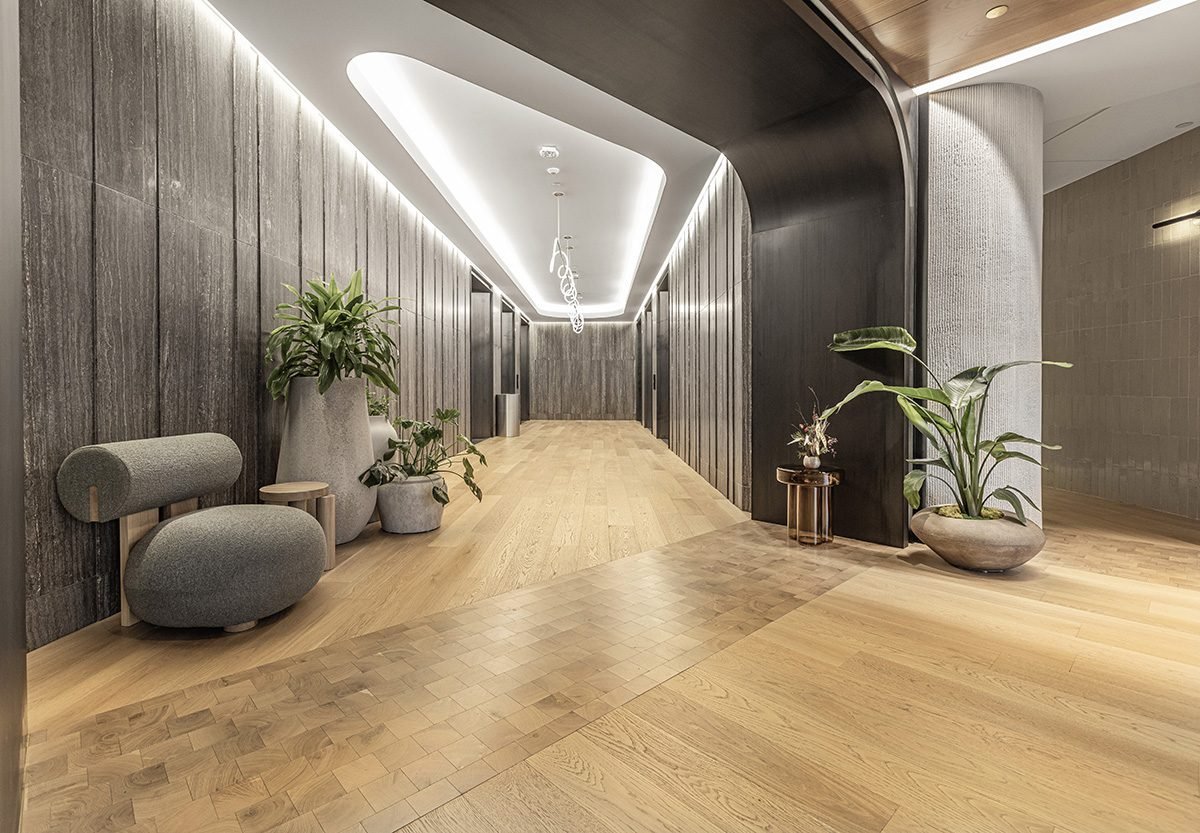
Seen this way, the comparison comes down to the role each material plays. In most commercial floors, one material supports the other, so the two work as parts of the same system. A strong spec treats them that way instead of weighing one against the other.
How to Specify Flooring for Commercial Spaces
Understanding the engineered wood vs plywood relationship pays off once you start writing the spec. Commercial floors face heavier traffic, tighter project schedules, and more varied site conditions than residential ones. Color and grain are only the start, so work through these steps when building the spec:
Assess foot traffic and wear. Lobbies, corridors, and dining areas take constant use, from dragged furniture to grit tracked in from outside. A wear layer thick enough to refinish lets the floor recover from that daily abuse over its life.
Review climate conditions. Entries, atriums, and other spaces with fluctuating temperature and relative humidity need dimensionally stable construction. Made-to-order engineered planks with a multi-ply backing keep their width stability as conditions shift.
Confirm the subfloor type. Concrete slabs, raised access platforms, and existing plywood each call for a different installation method. Confirming the subfloor early keeps adhesive, fastener, and prep decisions from holding up the schedule.
Check elevations and transitions. The finished floor height has to meet adjacent tile, stone, or carpet without an awkward lip. Plywood usually comes in here, since teams add a substrate only when the elevation needs to rise.
Plan for acoustics and moisture. Upper-level offices and hotel rooms often need sound pads to limit footfall noise below. Slabs with high moisture readings also need a moisture barrier built into the system.
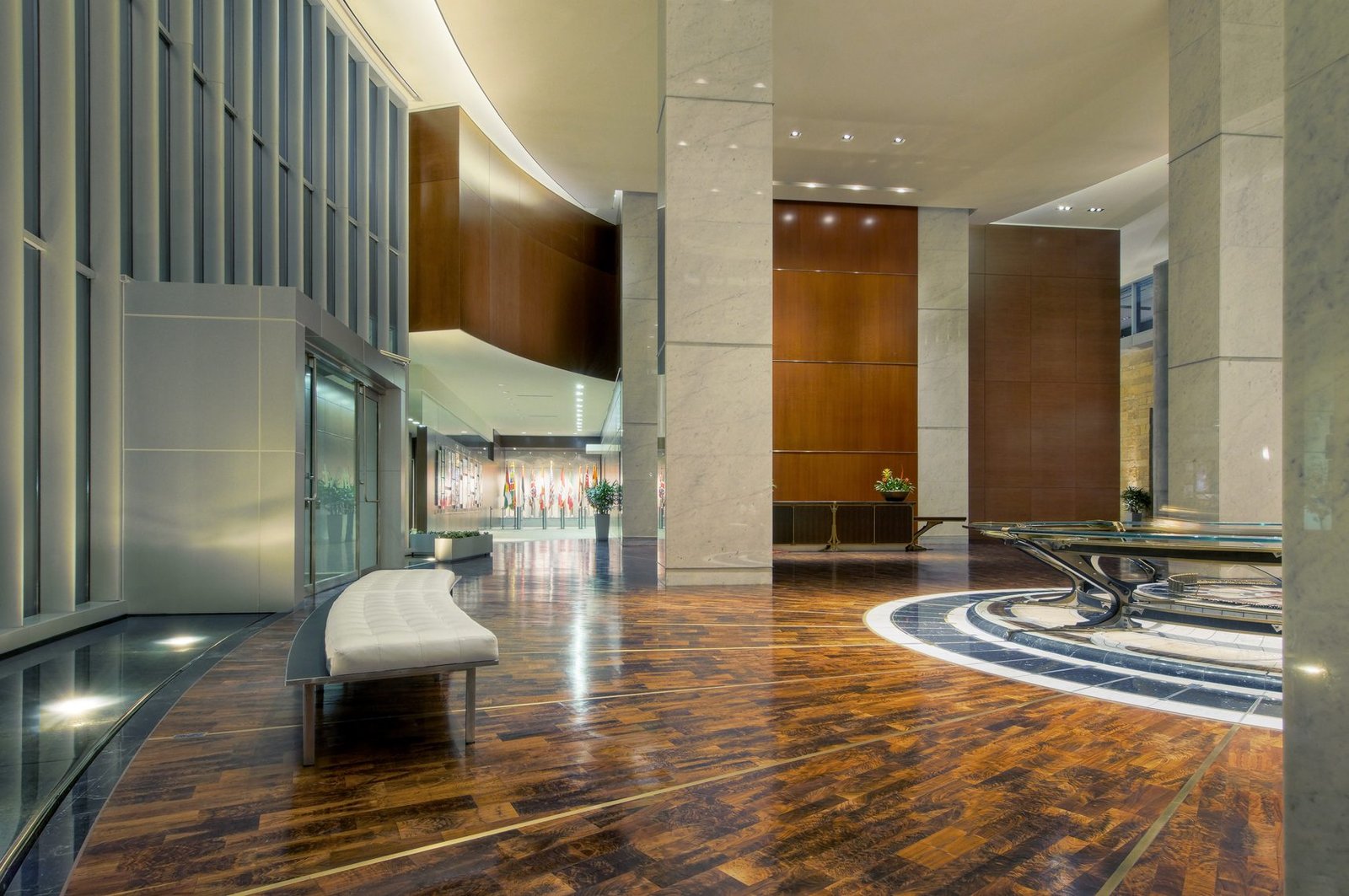
These demands make engineered wood flooring a practical choice for commercial projects, while solid wood is less commonly specified for these applications. Its layered construction stays flat in conditions where solid planks tend to cup, gap, or shift. Plywood, meanwhile, joins the floor when the project calls for it, not as an alternative to engineered flooring.
Specify a Floor System Built for Your Space
Engineered wood and plywood rarely compete for the same spot, since one usually supports the other within a single floor. Knowing each material’s role helps architects and designers write a spec that fits the site, traffic, and design intent. That clarity also prevents costly change orders once construction starts.
At Woodwright, we manufacture made-to-order engineered flooring, prefinished to handle the demands of commercial spaces. We also produce matching stair treads, nosings, and trim, so every component of the floor system coordinates in color and grain. Find a representative today to start specifying a floor built for your next project.
Frequently Asked Questions About Engineered Wood and Plywood
What is engineered wood flooring?
Engineered wood flooring is a real wood plank built from layers bonded in alternating directions. A hardwood wear layer forms the visible surface, while a multi-ply core keeps the plank flat as temperature and humidity change. That construction makes it the go-to choice for commercial interiors.
Is engineered wood the same as plywood?
No, but plywood is one type of engineered wood. The broader category also includes oriented strand board and glued laminated timber. Many engineered floors use plywood as their core, which is why people often mix up the two terms.
Is engineered wood cheaper than plywood?
No, plywood usually costs less because it’s an unfinished structural panel. Engineered flooring includes a hardwood wear layer, a factory finish, and precision milling. Since the two serve different roles, a more useful cost comparison weighs engineered flooring options against each other based on wear layer thickness, finish, and plank width.