

European Oak Flooring vs White Oak Flooring: Understanding the Differences
European Oak and White Oak often land in the same bucket during material selection. After all, both are Oak species that stain well and perform well under commercial foot traffic. In practice, however, European Oak flooring and White Oak differ in their cut and their look across a commercial floor.
Swapping one for the other can change the entire character of a space. It also shifts grain consistency, plank width, and surface hardness underfoot. This guide clarifies how the two compare, so you can specify the right Oak for your next project.
European Oak vs White Oak Flooring: Key Differences
Many project teams treat European Oak vs White Oak as a simple swap, but the two behave like distinct materials. Both share Oak’s open grain and stain-friendly nature, though they have clear differences. Here’s where they part ways, from the forest to the finished floor:
Origin. European Oak (Quercus robur and Quercus petraea) grows in forests throughout Europe. Meanwhile, White Oak (Quercus alba) grows across the eastern United States, which typically keeps it more budget-friendly for domestic projects.
Cut. White Oak comes in Plain, Rift, Quarter, and Live Sawn, so designers can match the grain to the design intent. European Oak is traditionally live sawn, so each plank carries the full range of grain.
Grain Appearance. European Oak’s mixed grain pattern adds natural movement and variation across a large floor plate. On the other hand, White Oak can be cut for a uniform look that keeps lines clean and consistent across the room.
Strength. Structural testing in Europe shows White Oak has greater inherent fiber strength than European Oak. That edge gives designers extra confidence in busy lobbies, corridors, and stair runs.
Density. White Oak averages around 770 kilograms per cubic meter, compared to about 720 for European Oak. Denser wood resists dents more effectively.
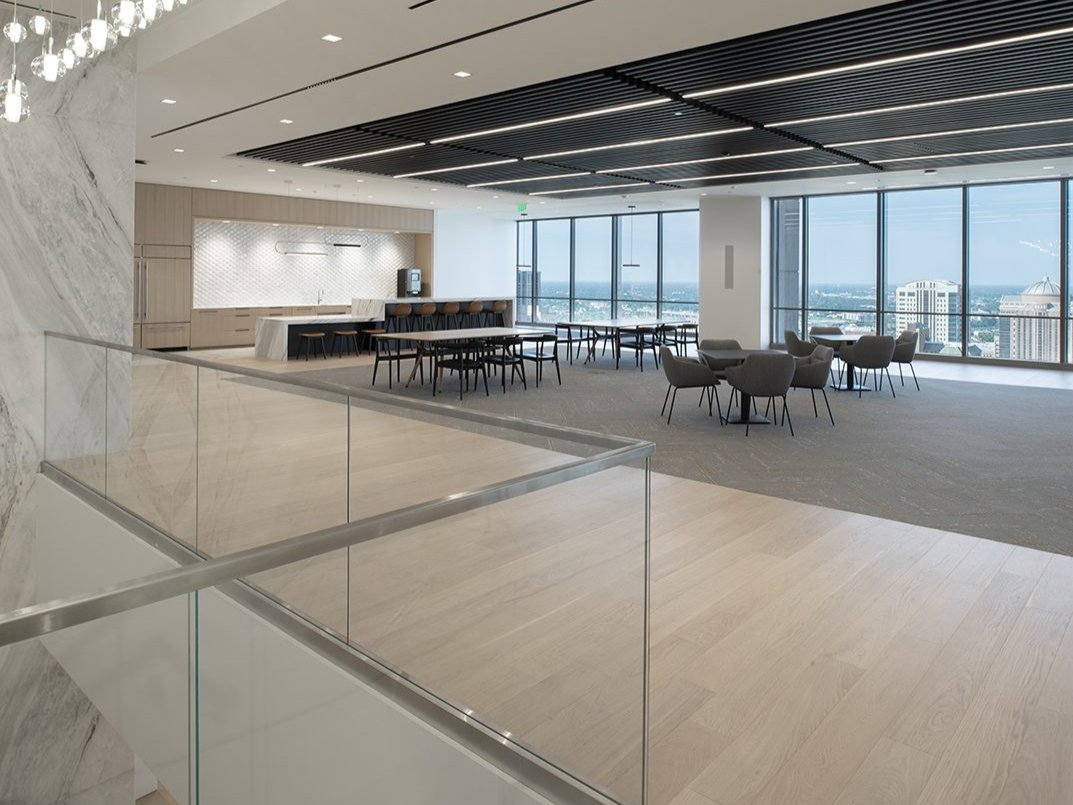
Together, these differences decide where each Oak performs best. Matching the right Oak to the right room is a core step in specifying wood flooring for high-traffic commercial interiors.
Spaces That Call for European Oak Flooring
European Oak earns its spot in projects that want an organic, relaxed character and generous plank widths. Its live sawn grain softens hard-edged architecture without screaming for attention. Designers specifying European Oak for contemporary interiors tend to lean on it in settings like these:
Scandinavian-Inspired Corporate Offices. European Oak flooring offers a mixed grain pattern and neutral palette which keep workspaces airy and calm. Paired with white walls and natural light, it anchors bright commercial spaces without adding visual weight.
Boutique Hotels and Hospitality Lounges. Wider planks mean fewer seams, giving lobbies and lounges the warmth of a private residence. That residential feel helps guests settle in the moment they arrive.
Campus Libraries and Student Commons. Live sawn planks capture the log’s full range of grain, so no two boards look alike. That natural variation brings warmth to study spaces where students linger for hours.
Across these settings, European Oak lets the floor add texture and warmth without competing with furniture or finishes. That quality comes from the traditional live sawn method European mills favor, which keeps the log’s character intact.
Projects That Benefit from White Oak’s Range of Options
White Oak’s range of cuts and added strength make it the more flexible choice when a project’s demands shift from room to room. That adaptability is a big reason White Oak remains a designer favorite. Architects and designers lean on it for projects such as these:
Contemporary Corporate Interiors. Rift Sawn White Oak delivers clean, linear grain that lines up with minimalist millwork and glass partitions. The consistent look keeps open offices and conference suites visually calm.
High-Traffic Lobbies and Corridors. White Oak’s higher density helps it stand up to dragged chairs, dropped bags, and steady foot traffic. That resilience keeps busy entries looking sharp between refinishing cycles.
Projects with Stairs and Matching Components. White Oak treads, nosings, and trim can be produced in the same cut as the floor. The result is a continuous material palette from the lobby floor to the top landing.
European Looks with More Options. Some American mills now live saw White Oak, delivering the mixed grain character European Oak is known for. Designers get that look while keeping matching treads and trim in the same species.

White Oak adapts to more design directions, while European Oak flooring offers a distinct, organic character. For projects that need one material to carry many design moves, the benefits of White Oak flooring often tip the balance.
Specify the Right Oak Flooring for Your Next Project
European Oak and White Oak may share a name, but cut, grain, and strength steer them toward different spaces. European Oak flooring brings an organic, relaxed character, while White Oak offers more ways to tailor a design. The right pick depends on the look, traffic, and components your project needs.
At Woodwright, we make both Oaks to order, prefinished for demanding commercial spaces. We also produce matching treads, nosings, and trim, so every component carries the same cut and color. Connect with us to request samples and find the right oak for your next project.
Frequently Asked Questions About Oak Flooring Options
Which type of Oak is more expensive?
European Oak flooring often costs more than White Oak in comparable grades and widths. Still, cut, plank width, and grade drive price more than species alone. A Rift Sawn White Oak floor can cost more than Live Sawn European Oak because rift cutting wastes more of the log.
Which is more durable, European Oak or White Oak?
White Oak has a slight advantage in durability. Structural testing shows it has greater fiber strength and higher density than European Oak, which helps it resist wear in busy spaces. Both Oaks still perform well in commercial interiors when paired with a durable, factory-applied finish.
Is White Oak a premium wood?
Yes. White Oak ranks among the most sought-after hardwoods for commercial interiors, thanks to its strength, stainability, and range of cuts. Its abundance in American forests also keeps it more accessible than rarer premium species.