

Few surfaces in a commercial building work harder than the stairs. Between heavy foot traffic, code requirements, and the need to still look sharp years later, the material needs to perform as well as it looks. Oak stair treads are a natural fit for that job, offering the density, grain, and finish flexibility commercial spaces demand.
But getting the most out of Oak takes more than picking a species and moving on. There are real considerations that affect performance and longevity. This article breaks down why Oak works so well for commercial stairs, what to consider before specifying it, and creative ways designers are putting it to use.
Why Oak Is a Top Choice for Commercial Stair Treads
Oak has a strong reputation in commercial design, and it is preferred by architects and designers for good reason. It holds up under constant foot traffic, stains beautifully, and looks refined years after installation.
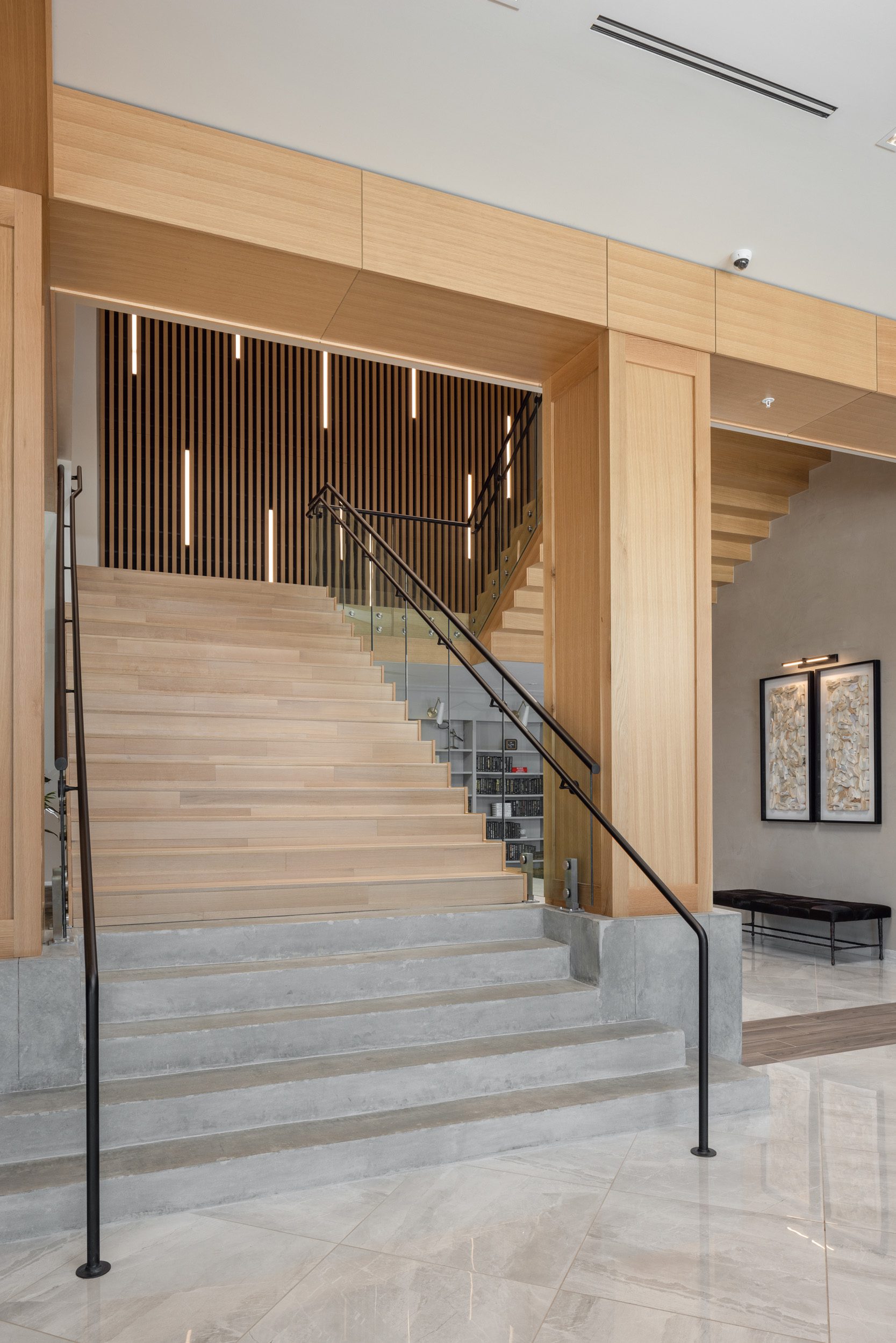
Moreover, here are a few other reasons Oak stair treads consistently outperform other species:
- Hardness and density. Oak ranks high on the Janka hardness scale, so it resists dents, scratches, and the daily wear of high-traffic stairs.
- Open, consistent grain. Its grain structure accepts stain evenly, which means better color consistency and improved wearability over time.
- Longevity. Solid Oak treads can be sanded and refreshed multiple times, extending the life of a stair well beyond its first finish.
- Design versatility. Oak takes well to a wide range of stains, cuts, and finish levels, so it fits both warm, traditional interiors and sleek, contemporary designs.
These qualities make Oak well suited to high-visibility, high-traffic spaces. Corporate lobbies, hospitality staircases, and higher education commons areas all put stairs through heavy daily use while expecting them to still look sharp. Anywhere a stair needs to perform and make a design statement, Oak tends to be the material that delivers both.
Considerations When Selecting Oak Stair Treads
Specifying Oak stair treads for a commercial project means working through a handful of technical details that affect how the stair performs and ages. Here is what to consider:
- Species selection. Texas Post Oak, White Oak, and Red Oak are all durable. However, White Oak has a tighter, more consistent grain that takes stain more evenly, making it the preferred choice for most commercial projects.
- Tread thickness and construction. Solid treads can be sanded and refinished many times over a building's life, while engineered treads offer stability but support a thinner wear layer with fewer refinishing cycles.
- Finish and sheen level. Matte and satin finishes tend to hide scuffs and wear better than high-gloss options, which matters in high-traffic commercial spaces.
- Cut and grade. Rift and quartered cuts offer a cleaner, more consistent grain pattern and added stability, while grade selection affects both appearance and cost.
- Stain color. Darker, richer stains tend to camouflage scratches and everyday wear better than lighter tones, making color a performance decision as much as an aesthetic one.
- Made to order vs. quick ship. Made-to-order treads offer full control over species, cut, and color, while quick-ship options trade some of that flexibility for shorter lead times and lower cost.
- Slip resistance (COF). Commercial stairs need to meet coefficient of friction requirements, which depend on finish type and sheen level, especially in hospitality and higher education settings.
- Sustainability and certification. Many commercial projects require FSC certification or need to contribute toward LEED credits, so it is worth confirming a manufacturer's sourcing and certifications early.
None of these decisions happen in isolation. These components work together to determine how well Oak stair treads perform over its lifetime.
Using Oak Stair Treads for Commercial Spaces
Specifying the right species and finish is only half the equation. How Oak stair treads get used within a space is what turns a functional stair into a design moment. Here are a few ways designers are putting Oak stair treads to work in commercial projects:

- Turn the stair into a wayfinding cue. Landings, half-flights, and open stairwells are some of the most visible spots in a building. A subtle contrast in stain or a signature detail at eye level can help orient people through a space while reinforcing a brand's identity.
- Let the stair be the statement, not an afterthought. In corporate and higher ed lobbies, stairs are increasingly designed as architectural focal points rather than purely functional connectors. That shift changes how species, cut, and finish get chosen from the start.
- Extend the material into social seating. Staircases aren’t just for getting from one floor area to another. Many workplaces are incorporating tiered social stairs into commons areas, using matching wood across seating and stair surfaces to unify the space.
- Balance warmth against harder materials. Glass railings, metal stringers, and painted risers are common in commercial stairs, and Oak adds warmth to that mix. Coordinating the tread and riser materials keeps the transition feeling intentional rather than mismatched.
- Keep large projects consistent. For campuses or multi-floor buildings, using the same species and stain across every stair keeps a big project feeling cohesive. This is often where coordinating stair treads with the rest of the interior makes the biggest visual impact.
Work with an Expert Manufacturer to Get the Spec Right
Getting Oak stair treads right takes the right species, the right details, and the right partner to bring it all together. At Woodwright, we specialize in made-to-order Oak stair treads, along with coordinating flooring, wall, and ceiling applications, so every project feels cohesive from the ground up. Our team works closely with architects and designers to protect design intent without compromising performance. Partner with us to get your next commercial stair spec right from day one.