The ceiling is often the most overlooked surface in a commercial interior, yet it holds the greatest potential for transforming a room's atmosphere. When treated as an architectural canopy that ties an interior together, ceilings can become a powerful tool for defining volume and character.
Specifying wood plank ceilings is one of the most effective ways to achieve this sense of structural cohesion and warmth. By utilizing the depth and texture of tongue and groove planks, designers can elevate a space far beyond the standard flat finish.
The following sections explore how these overhead wood applications impact the modern built environment—from psychological comfort to technical integration.
Beyond the Floor: The Fifth Wall as a Design Statement
The atmosphere of a high-volume commercial interior is often dictated by the materials used overhead. While standard white or industrial ceilings can feel cold and detached, wood plank ceilings introduce a sense of human-scale warmth to even the most expansive rooms. You can even add a pop of color to them by taking advantage of custom wood stains.
This natural overhead presence provides a "biophilic" canopy that significantly improves the comfort and well-being of those occupying the space. It acts as a visual anchor, softening the hard reflections of glass and concrete to create a more grounded and inviting environment.
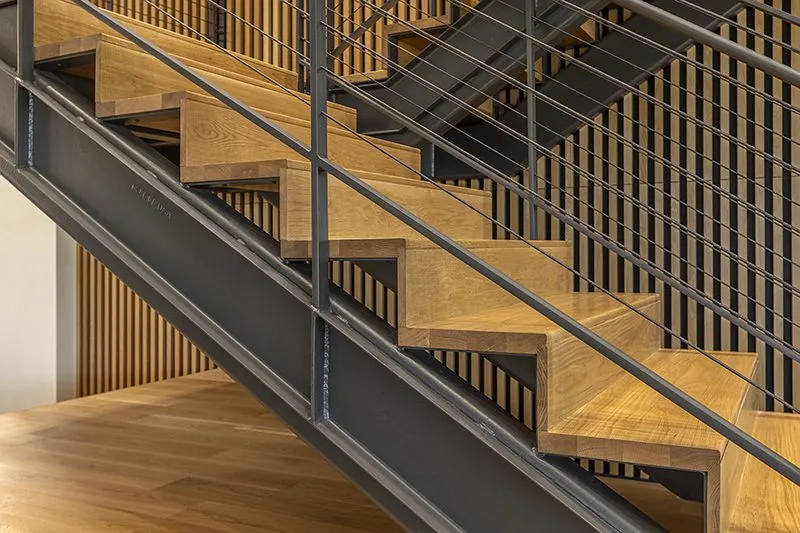
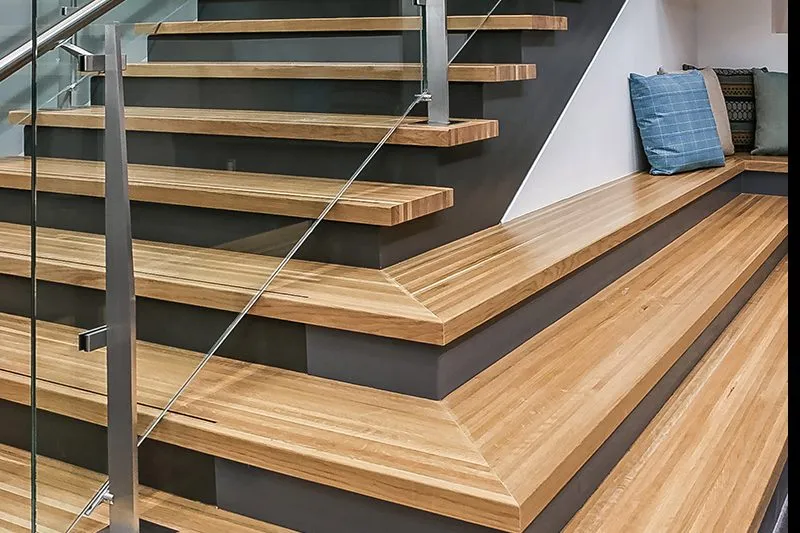
By utilizing robust tongue and groove flooring planks rather than thin veneers, these installations gain an authentic physical presence and rich texture. The result is a commercial space that feels protective and intentionally crafted, rather than just a functional shell.
Linear Perspectives: Guiding the Eye and Defining Volume
The orientation of wood plank ceilings is a powerful tool for manipulating the perceived dimensions of a commercial interior. By strategically aligning the planks, designers can visually elongate a corridor or expand the width of a narrow room.

Depending on the architectural goals of the project, the direction of the planks creates distinct spatial effects:
- Longitudinal Alignment: Running planks parallel to the longest walls draws the eye forward, making a space feel deeper and encouraging movement.
- Transverse Alignment: Installing planks perpendicular to the length of a room "pushes" the walls outward, making narrow hallways or small lobbies feel significantly wider.
- Diagonal Alignment: Setting planks at a 45-degree angle breaks the boxy feel of standard rooms, adding a sense of dynamic energy and high-end custom craft.
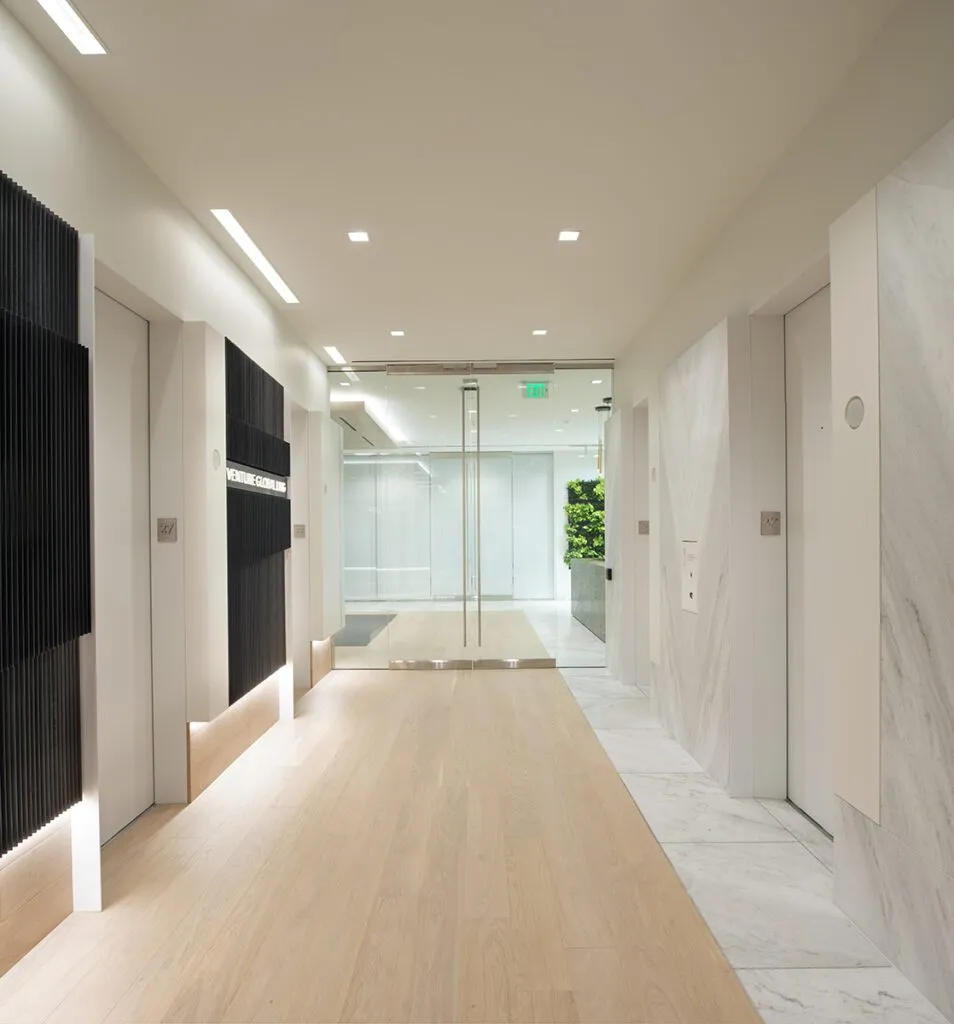
This linear geometry acts as a subtle form of wayfinding in high-traffic zones like transit hubs or corporate offices. The parallel lines naturally guide the eye toward a specific destination, such as a reception desk or an elevator bank.
Beyond direction, the physical depth of these planks adds a sense of structural volume that flat surfaces lack. The result is a ceiling that feels more like a deliberate architectural element than a simple utility cover.
Integrating Modern Infrastructure: Lighting and HVAC
One of the most significant design challenges in commercial interiors is managing the clutter of essential building systems. From air diffusers to fire suppression, these utilities often disrupt the clean lines of a ceiling.
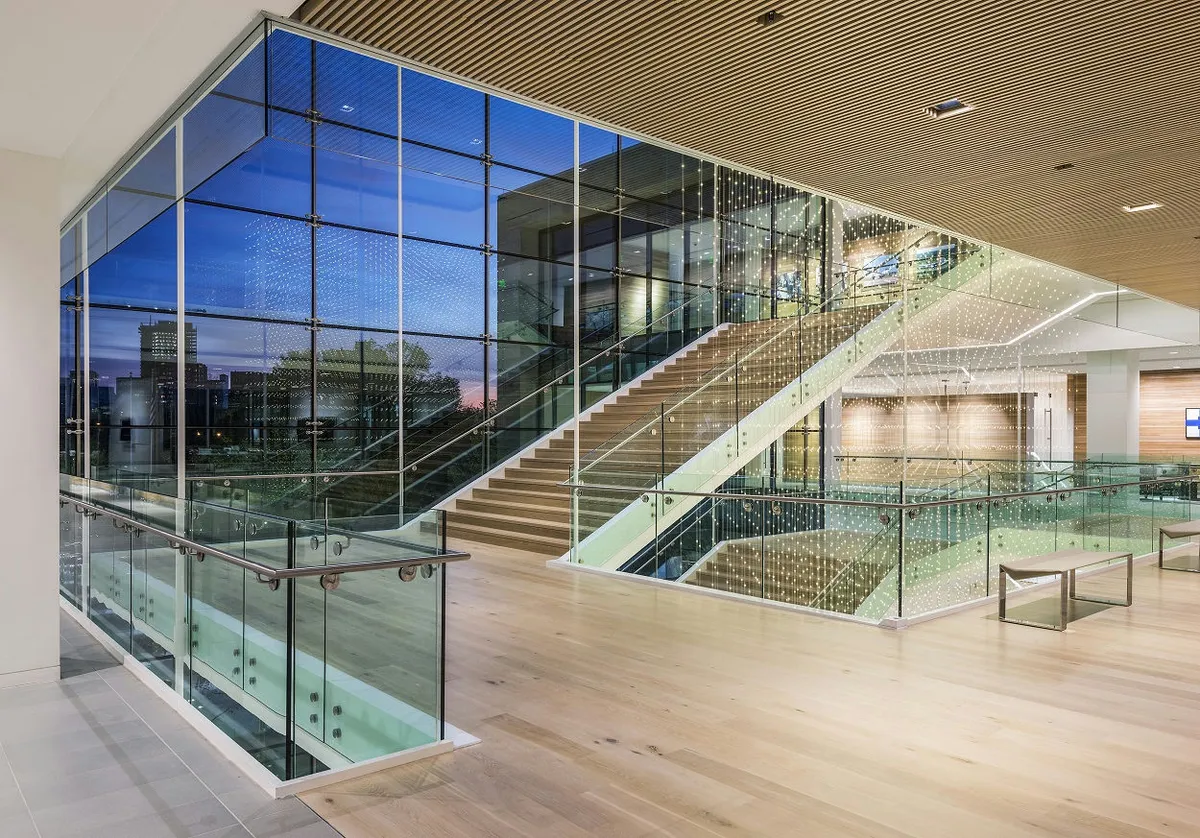
By specifying wood plank ceilings, designers can seamlessly integrate these technical elements into a cohesive architectural surface. The tongue and groove system allows for precise cutouts that accommodate modern infrastructure without compromising the natural beauty of the wood.
Common methods for integrating these systems include:
- Linear Diffusers: Slotting HVAC vents between wood planks to maintain a continuous, uninterrupted visual flow.
- Recessed Lighting: Creating custom apertures for "can" lights or sleek LED strips that sit flush with the wood surface.
- Access Panels: Engineering discrete removable sections that allow for maintenance without detracting from the overall aesthetic.
This approach transforms a utility-heavy surface into a refined, intentional design element. Instead of distracting from the room’s atmosphere, the infrastructure becomes a quiet part of the ceiling’s geometry.
Texture and Rhythm: Breaking the Monotony of Flat Surfaces
Most commercial interiors rely on flat, white, or industrial grey ceilings that lack visual depth. Wood plank ceilings introduce a rhythmic quality through the natural variation of grain patterns and the intentional placement of "reveals" between the boards.
The choice of species plays a critical role in the final rhythm and tone of the environment. Whether you are aiming for a classic look or a bold modern statement, the wood's natural characteristics define the space:
- European Oak: A designer favorite for its clean, mixed grain pattern and neutral palette, perfect for airy, Scandinavian-inspired offices.
- Black Walnut: Offers a deep, rich tone and complex swirling grain that brings a sense of high-end luxury to executive suites or hospitality lounges.
- Hickory: Known for its dramatic color variation, providing a more rustic and energetic rhythm that stands out in large-scale installations.
Varying the width of the tongue and groove planks or the depth of the reveals creates a sophisticated play of light and shadow. This adds a three-dimensional quality to the ceiling that makes a space feel bespoke rather than mass-produced.
Material Continuity: Creating a Seamless Transitions
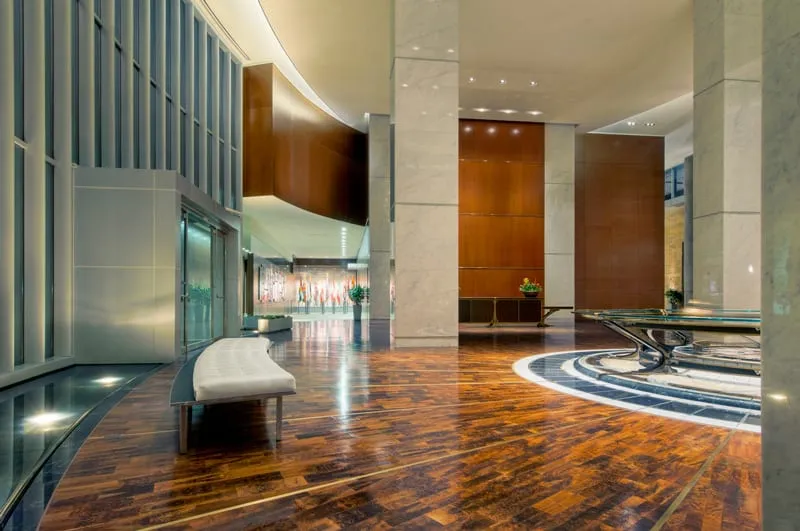
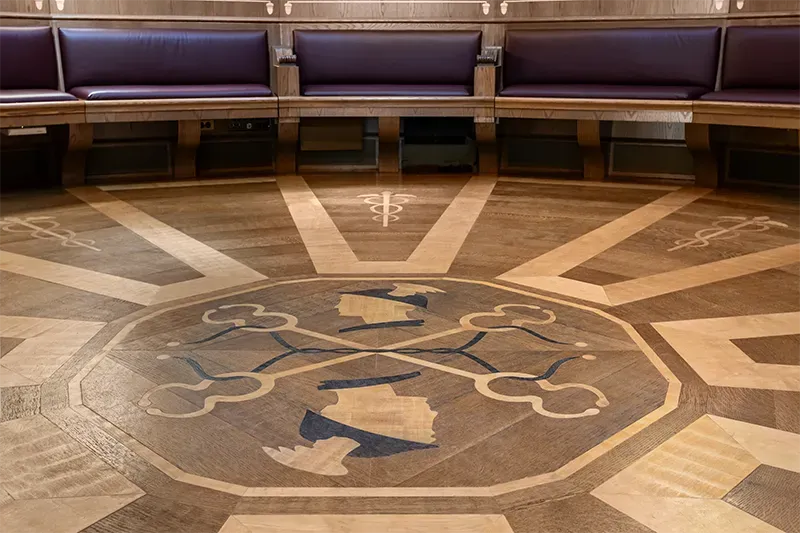
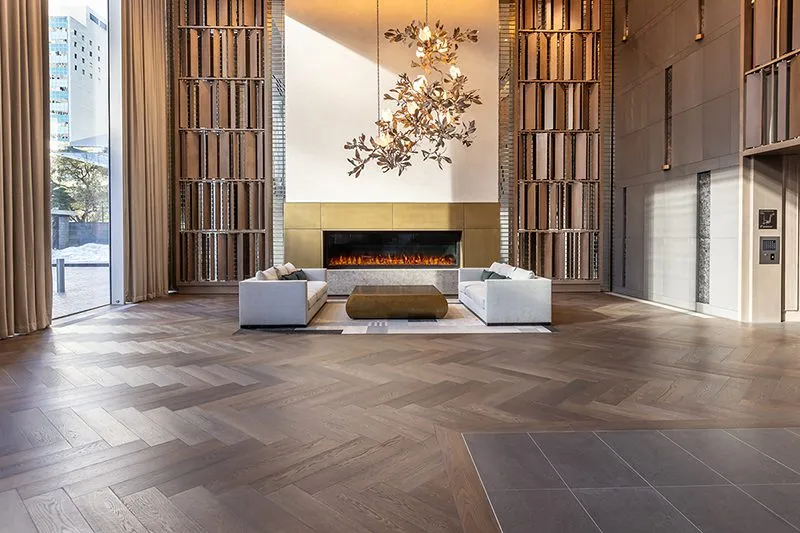
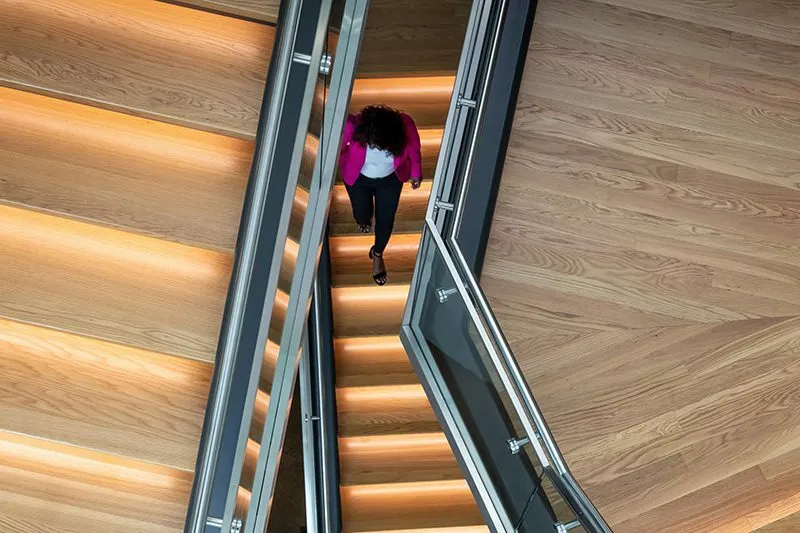
Design is most powerful when it feels intentional and connected across every surface of a project. By specifying wood plank ceilings that mirror the species and finish of the flooring, architects can create a seamless "envelope" that defines the entire volume of a room.

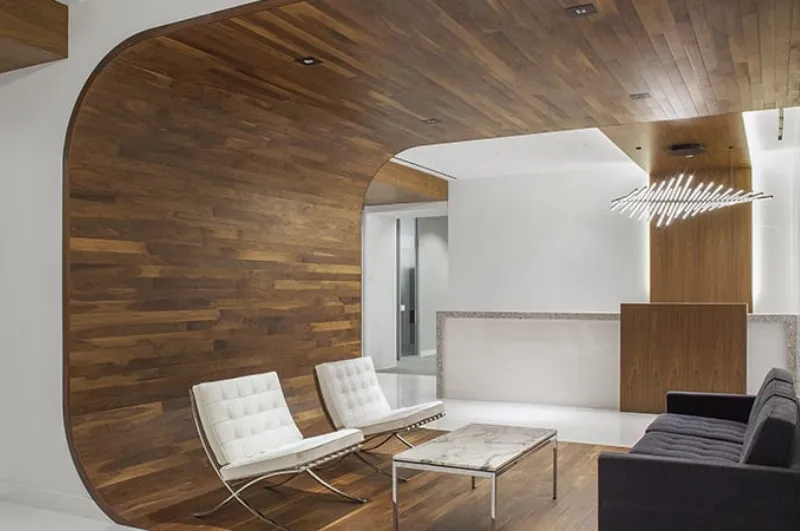
This material continuity allows for a wrap-around effect, where the wood transitions from the horizontal floor to a vertical wall and onto the ceiling plane. This technique is particularly effective for creating a sense of shelter and definition in open-concept environments:
- Lobby Canopies: Extending wood planks from a reception desk up to the ceiling to create a protective, defined zone within a large atrium.
- Corridor Transitions: Using a continuous wood wrap to signal a transition from a public lobby into a private executive suite or conference area.
- Niches and Alcoves: Defining rooms within rooms by enveloping a seating area or coffee station in matching tongue and groove planks.
This approach ensures that the wood elements are not viewed as separate additions, but as a unified part of the building’s DNA. It eliminates the visual jarring that occurs when different wood species or mismatched finishes are used in the same sightline.
Achieve Cohesive Designs from Floor to Ceilings
Treating the ceiling as a primary design element transforms a commercial interior into a curated environment. Wood plank ceilings offer the ideal balance of natural beauty and structural rhythm.
At Woodwright, we can provide you with perfectly matched solutions for wood plank ceilings as well as wood flooring. We can help you unify every surface of your project to ensure a sophisticated, cohesive finish from the ground up. Get in touch with us today to bring your vision to life.