

When designing executive corporate suites or boardroom hubs, selecting premium materials helps anchor a sense of permanent success. Specifying premium walnut hardwood flooring is a definitive way to deliver this level of upscale architectural prestige.
While its natural warmth instantly commands attention, using premium walnut requires balancing high-end aesthetics with technical durability strategies. This article breaks down why this material is heavily favored for leadership spaces and explores how designers and architects can optimize its long-term performance.
Why is Walnut Hardwood Flooring Preferred for Executive Spaces
Corporate interior layouts face the unique challenge of establishing a high-end atmosphere while quietly supporting daily productivity and focus. Walnut hardwood flooring allows designers and architects to address these overlapping spatial goals through a single premium material package.
Visual Luxury
The primary design benefit of using luxury wood flooring like Walnut lies in its deep, sophisticated aesthetic characteristics. Selecting walnut hardwood flooring introduces distinct advantages to flagship corporate spaces:
- It offers a rich, luxurious, deep chocolate brown color profile that synthetic floor coverings cannot accurately replicate.
- The elegant, sweeping grain patterns deliver an immediate sense of weight and permanent organizational status.
- Its dark tones also provide an excellent architectural backdrop that pairs beautifully with corporate office furnishings like high-end leathers, natural stones, and matte metals.
Low Light Reflectivity Value (LRV)
Lighting design in executive spaces often relies on soft, low-ambient accent fixtures rather than harsh overhead glare. Incorporating walnut hardwood flooring alters the light properties of a leadership suite.

Walnut’s dark, organic surface possesses a low light reflectivity value that naturally absorbs intensive brightness. This minimizes problematic light bounce and distracting glare across large open boardrooms. In turn, the design maintains premium visual comfort for executives during long strategy sessions or extensive screen work.
Natural Sound-Dampening Characteristics
Acoustic control and conversational privacy remain critical requirements when planning the layout grids for executive offices. Utilizing walnut hardwood flooring provides organic sound mitigation properties.
The distinct cellular anatomy of the timber absorbs harsh acoustic frequencies much better than dense tile or stone. This dampens the sound of distracting footsteps or rolling office chairs across the floor plate. Consequently, this cultivates a quieter environment that helps protect confidential discussions.
Total Continuity
Architects and designers heavily favor this species because it allows them to establish an integrated material identity across multiple surface planes. Sourcing walnut hardwood flooring from a specialized domestic manufacturer unlocks specific continuity benefits:
- It allows you to perfectly coordinate the tone of the floor with custom engineered wood stair treads.
- Designers and architects can carry that exact color match overhead into premium wood plank ceilings.
- This single-source specification strategy utilizes tongue and groove flooring planks on vertical surfaces to eliminate problematic dye-lot variations.
Maximizing the Potential of Walnut Hardwood Flooring
Walnut hardwood flooring undoubtedly offers many distinct benefits for high-end corporate interiors. However, fully unlocking those strategic advantages requires architects and designers to implement extra protective specification steps during the planning phases.
Incorporating the following manufacturing methods and deliberate structural guidelines ensures the chosen materials perform beautifully over time to maximize their true spatial potential.
Navigate Traffic and Hardness Pitfalls
With a Janka hardness rating of 1010, walnut sits notably below heavy-duty commercial wood standards like White Oak at 1360 or Pecan at 1820. This lower cellular density means the raw wood fiber is more susceptible to permanent crushing or fiber separation under targeted pressure.
This trait can result in noticeable surface imperfections like puncture marks from high heels, deep wood bruising from heavy executive furniture, and tracks from rolling office chairs.
Architects and designers can easily avoid these common lifecycle problems by using smart zoning and preventative planning choices during layout development:
- Delineate functional spaces by reserving walnut hardwood flooring for private offices, enclosed boardrooms, and low-traffic client lounges.
- Route high-volume foot traffic onto more resilient surrounding materials like natural stone or harder wood borders to insulate the signature zones.
- Implement custom felt caster glides and protective baseline barriers beneath heavy corporate furniture pieces to distribute weight safely across the planks.
Specify High-Quality Engineered Construction
Opting for high-quality engineered wood floors balances the movement of the timber to keep planks stable across changing seasons. This layered system completely preserves the upscale aesthetic of premium walnut hardwood flooring while eliminating typical solid-wood structural failure claims.
When evaluating these specialized products for your layout grid, consider a few critical parameters:
- Specify a thick wood wear layer to allow for future sand cycles and refreshing over decades of office use.
- Verify the width stability metrics of the multi-ply core to ensure it handles volatile commercial HVAC environments.
- Partner with a domestic made-to-order manufacturer like Woodwright to ensure precision tongue-and-groove alignment across all runs.
Choose Advanced Pre-finishing
Specifying advanced pre-finishing moves the coating process into a controlled factory setting where multi-layered shield technologies cure uniformly under precision automated systems.
Utilizing this factory method is highly effective for walnut because it applies an incredibly resilient barrier directly over the softer cellular fibers without compromising the material's premium appearance. This upfront production protection allows walnut hardwood flooring to confidently withstand the minor scratches, scuffs, and daily friction common to bustling executive office suites.
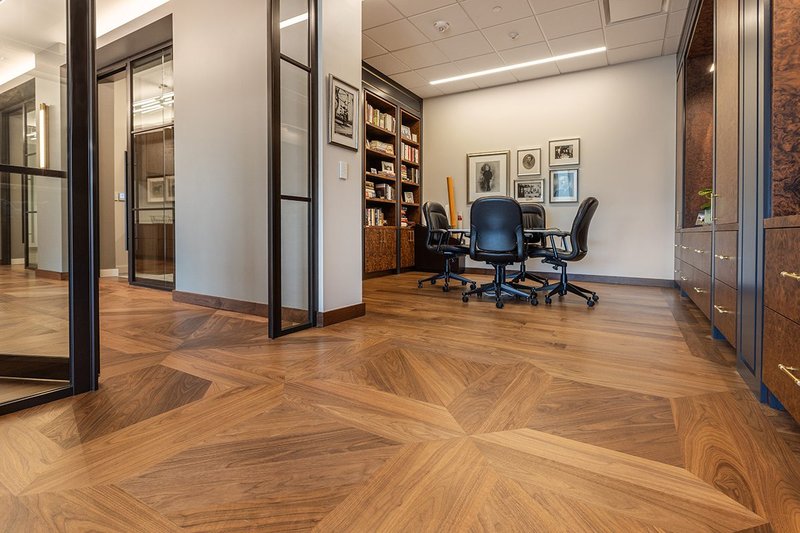
Architects and interior designers can select from several sophisticated pre-finishing parameters depending on the targeted design language of the workplace layout.
Opting for an ultra-low-sheen or flat matte finish is a smart tactical choice because flat sheens naturally diffuse reflection to camouflage micro-scratches and footprints. Designers can also specify premium UV-cured oils or specialized commercial matte polyurethanes that protect the rich timber tissue while showcasing the authentic texture of the grains.
Consider Made-to-Order Layout Variations
Made-to-order layout variations adapt plank geometry, size parameters, and directional orientations during production to create clear visual zoning. Corporate interior spaces typically use these customized geometric floor orientations to guide pathfinding and denote spatial hierarchy without erecting physical partitions. This tailored approach effectively leads high-profile corporate visitors from busy public reception spaces straight into private executive portals.
Architects and designers can leverage precise layout techniques to enhance material dynamics in focused areas:
- Transition walnut hardwood flooring into premium chevron or herringbone installations to frame primary leadership desks.
- Specify custom wide-plank profiles that integrate seamlessly with the column grid lines of the building structure.
- Apply unique perimeter borders to elegantly anchor standalone corporate office furniture setups.
Balance Prestige and Performance for Executive Spaces
Specifying walnut hardwood flooring requires balancing visual prestige with tactical spatial zoning. While its unique cellular structure demands defensive planning, advanced multi-ply engineering and matte factory pre-finishing ensure long-term design success.
At Woodwright, we provide high-end domestic manufacturing to help designers and architects execute walnut hardwood flooring with complete technical confidence. Our facility crafts project-specific engineered planks and perfectly color-matched components to ensure structural stability in high-stakes workplace interiors.
Contact our team today to request material samples or plan your next custom suite installation.