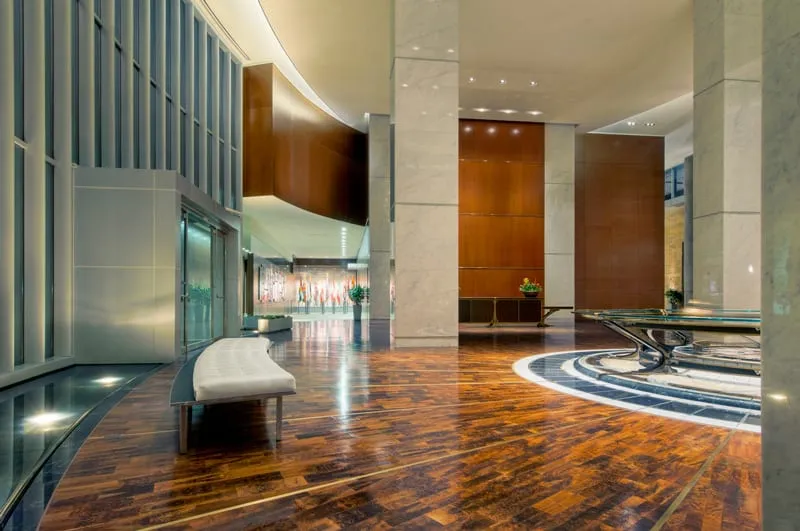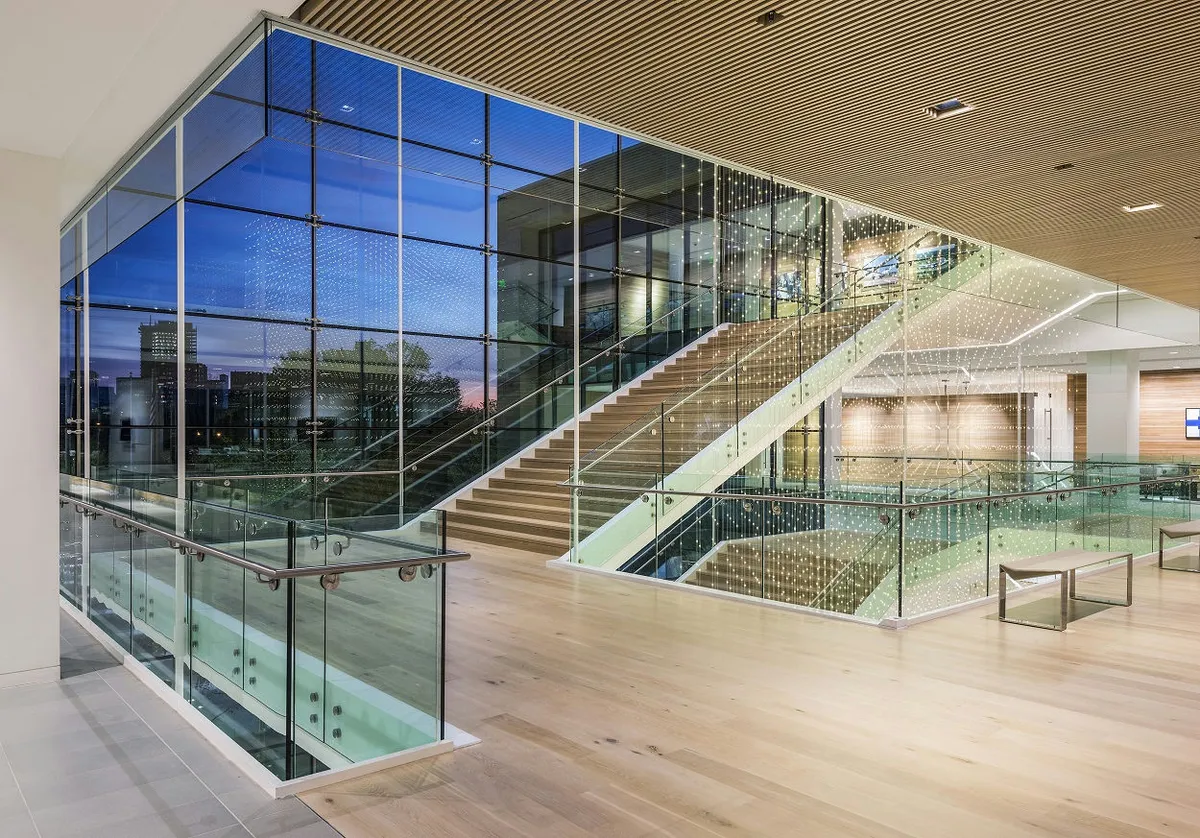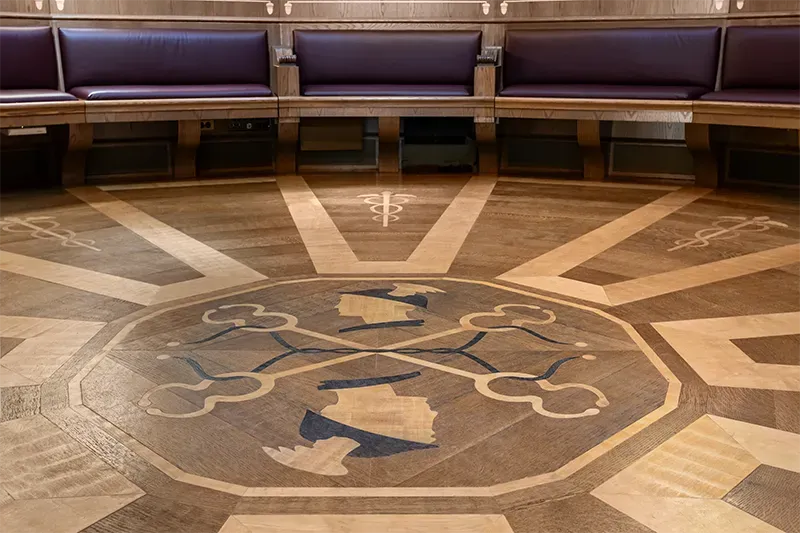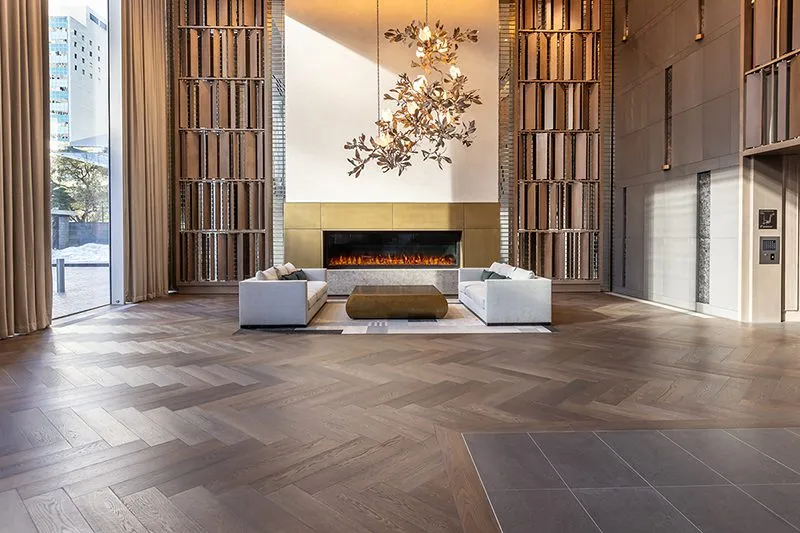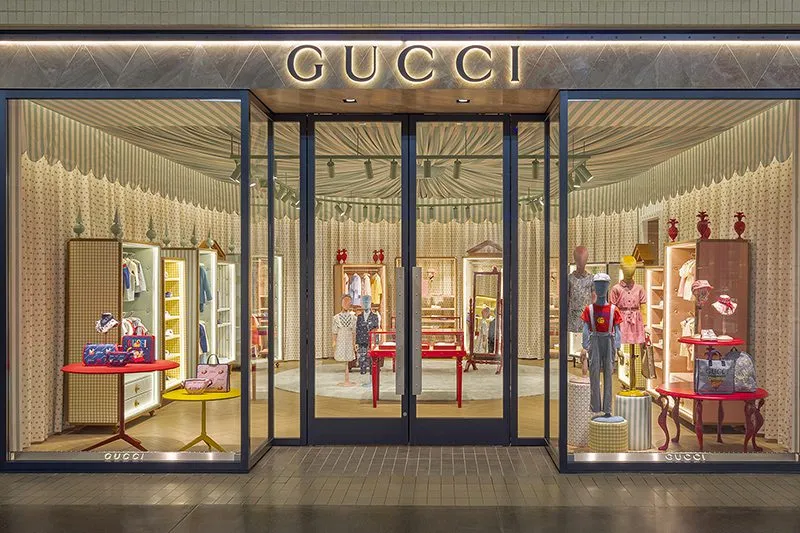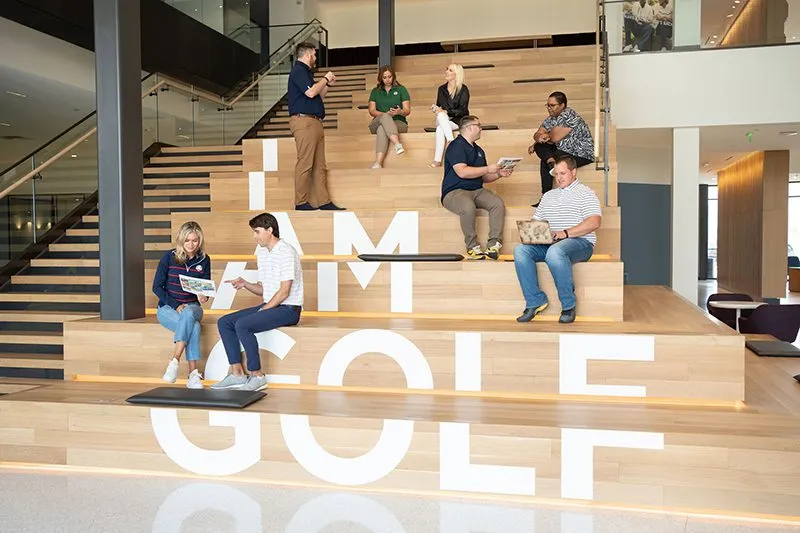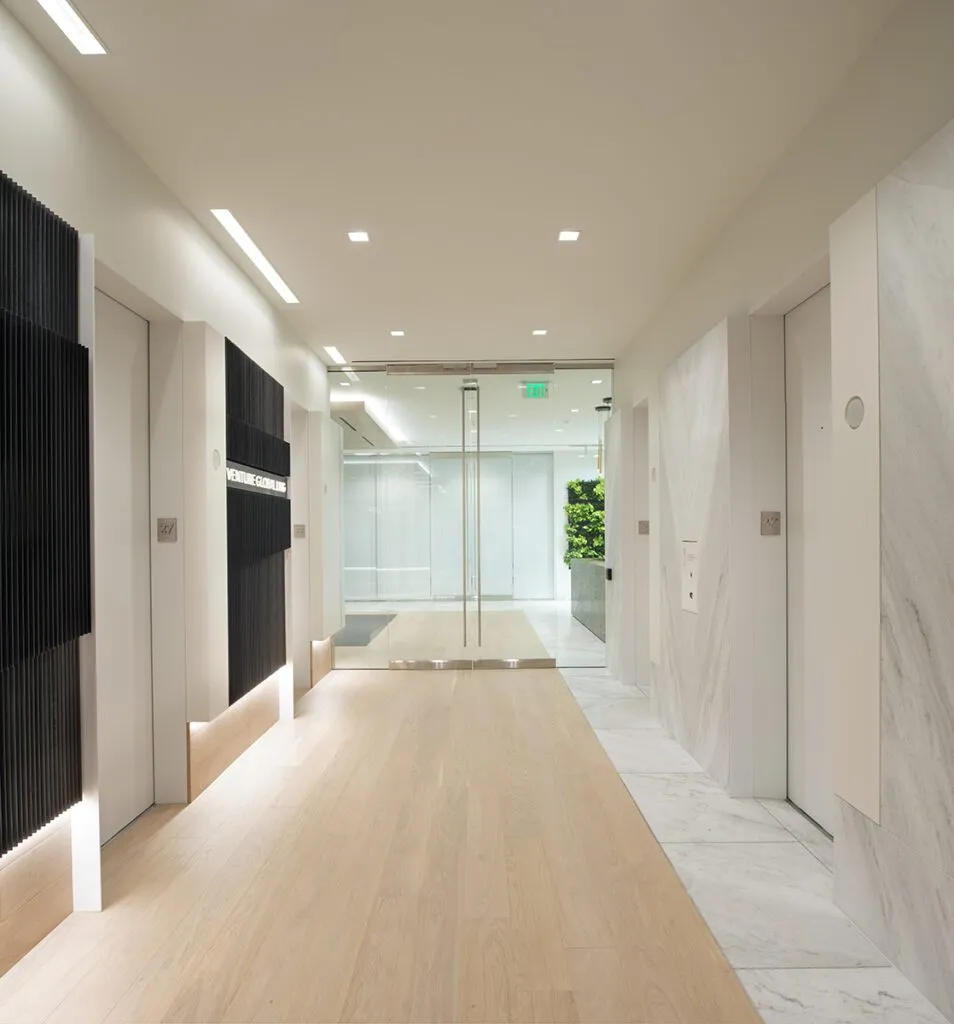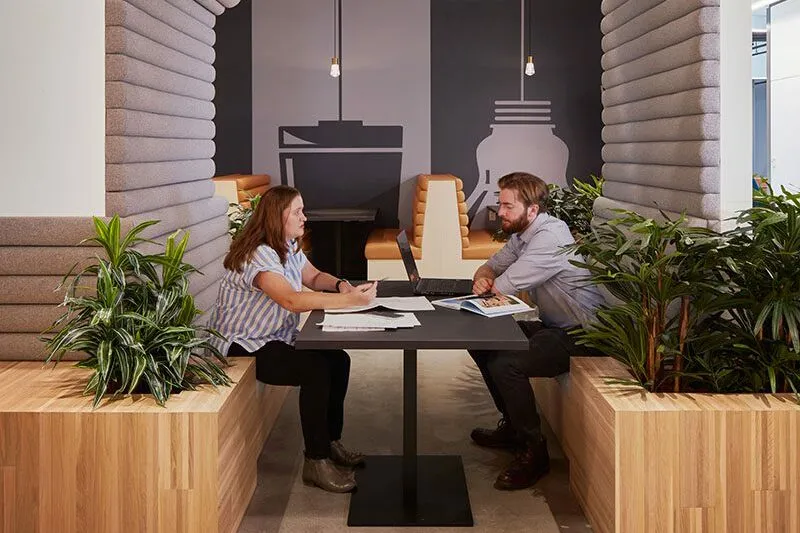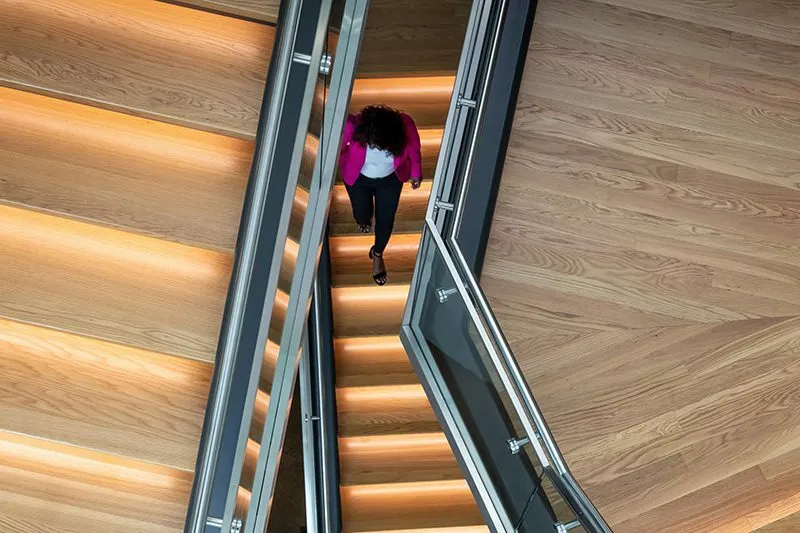
A designer or architect’s choice in flooring material is often the defining factor that turns office lobbies, hotels, and restaurants into sophisticated interiors. It is what bridges the gap between structural necessity and an inviting atmosphere. However, the true beauty of commercial wood flooring lies in its ability to maintain that initial “wow factor” under the relentless pace of a high-traffic environment.
To achieve a seamless integration of form and function, one must look beyond the surface. In this article, we’ll explore some of the technical checkpoints that architects should consider when choosing the ideal commercial wood flooring.
Commercial Wood Flooring Species Selection
Selecting the right species is the first step in ensuring that commercial wood flooring can withstand the rigors of a high-traffic environment. While the Janka scale is a helpful baseline for dent resistance, it is not an absolute guarantee of performance. In a fluctuating commercial climate, hardness is only as valuable as the wood’s dimensional stability.
A high Janka rating provides peace of mind against high heel dents and wear, but it doesn't account for how a species reacts to humidity or temperature shifts. To build a resilient specification, architects and designers should evaluate these primary considerations:
- Dimensional Stability: How the species naturally expands or contracts.
- Grain Orientation: Why rift and quartered cuts offer superior width stability.
- Environmental Compatibility: How the timber interacts with the building’s HVAC profile.
For example, a balanced material like White Oak remains an industry favorite for its predictable nature and robust density. By prioritizing stability alongside raw hardness, you ensure your design remains structurally sound long after the installation is complete.
Structural Integrity for High-Traffic
When navigating the complexities of a commercial wood flooring, the choice between solid and engineered construction is a pivotal technical decision. While solid wood offers a classic, single-piece composition, high-quality engineered flooring is the professional standard for its superior dimensional integrity.
Beyond the composition of the plank, the success of an installation depends on the caliber of its production. Precision manufacturing ensures that every tongue-and-groove connection meets the exacting tolerances required for large-scale footprints.

Tight milling standards reduce the risk of structural gaps and "over-wood," providing a perfectly flush surface that can withstand mechanical stress. By specifying a made-to-order product with controlled manufacturing, you eliminate the variables that often lead to site failures.
Slip Resistance and Coating Technology
The finish of a commercial wood flooring is the critical interface where design meets safety. Architects must navigate the balance between a sophisticated visual "sheen" and the rigorous safety standards required by the Americans with Disabilities Act (ADA). Choosing the right chemistry is not just a design choice; it is a long-term facility management strategy.
Current trends in wood flooring are shifting toward matte, low-sheen aesthetics that highlight the raw, organic character of the timber. These finishes offer a high-end residential feel while meeting the demanding slip-resistance coefficients required for commercial zones. To ensure a safe and resilient specification, evaluate these primary finish options:
- UV-Cured Urethanes: Providing exceptional scratch resistance and a durable "film" for high-traffic corridors.
- Penetrating Oils: Offering a low-sheen aesthetic that resides within the wood fibers, allowing for easier localized repairs.
- Slip-Resistance (COF): Verifying the finish meets or exceeds the Coefficient of Friction requirements for public safety.
Beyond the type of coating, the application method dictates the consistency of the final product. Factory-applied finishes are cured in controlled environments, eliminating the risks of dust contamination and uneven drying times common on a job site. By specifying a high-performance, factory-cured finish, you ensure a uniform surface that remains both beautiful and compliant.
Aesthetic Versatility
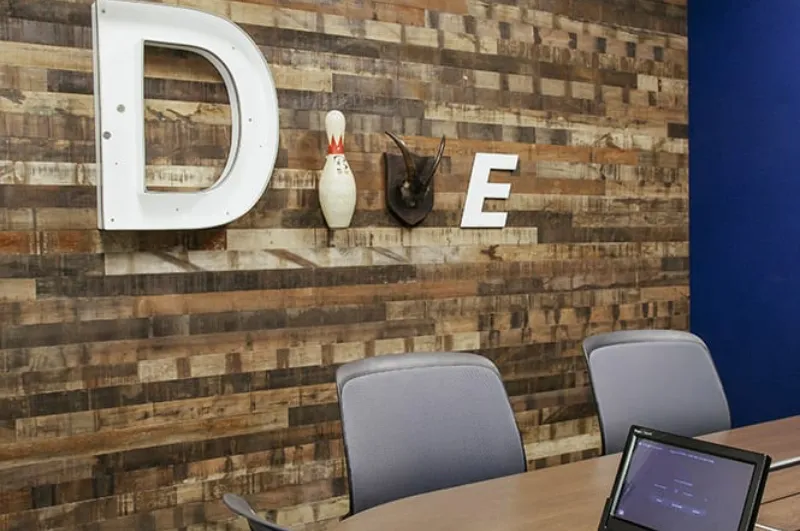
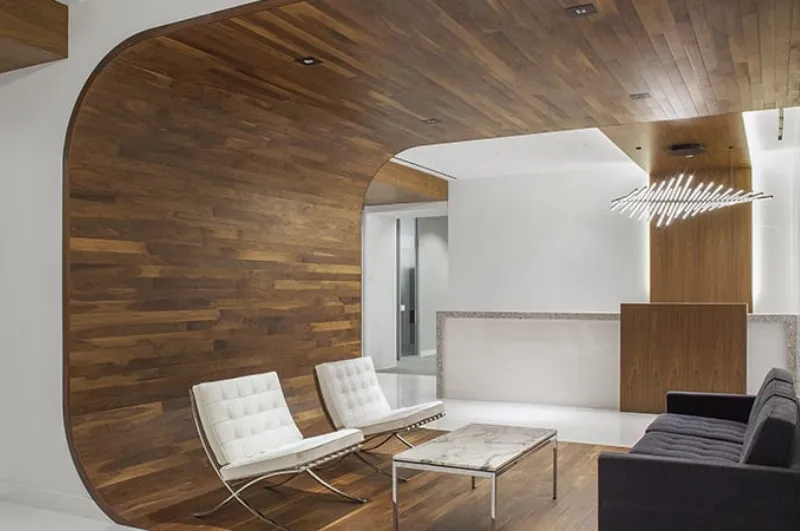
The true power of commercial wood flooring lies in its ability to serve as a cohesive design thread throughout a project. Beyond the horizontal plane, wood offers a unique flexibility that allows architects to blur the lines between floors, walls, and ceilings. By leveraging a single material across multiple surfaces, you create a sophisticated, integrated environment that feels custom-tailored rather than assembled.
Achieving this level of material cohesion requires a deep understanding of how different cuts and grades interact within a large-scale space. To maximize the design impact of your specification, consider these primary versatility benchmarks:
- Integrated Millwork: Using tongue-and-groove planks to transition seamlessly from the floor to wall and ceiling applications.
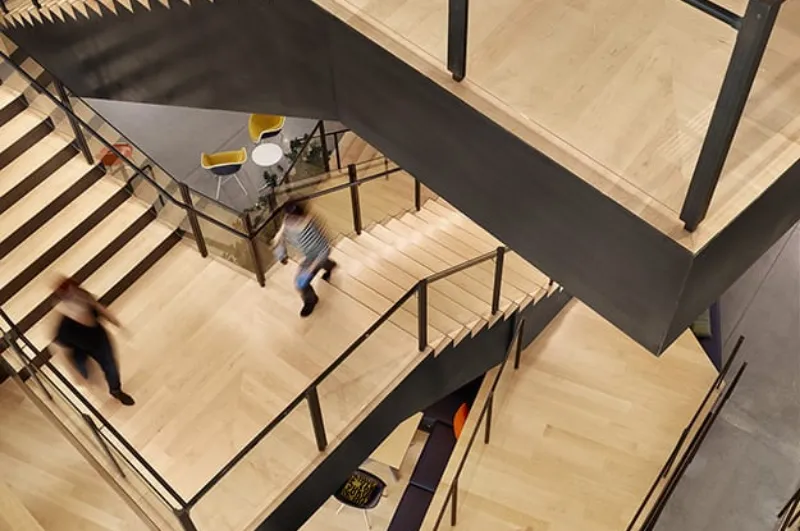
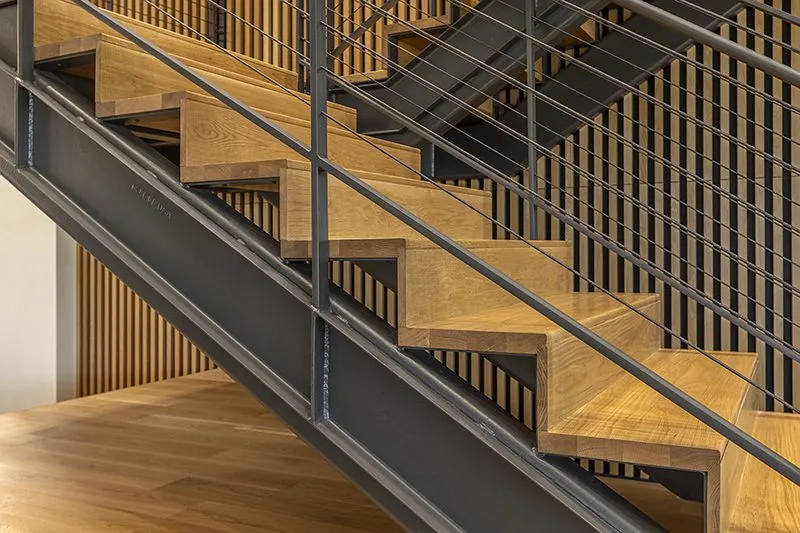
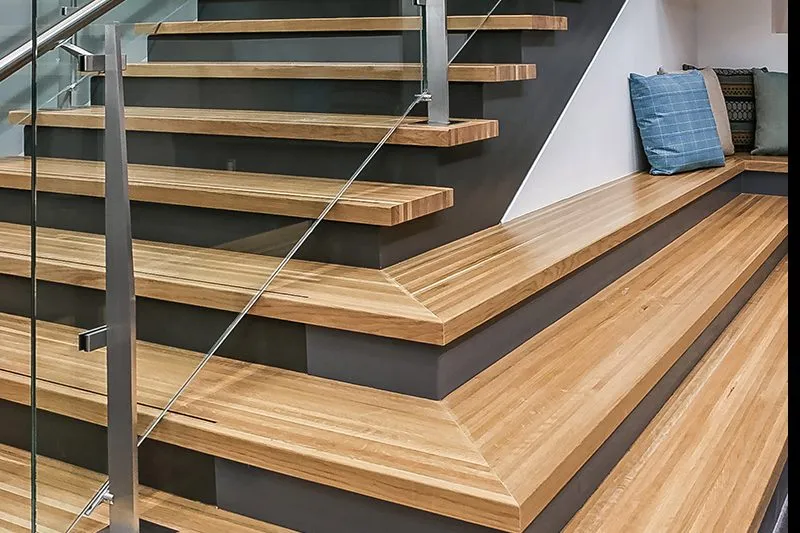
- Cohesive Vertical Elements: Coordinating wood stair treads and risers to match the flooring for a unified architectural statement.
- Grain and Texture Selection: Utilizing various slicing techniques—from rift and quartered to live sawn—to dictate the visual rhythm of the interior.
This approach to "total wood" design eliminates the color-matching challenges often found when mixing veneers or panel products from different sources. By specifying a made-to-order plank system for both horizontal and vertical surfaces, you ensure a perfectly matched aesthetic from the grand entryway to the private suite.
Sustainability for Commercial Wood Flooring
Environmental responsibility is no longer a separate consideration; it is the benchmark of sustainable luxury. For a high-caliber project, the pedigree of the timber is as vital as its grain pattern. Specifying wood from responsibly managed forests ensures that the elegance of a corporate lobby or a private estate does not come at the cost of the ecosystem.

Beyond the source of the raw material, the long-term sustainability of commercial wood flooring is measured by its lifecycle and indoor environmental quality. To ensure your specification meets the highest green building standards, evaluate these primary sustainability markers:
- Sourcing and Chain of Custody: Utilizing FSC-certified or reclaimed timber to verify responsible forestry practices.
- Indoor Air Quality (IAQ): Specifying factory-cured finishes with zero or ultra-low VOC emissions for a healthier interior.
- Carbon Sequestration: Leveraging wood’s natural ability to store carbon, making it a superior choice for low-embodied carbon designs.
A commitment to sustainable luxury is a commitment to the longevity of the project and the planet. By selecting high-performance, ethically sourced timber, architects can offer clients a space that is as environmentally sound as it is visually striking.
Elevate Your Next Project
Specifying commercial wood flooring is a balance of high-end aesthetics and rigorous engineering. By prioritizing dimensional stability, precision manufacturing, and the principles of sustainable luxury, architects can transform any commercial space into a timeless interior. When the science of the plank matches the beauty of the grain, the result is a resilient, cohesive design that performs for decades.
Ready to elevate your next specification? Get in touch with us at Woodwright to explore custom wood solutions tailored to your project’s unique demands.