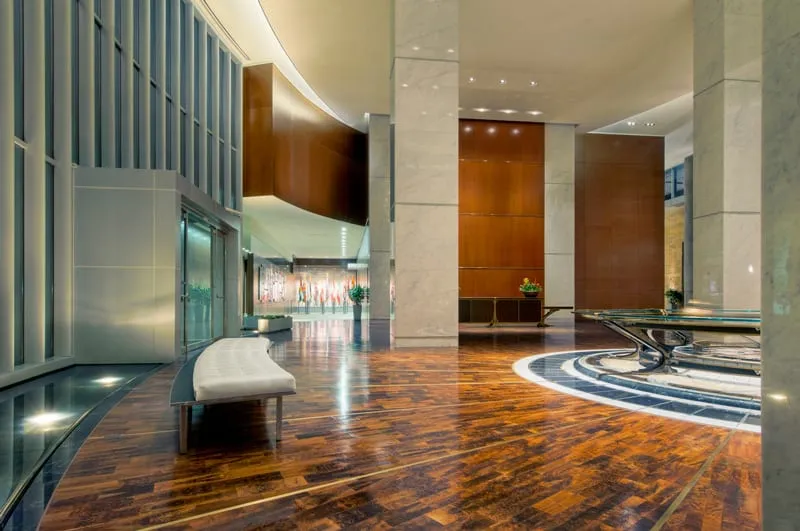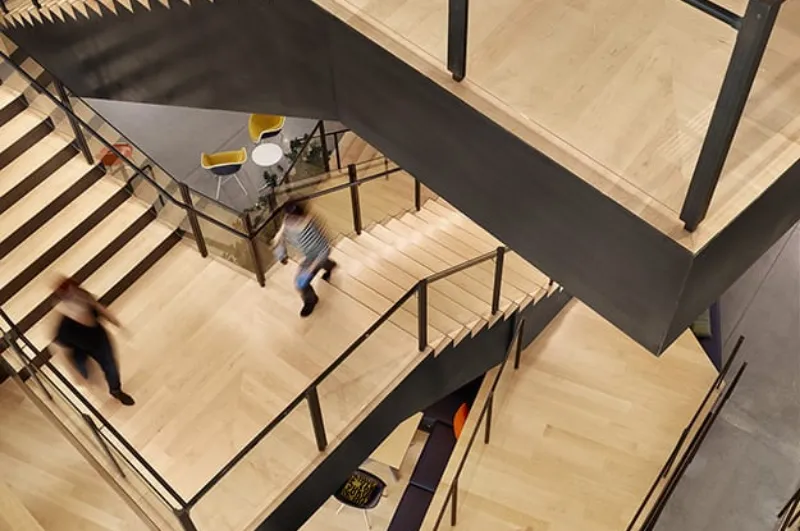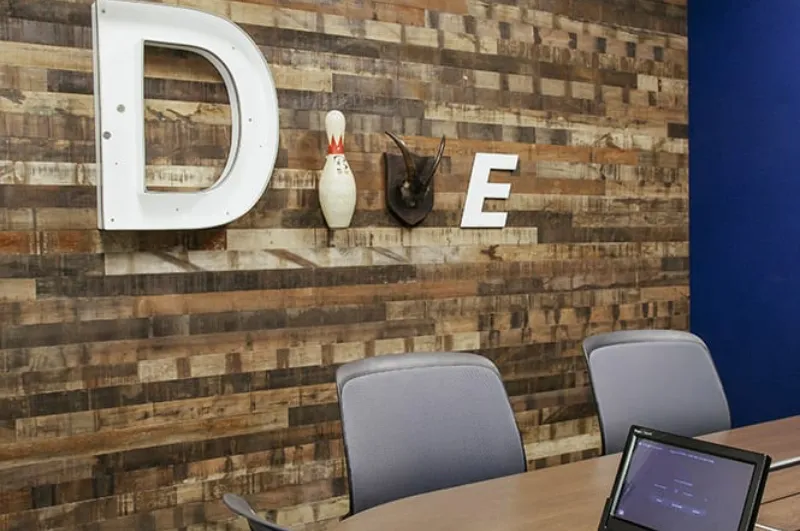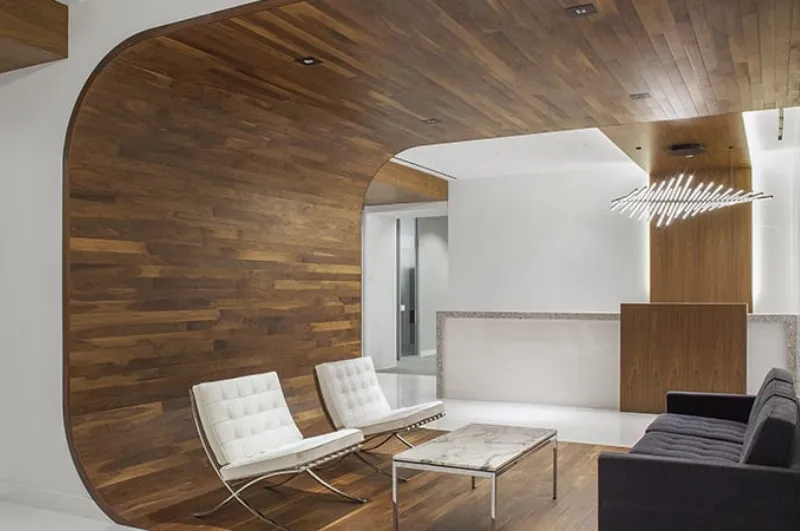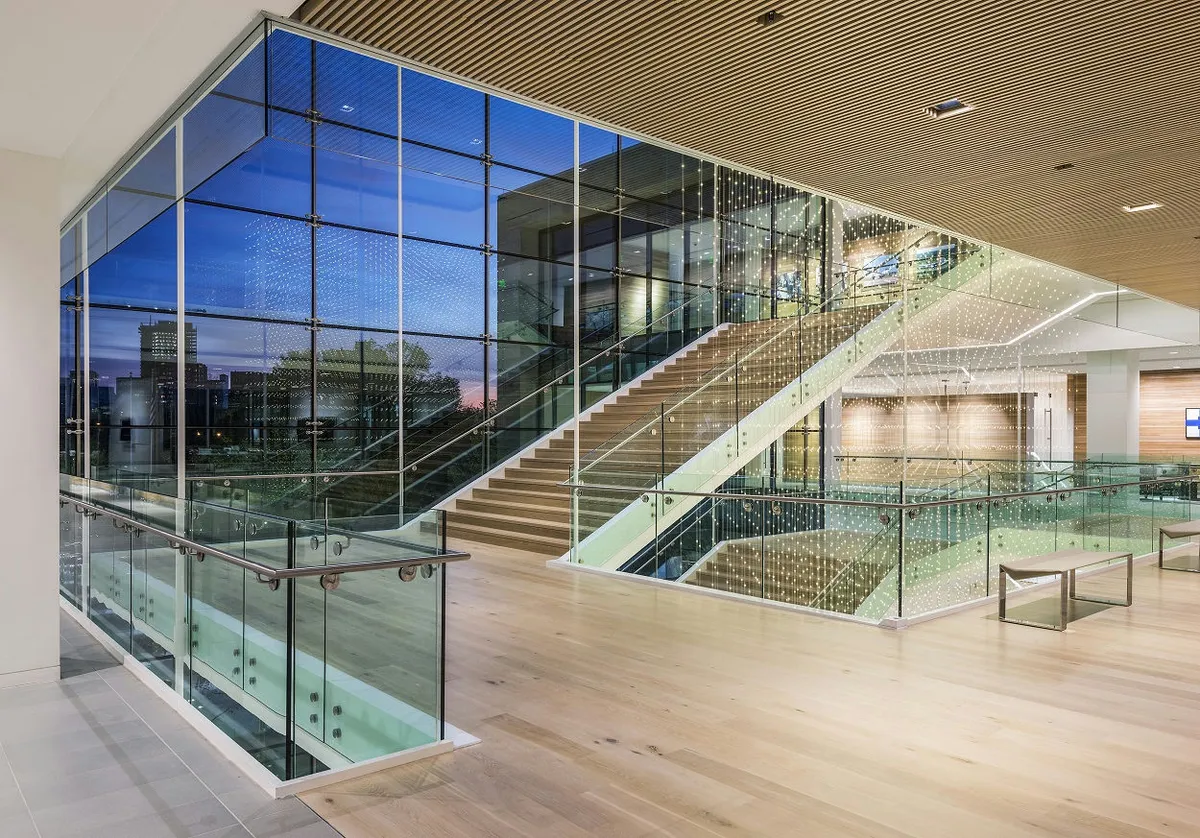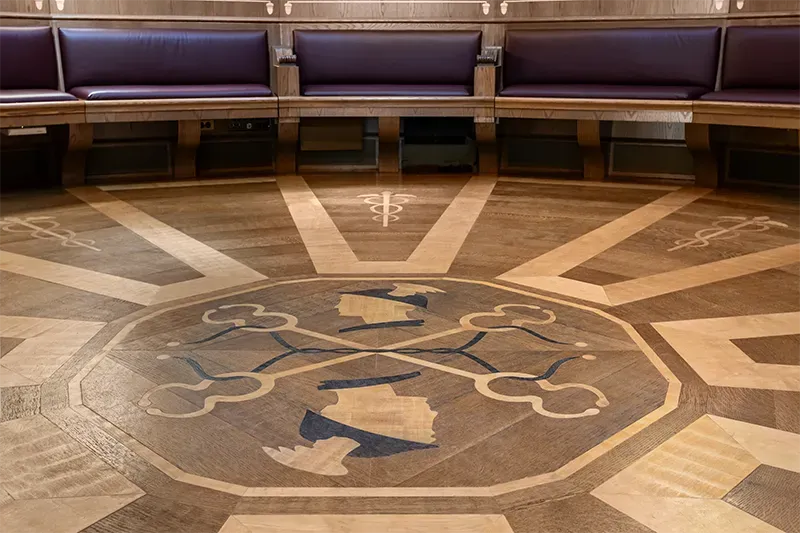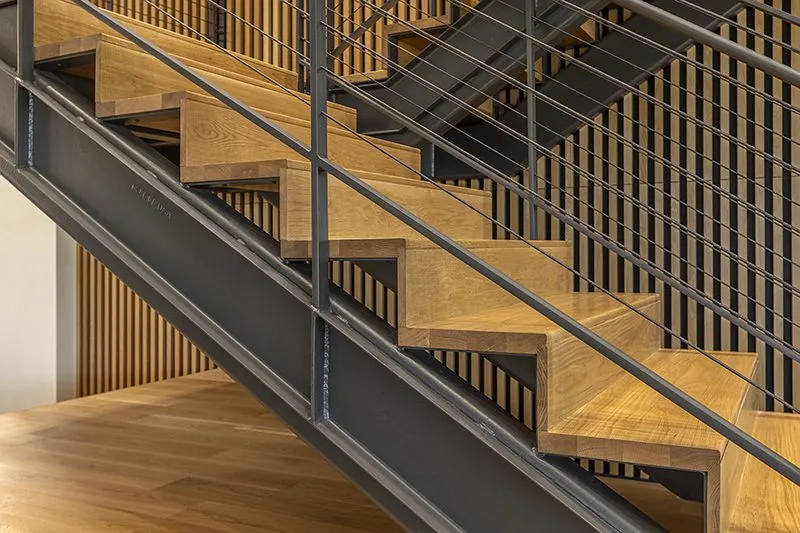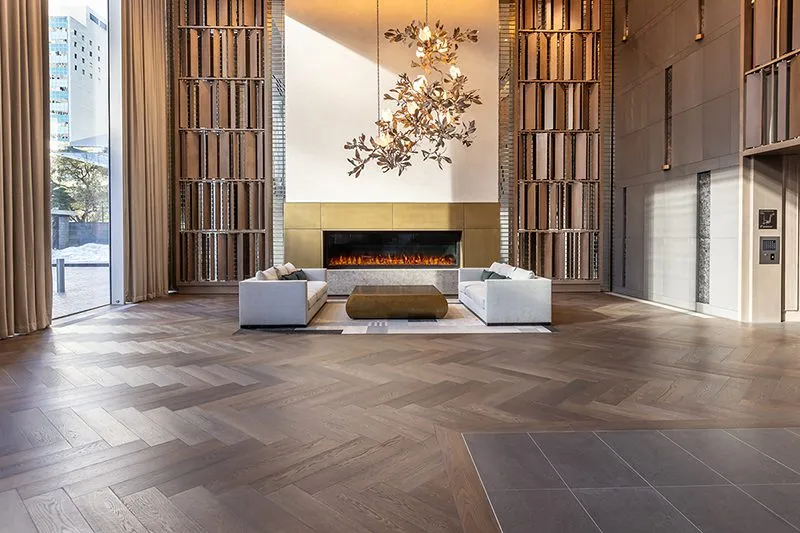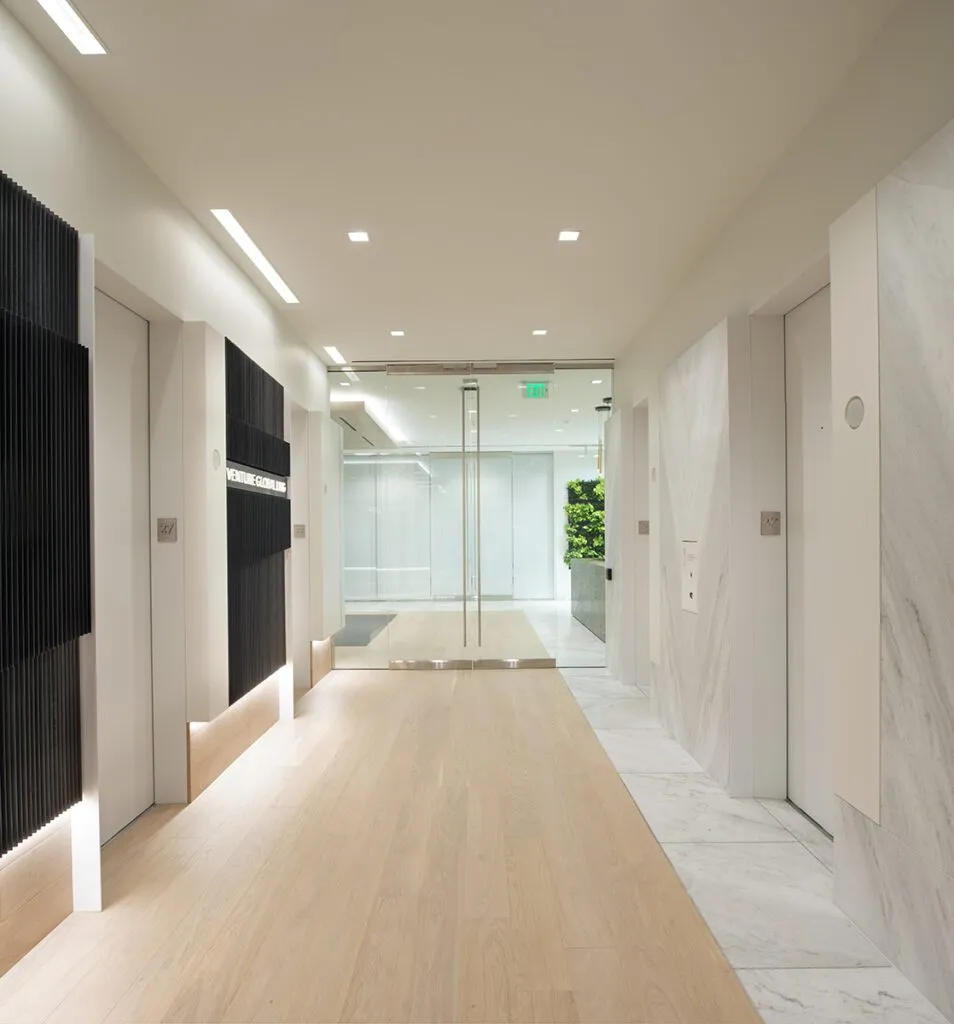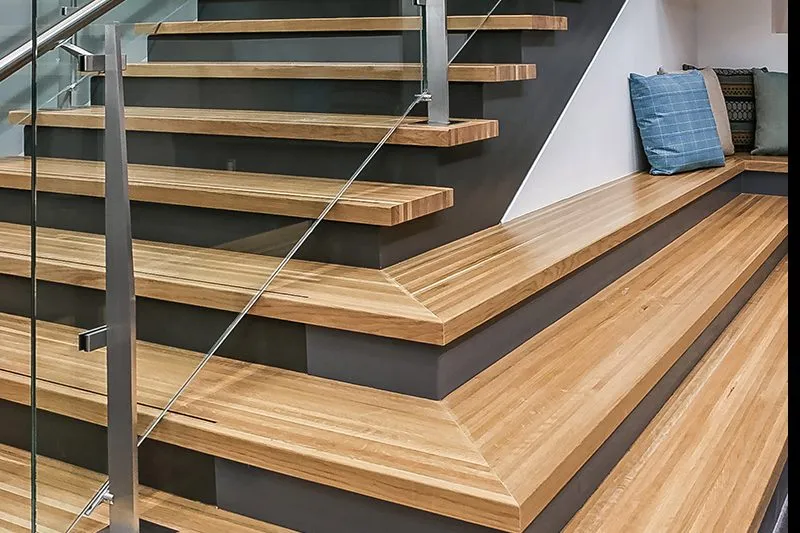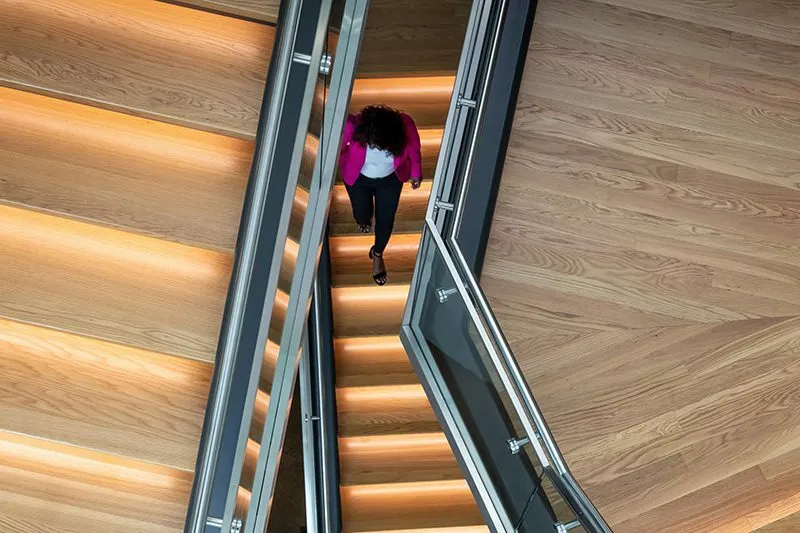
When designing a corporate lobby or a busy campus hub, durability is always top of mind during the material specification process. This is where understanding the wood hardness scale becomes incredibly important for a design team.
This metric provides a data-driven foundation for predicting how specific wood species will perform under the daily demands of a commercial environment. It gives specifiers the exact insight needed to balance long-term wear resistance with the aesthetic goals of the project.
This article explores how the wood hardness scale impacts specific design outcomes, real-world commercial performance, and overall project longevity.
The Janka Test: Explaining the Wood Hardness Scale
The Janka test is the metric that most designers and architects use in order to understand how wood species will perform under pressure. Developed by Austrian researcher Gabriel Janka in 1906, this method involves measuring the exact pounds-force required to embed a 0.444-inch steel ball halfway into a block of wood. This measured force is then translated directly into a numerical rating—the higher the number, the harder the wood is. Consequently, this means that the wood is more resistant to deep dings and heavy foot traffic.

With this test, designers and architects have a reliable benchmark for comparing the dent resistance of different types of wood.
The wood hardness scale generally groups species into distinct tiers to help guide the specification process:
- Softwood Tier (Under 900 lbf): Species such as American Cherry, Douglas Fir, and Eastern White Pine, which are highly susceptible to immediate denting, are generally avoided for commercial floors.
- Standard Hardwood Tier (900 lbf – 1,400 lbf): The baseline bracket for most architectural applications, featuring widely specified options like Walnut and White Oak.
- High-Density Hardwood Tier (Over 1,400 lbf): Tough, heavy-duty species like Hard Maple, Sapele, and Pecan that are built to thrive in severe commercial traffic zones.
A few things worth noting about the Janka Test, however, is that while this test is great for understanding the wearability and long-term durability of wood species, it does not measure scratch resistance. Moreover, species aside, the Janka rating of wood may also vary based on grain orientation. After all, flat, vertical, and end grains respond differently to impact.
How Wood Hardness Impacts Commercial Performance
In high-traffic design, selecting a specie based on aesthetics alone can jeopardize the long-term success of the installation. A direct reading from the Janka hardness scale offers key insights into several critical performance metrics:
- Dent and Impact Resistance: The primary utility of the wood hardness scale is predicting how well wood fibers resist crushing under concentrated point loads. In public environments, the sharp point of a high heel can exert thousands of pounds of pressure per square inch. A higher rating ensures the material absorbs these impacts without leaving permanent depressions in the floor.
- Wearability Over Time: Wearability refers to how gracefully a wood surface handles the continuous abrasive friction of heavy foot traffic. While a higher position on the wood hardness scale indicates a tougher raw substrate, a specie must also be manufactured and prefinished specifically for commercial durability to truly excel. A robust factory finish works hand-in-hand with the underlying cell structure to prevent early wear tracking.
- Refinishing Potential: Harder wood species provide a rigid, structurally stable foundation during eventual maintenance cycles. When a commercial space needs to be refinished to restore its original design intent, a dense hardwood handles the mechanical sanding process without excessive loss of material. This ensures the installation can be refinished multiple times over its lifespan.
- Staining Capability: The rating on the wood hardness scale is inherently tied to a wood species' cell density and natural porosity. Extremely dense hardwoods have tightly packed cells that absorb stains less readily, requiring advanced manufacturing techniques to achieve highly specific custom colors. Open-grained hardwoods with moderate hardness offer excellent mechanical adhesion for custom stains and finishes.
Considerations When Specifying Wood: Why Density Isn't Everything
One of the most common misconceptions in material specification is that a higher Janka hardness rating automatically translates to better flooring performance. In the real world, relying solely on raw density can lead to major performance issues if grain patterns and wood physics are overlooked.

To help you better understand how specific species behave under real-world conditions, we’ve outlined some of the few specification mistakes and misconceptions about the wood hardness scale:
- Higher Density Means Higher Stability. Wood physics dictates that exceptionally dense exotic hardwoods—like Brazilian Cherry or Santos Mahogany—tend to lack width stability, making them risky choices for environments with volatile humidity. Stability refers to how much a plank expands or contracts with changes in a space's temperature and moisture levels. When environmental control is a concern, these ultra-dense species are highly prone to cupping or gapping.
- Close-Grained Woods Wear Better Than Open-Grained Woods. On paper, Hard Maple (1,450 lbf) looks superior to White Oak (1,360 lbf) because it is denser on the wood hardness scale. However, Maple features a very tight, close grain pattern that easily telegraphs scratches and scuffs under commercial lighting. Open-grained species like White Oak or Pecan/Hickory actually wear much better over time because their natural texture beautifully masks everyday traffic marks.
- Popular Premium Aesthetics Always Match Commercial Traffic Demands. American Walnut has a gorgeous, high-end look, but at a 1,010 rating on the wood hardness scale, it is typically too soft to handle heavy commercial traffic or stair treads without denting. For projects requiring that rich, dark aesthetic, Sapele (1,500 lbf) serves as an excellent substitute that delivers the necessary dent resistance.
Specify with Confidence
Ultimately, navigating the wood hardness scale requires balancing raw data with real-world wood physics to ensure a commercial space performs beautifully for years. As a business with over 40 years of expertise, Woodwright is the ideal partner to help guide these technical specification decisions. We specialize in coordinating project-specific wood flooring with wall and ceiling plank applications to deliver a cohesive, unified aesthetic that stands up to heavy commercial demands. Find a Woodwright representative for your next project to coordinate a cohesive, high-performance design.