

Every space has a story to tell, and standard linear flooring is no longer the only narrative available. Moving past conventional design constraints allows architects and interior designers to treat surfaces as a cohesive, expressive canvas. Embracing custom wood designs opens up a world of geometric freedom, turning floors, walls, and ceilings into striking focal points.
This discussion explores how modern manufacturing transforms interiors through complex patterning, digital precision, and unique material combinations. We’ll analyze current pattern possibilities, including curving architectural elements, CNC cutting techniques, and mixed-media integration.
Making the Case for Custom Wood Designs
Striking a balance between daily performance and high-end aesthetics can be a challenge in modern interior architecture. Standard off-the-shelf options often force a compromise between the desired visual impact and the structural realities of the space. Opting for custom wood designs solves this dilemma by allowing every plank to be engineered for both beauty and long-term durability.
Selecting this tailored manufacturing approach provides several distinct advantages for ambitious architectural projects:
- Exceptional Dimensional Stability. Large-scale spaces require materials that handle environmental shifts without warping. Made-to-order custom wood designs allow for precise control over width stability, ensuring the planks remain flush and secure over time.
- True Color and Material Cohesion. Achieving visual continuity across different architectural planes is notoriously difficult with pre-packaged materials. Specifying specialized layouts ensures that the flooring matches perfectly with wall and ceiling tongue-and-groove installations.
- Superior Lifecycles and Long-Term Value. High-quality, pre-finished surfaces offer a remarkable return on investment because they are built to last. When these unique custom wood designs eventually show signs of wear, the material can be completely refinished rather than replaced.
- Unlimited Pattern Flexibility. Standard linear layouts can sometimes feel uninspired or predictable in unique architectural spaces. This manufacturing freedom allows designers and architects to experiment with scale, direction, and intricate geometric configurations that elevate the entire interior.
Maximizing the Potential of Your Space with Bespoke Wood Designs
Surfaces define the visual boundary of an interior, acting as the fundamental layer that anchors every other design element. When these planes are treated as active design opportunities rather than passive backgrounds, the entire spatial experience changes. Implementing custom wood designs allows for the strategic manipulation of scale, direction, and form to alter how people perceive and navigate an environment.
In this section, we’ll give you some examples on the many ways that you can use leverage this in your space.
Curving Perspectives: Radius Planks and Bend Laminations
Curved elements breaks the rigid grid of standard layouts and mirrors organic architectural structures. Achieving these flowing lines requires specialized engineering to ensure the wood follows curved walls, circular steps, or rounded reception areas seamlessly.

Implementing these sweeping layouts relies on specific custom wood designs that manipulate the material without sacrificing structural integrity:
- Radius Planks. Utilizing planks cut at precise, concentric curves allows a flooring or ceiling pattern to follow an architectural arc perfectly. This method ensures the grain lines curve naturally with the space, eliminating the jagged edges of segmented linear boards.
- Bend Laminations. Layering thin strips of high-durability wood like European Oak or Hickory/Pecan allows the material to be permanently molded into structural curves. This technique is ideal for wrapping stairs, creating flowing transitions to walls, or framing curved structural columns.
- Cohesive Surfacing. Extending these curved configurations from the floor up onto walls and ceilings using tongue-and-groove plank profiles creates an enveloping, continuous aesthetic.
Digital Precision: CNC Cut Patterns and Intricate Geometry
Modern computer numerical control (CNC) technology allows complex digital layouts to be carved directly into timber with absolute replication accuracy. This capability completely redefines the classic parquet floor, allowing for highly intricate, large-scale geometric fields that remain perfectly aligned across a vast floor plate. Incorporating these precise custom wood designs ensures that complex patterns fit together like a flawless puzzle during installation.

Key applications of this include:
- Custom Branding and Motifs. Laser and CNC techniques can etch intricate company logos, historic emblems, or abstract geometric motifs directly into the surface of the wood planks.
- Scale and Monolithic Patterns. Designers and architects can scale up traditional chevron or herringbone patterns to massive proportions or create completely original interlocking tessellations that run seamlessly from wall to wall.
- Vertical Applications. These digitally cut patterns can be applied directly to tongue-and-groove plank systems on walls and ceilings, creating high-impact feature walls that perfectly match the flooring below.
Material Synergy: Integrating Mixed Media in Wood Floors
Combining diverse materials within a surface layout creates striking contrast and highlights the natural beauty of the timber. Introducing non-wood elements allows designers and architects to establish clear focal points or seamlessly blend different design aesthetics within a single space. Executing these mixed-media custom wood designs requires precise manufacturing to ensure a smooth, level finish where the materials meet.
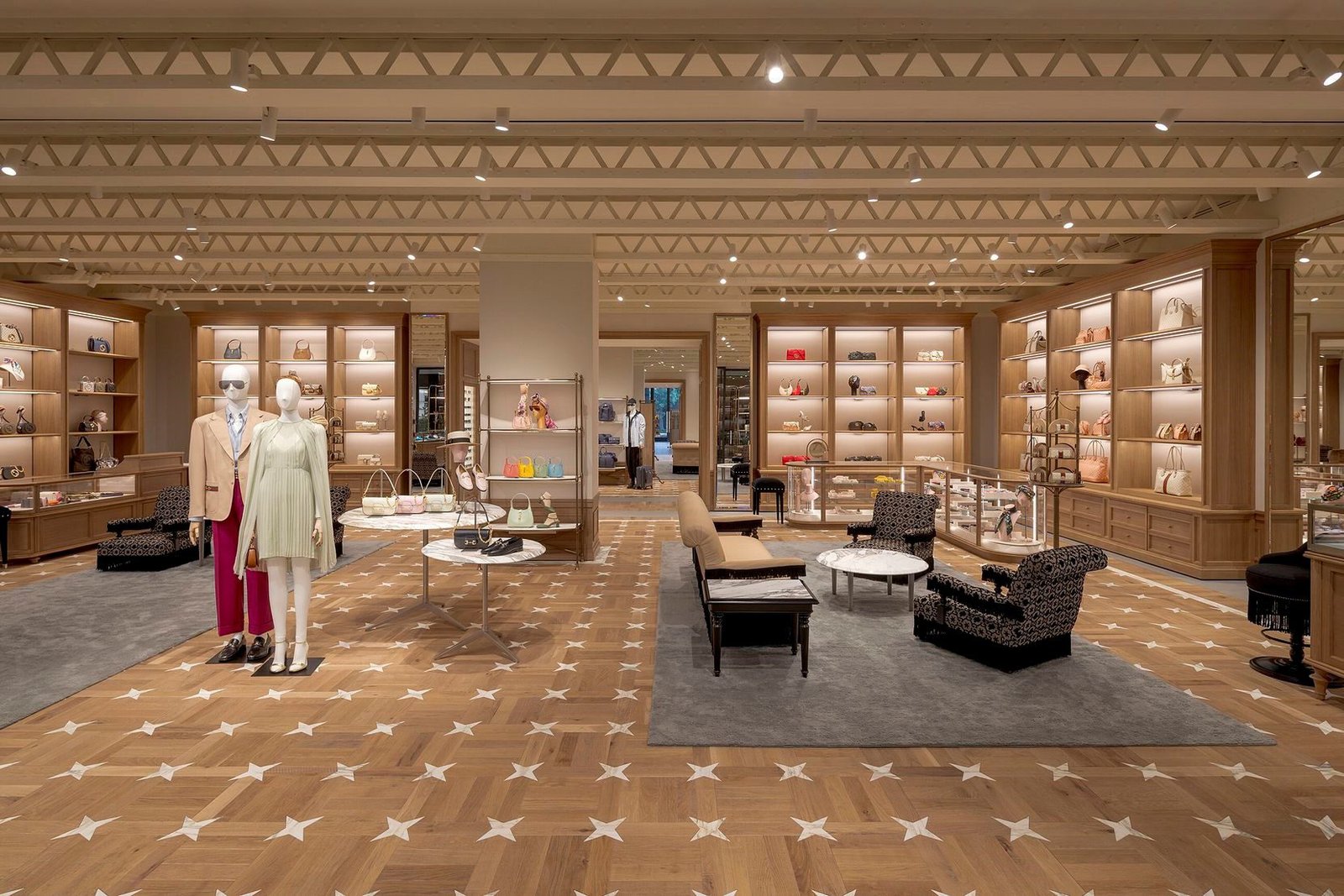
Incorporating contrasting textures into the floor layout can be achieved through several sophisticated material combinations:
- Marble Inlays. Embedding premium marble strips or geometric stone tiles directly into wood planks creates an elegant, high-contrast matrix that bridges classic and modern aesthetics.
- Metallic Borders. Utilizing brass, zinc, or copper accents between wood joints outlines complex patterns and adds a subtle, reflective luxury to the floor surface.
- Wayfinding Elements. Combining contrasting material borders with high-durability wood species like Oak or Hickory/Pecan naturally guides foot traffic through expansive layouts without physical barriers.
Balance Vision with Performance
Ambitious design visions require surfaces that can withstand intense daily use without losing their striking visual character. Utilizing durable custom wood designs solves this challenge by ensuring that intricate pattern artistry is backed by exceptional, long-term structural integrity.
Bringing these complex geometries to life requires a manufacturing partner with deep material expertise and precision engineering capabilities. Woodwright specializes in executing highly sophisticated, project-specific installations that remain beautiful and stable for decades. From perfectly matched tongue-and-groove planks to advanced curving techniques, the technical complexities are handled so the original design intent remains flawless.
Explore the pattern possibilities for your next project. Contact us at Woodwright today to collaborate on a tailored solution that brings the vision to life.