Every architect and designer has been there: you sketch a stunning, sculptural staircase that anchors the entire lobby, only to have the vision chipped away by the difficulty of finding the right stair treads and the practicalities of a commercial build. Between the grinding demands of high-traffic durability and the rigid lines of strict code compliance, the focal point of your design can quickly start to feel like a glorified fire escape.
The challenge is keeping that original aesthetic intent alive while meeting every technical requirement. Specifying high-quality wood stair treads is often the pivot point where function meets form.
In this article, we’ll look at technical strategies to maintain your design integrity and explore practical ways to integrate wood into diverse commercial statements.
The Staircase as a Primary Design
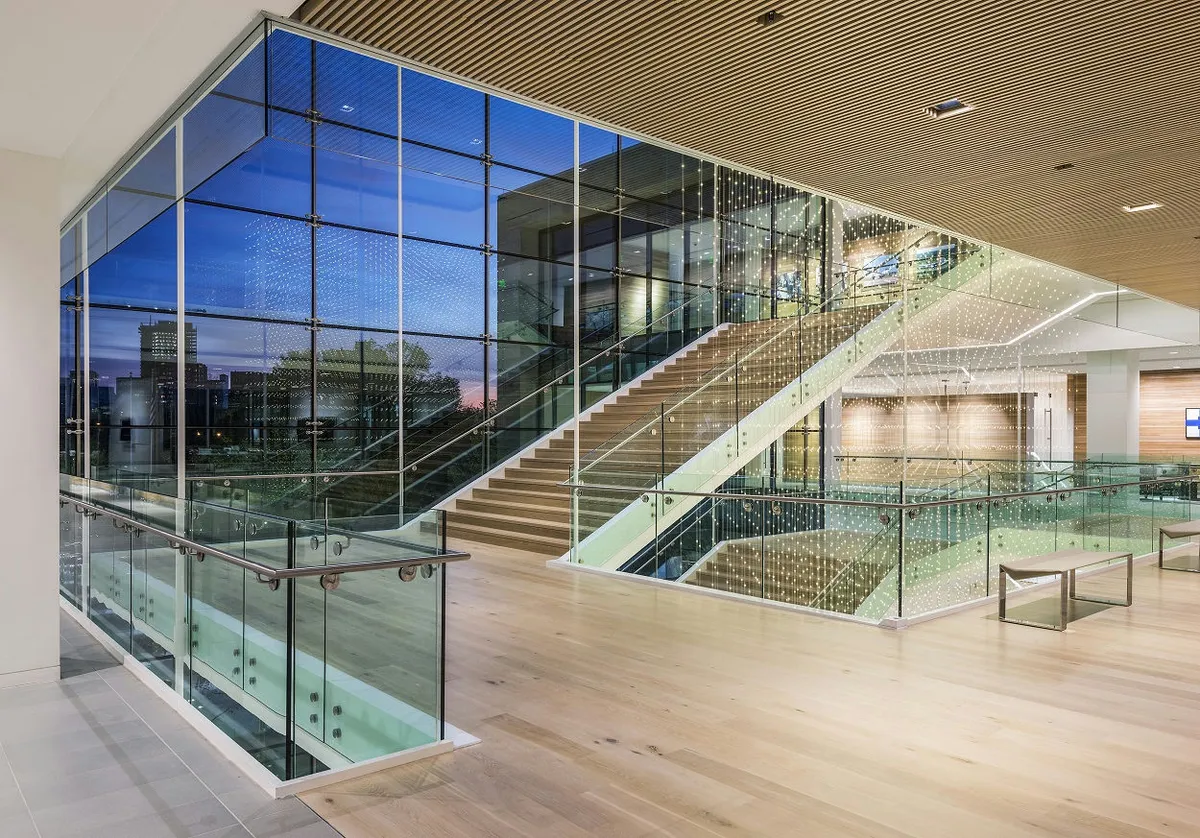
In modern commercial design, the staircase has evolved from a hidden means of egress into a primary architectural gesture. Whether in a corporate headquarters or a luxury retail flagship, these structures now act as the visual anchor of the interior. By moving the staircase into the light, designers can transform a simple transit route into a destination.
This evolution was driven by a shift toward social architecture, where spaces—including staircases—are meant to serve as hubs for spontaneous collaboration. Open atriums and high-volume lobbies now prioritize vertical connectivity to break down silos between floors.
However, achieving this requires meticulous focus on the individual components of the design. Among which are the stair treads, the most tactile part of the installation. When the profile and material of these treads are prioritized, the entire assembly is elevated from a utility to a work of functional art.
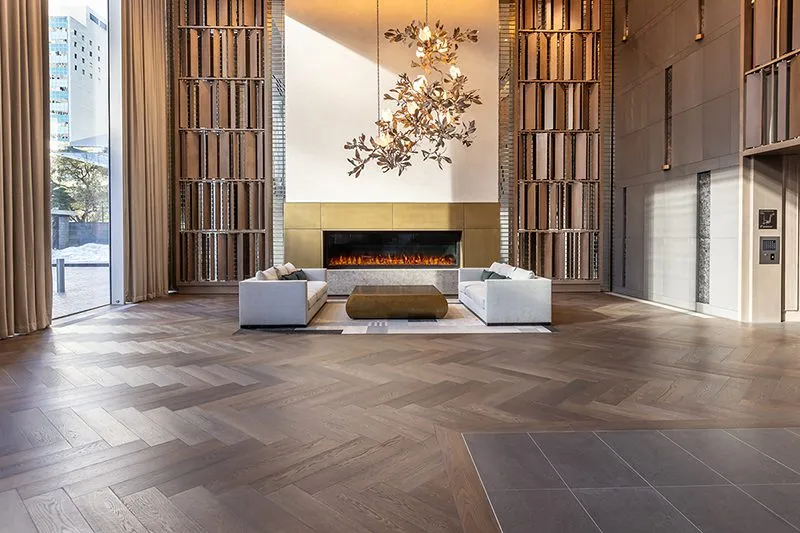
Currently, design trends are shifting away from cool greys and blacks toward a palette of organic warmth. Specifying wood for commercial stairs and stair treads allows architects to lean into this trend, providing a natural contrast to industrial glass and steel. This material choice offers a grounded, human-centric feel that modern commercial interiors increasingly demand.
Design Language: Matching Stair Treads to Architectural Intent
Achieving a high-end architectural statement requires a deep dive into the technical profile of the stair treads. The way a tread interfaces with the supporting structure dictates the overall vibe of the interior. By moving beyond standard dimensions, designers can use wood to signal either structural permanence or modern weightlessness.

Architects and interior designers utilize several key strategies to align their stair treads with the broader architectural intent:
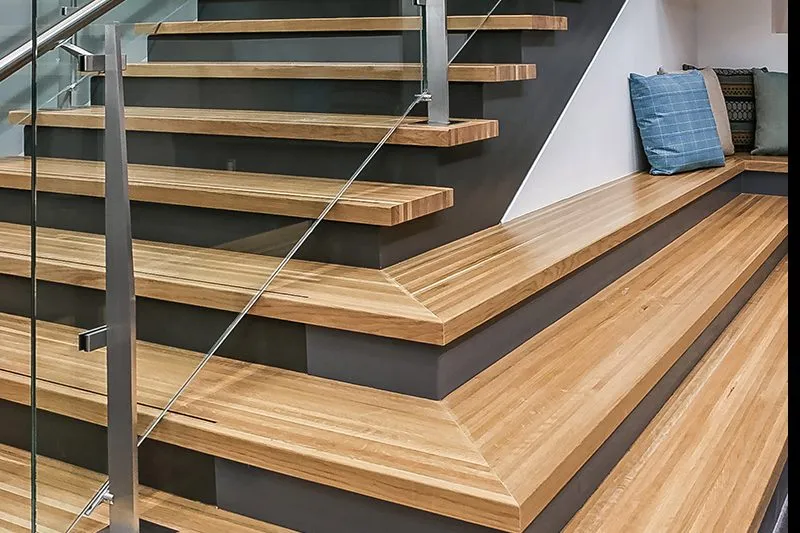
- Monolithic Minimalism: This approach utilizes thick, chunked wood profiles or mitered-box constructions to create a sense of grounded mass. It is particularly effective in brutalist or industrial-modern spaces where the wood provides a warm, organic counterbalance to raw concrete.
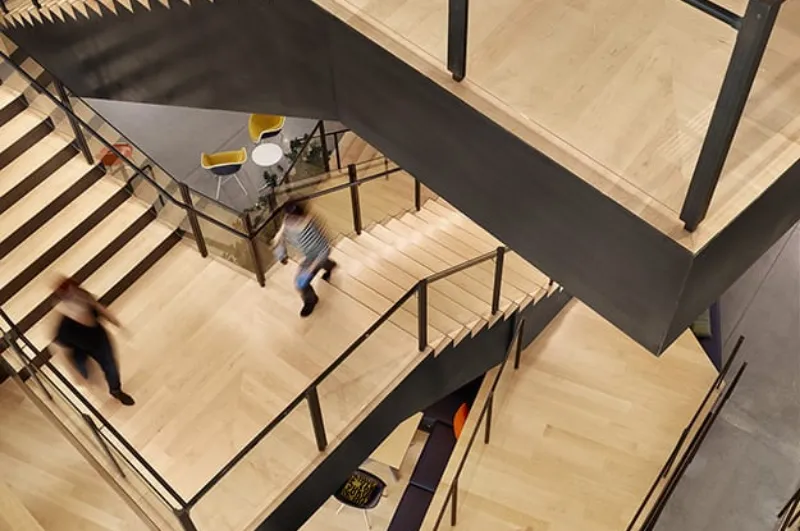
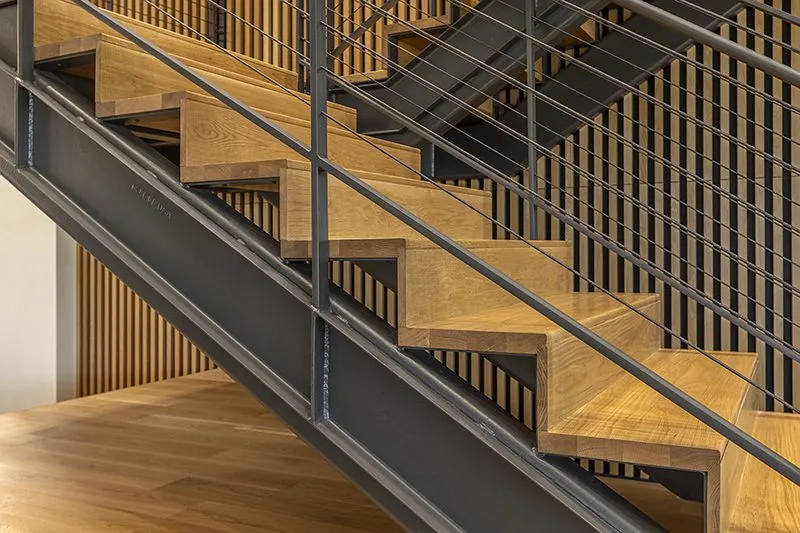
- The Floating Effect: By integrating wood stair treads with hidden steel stringers or knife plates, designers can achieve a gravity-defying look. This allows light to pass through the vertical plane, maintaining an airy and ethereal feel in high-volume commercial atriums.
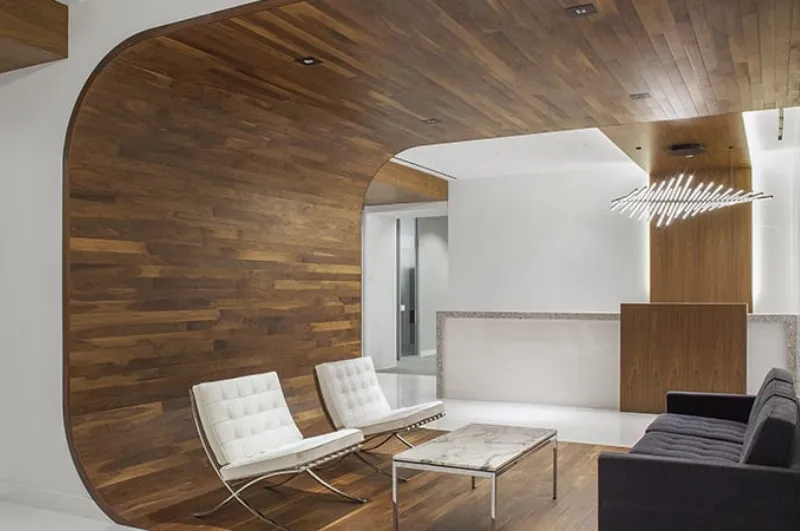
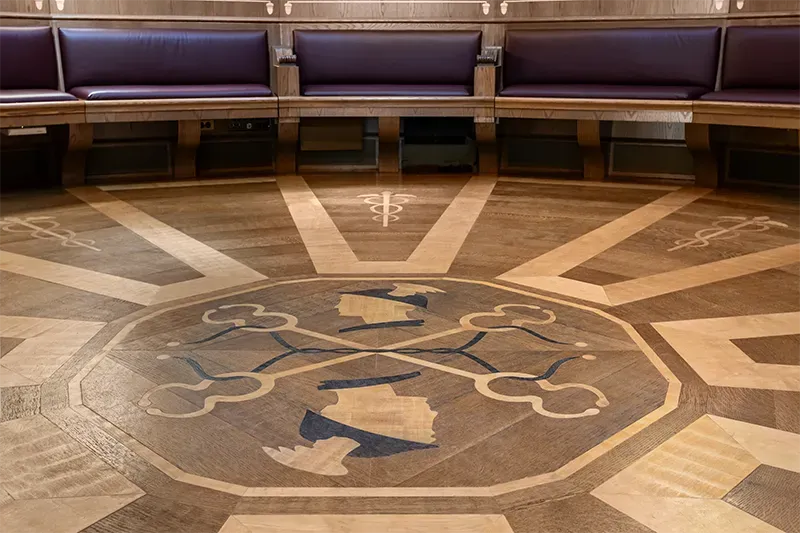
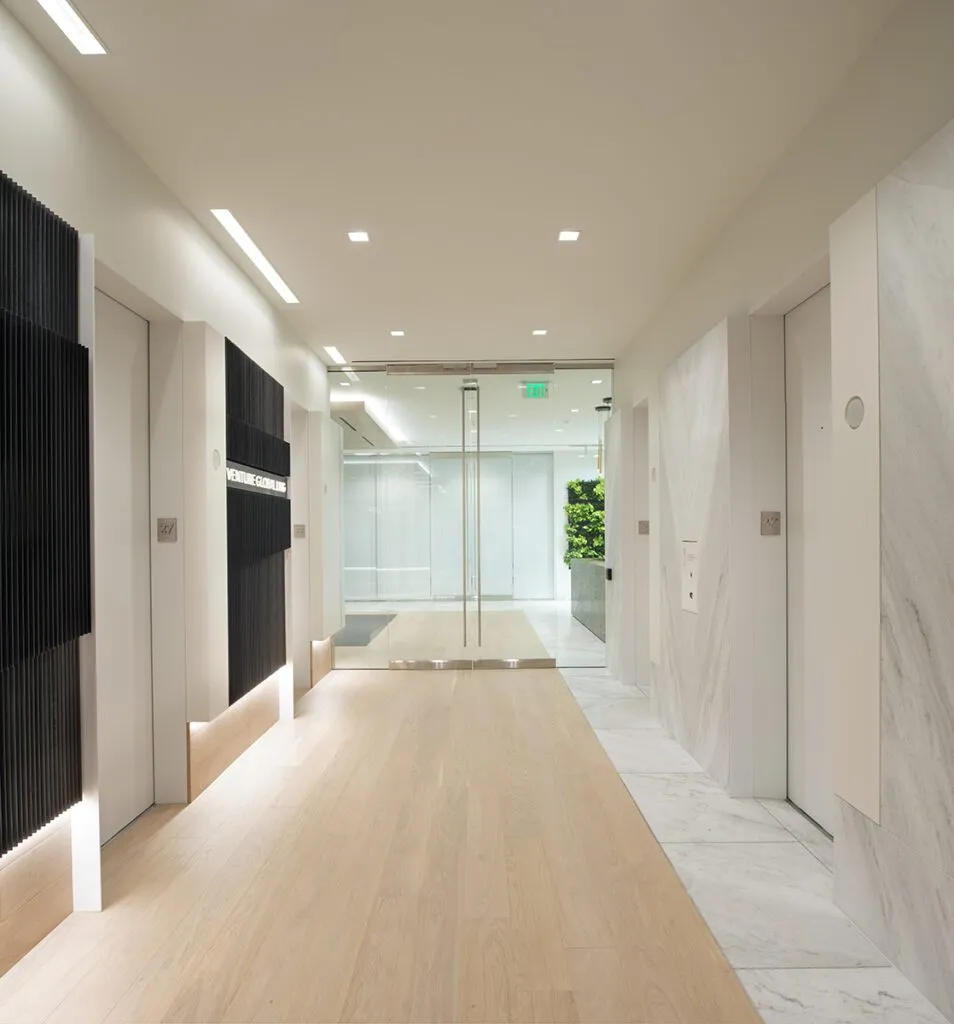
- Visual Continuity: Using a cohesive material palette allows the staircase to emerge naturally from the building’s skin. When the wood species and finish of the flooring perfectly match the stair treads and adjacent wall planks, it eliminates visual clutter and reinforces the sculptural narrative.
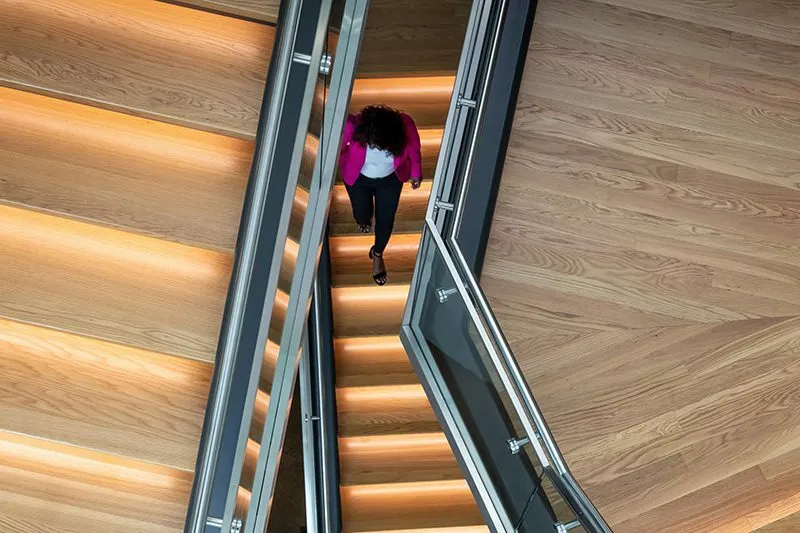
- Integrated Lighting Channels: Precision milling allows for recessed LED channels on the underside or nose of the tread. This technical detail enhances safety while highlighting the grain of the wood and the staircase’s silhouette after dark.
By specifying these custom profiles early in the design phase, architects ensure that the stair treads are not just a finish, but a structural component of the building's identity. This technical intentionality is what separates a standard staircase from a primary design statement.
Practical Applications Across Commercial Spaces
Moving from a conceptual sketch to a finished installation requires understanding the unique pressures of different commercial sectors. Whether you are solving for acoustic dampening in a busy atrium or durability in a retail flagship, your choice of stair treads is the deciding factor.

- The Corporate Hub: The trend of stair-as-furniture has redefined the modern workplace, with massive, wide-plank White Oak stair treads often doubling as stadium seating for all-hands meetings. Designers also began embedding technology in stairs, such as discreet wireless charging pads or recessed power outlets directly into the wood treads to support mobile workstations.
- Luxury Retail & High-End Flagships: The goal in retail is often to create a branded journey between floors using premium tactile materials. Utilizing custom-stained Pecan for the stair treads provides a sophisticated contrast to glass shelving and metallic fixtures while maintaining elegance under heavy foot traffic.
- The Hospitality Atrium: A sweeping spiral staircase often serves as a central piece of functional art and a primary visual anchor. Custom-radius stair treads must be precision-milled to match the building's curves perfectly, often featuring subtle LED technology in stairs through recessed lighting channels to create a dramatic silhouette for guests.
Elevate the Standard
Choosing the right stair treads is the final, critical step in transforming a structural necessity into a lasting architectural statement. By balancing technical precision with the organic warmth of wood, you ensure your design remains a functional focal point for years to come.
Ready to specify custom wood for your next project? Contact the Woodwright team today to discuss your vision.