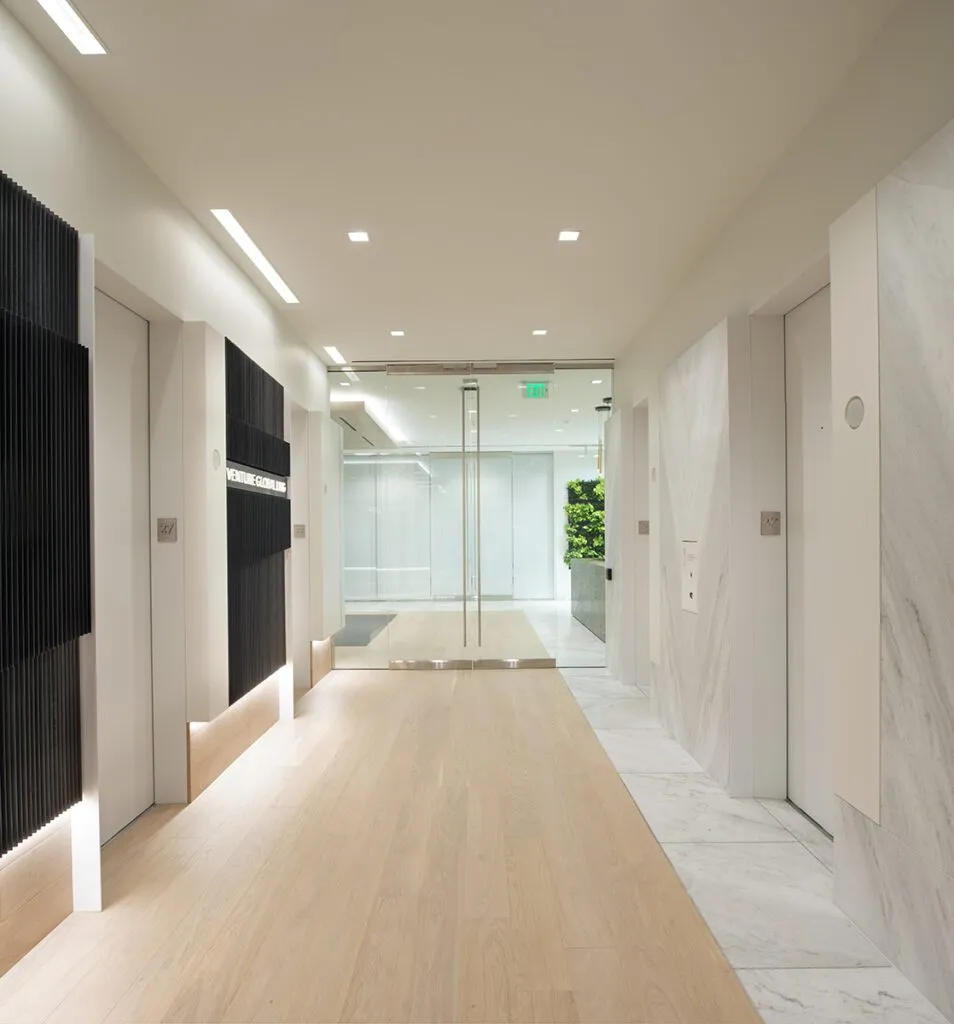
An accent wall is more than a design trend. In a professional environment, it serves as a critical architectural tool that guides the eye and defines the purpose of a room.
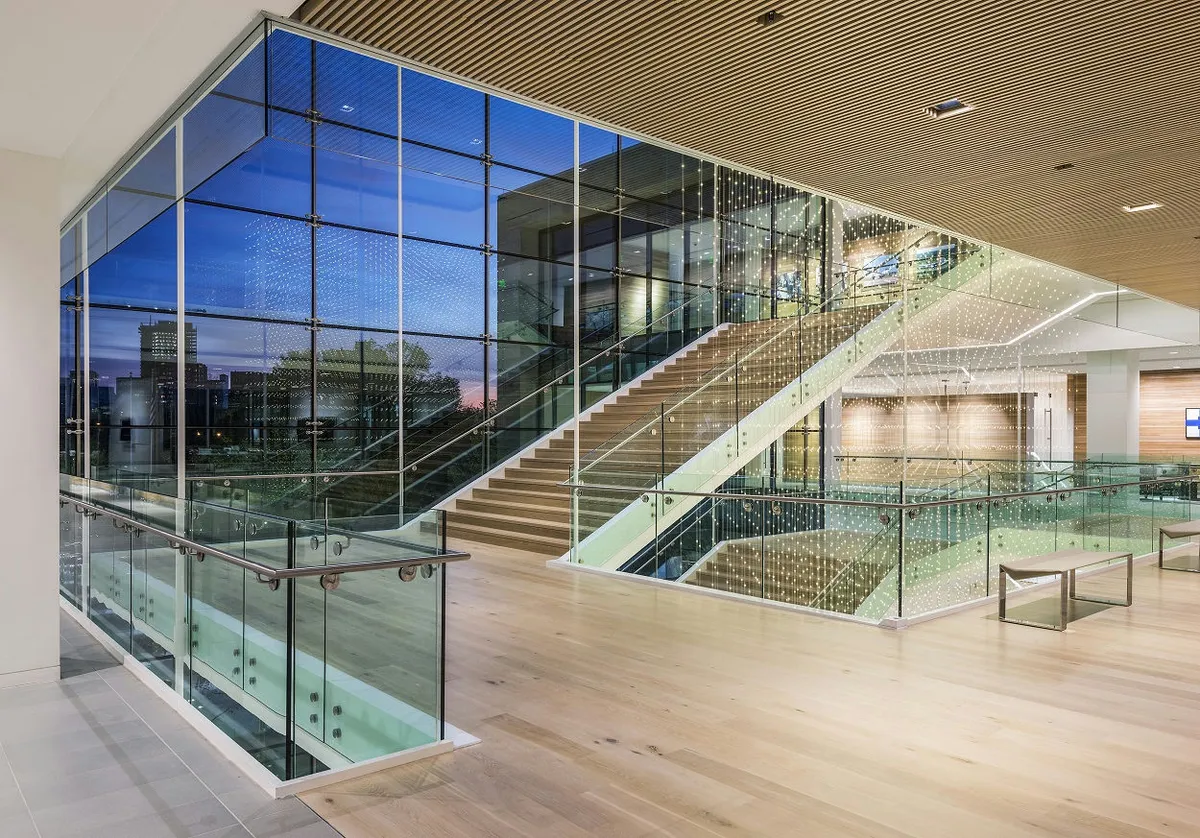
When you specify a wood plank accent wall, you are introducing organic warmth and texture into a space often dominated by glass and steel. This natural element provides a necessary tactile break that humanizes commercial interiors.
In this article, we’ll explore how you can use these materials to elevate your next project.
Define the Zone: Use a Wood Plank Accent Wall to Anchor Key Areas
In large-scale commercial interiors, open floor plans often need a visual anchor to prevent the space from feeling aimless. You can use a wood plank accent wall to signal a change in programming, such as marking a reception desk or a collaborative lounge. This strategy establishes a clear spatial hierarchy that helps occupants navigate the environment intuitively.

Consider these strategies to anchor your next project:
- Specify high-contrast species to pop against neutral drywall, making the feature area instantly recognizable from across a lobby.
- Select lighter tones like European Oak to keep breakout areas feeling energetic and airy for student centers or creative offices.
- Choose deep, dark hues such as Sapele or Walnut for your wood plank accent wall to add a sense of executive permanence and quiet focus to a boardroom.
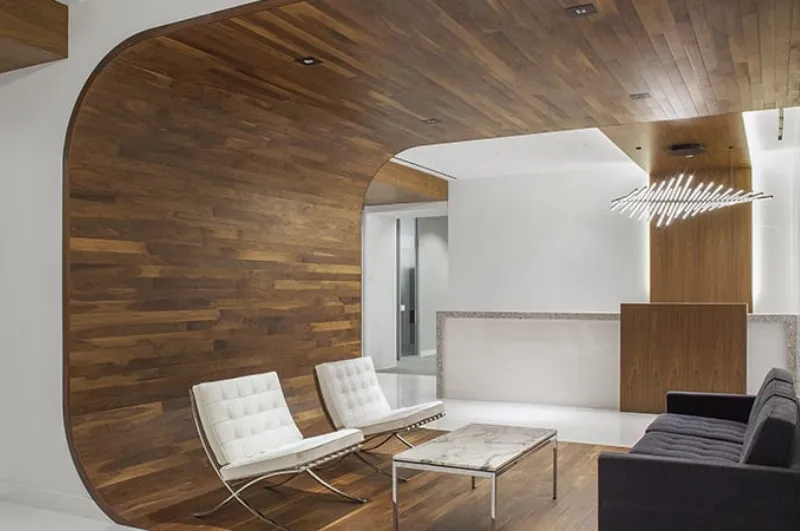
- Coordinate the wall color with fixed furniture like reception desks or stone counters to create a unified, intentional hub.
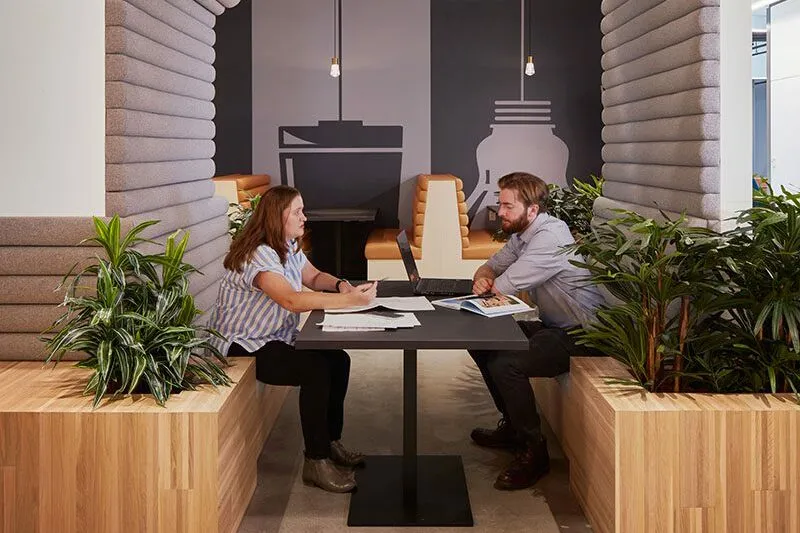
- Utilize warmer stains on the wood to naturally draw people toward collaborative seating areas and social zones.
Strategic anchoring allows you to influence how a person feels the moment they enter a room. By directing the focus toward a wood plank accent wall, you create a sense of arrival that feels both intentional and professionally curated.
Leverage Linear Continuity: Extend the Flooring to the Walls
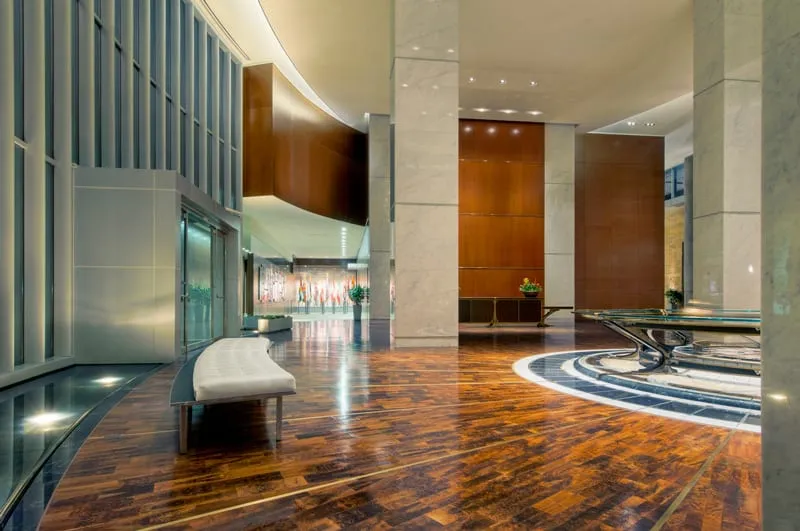
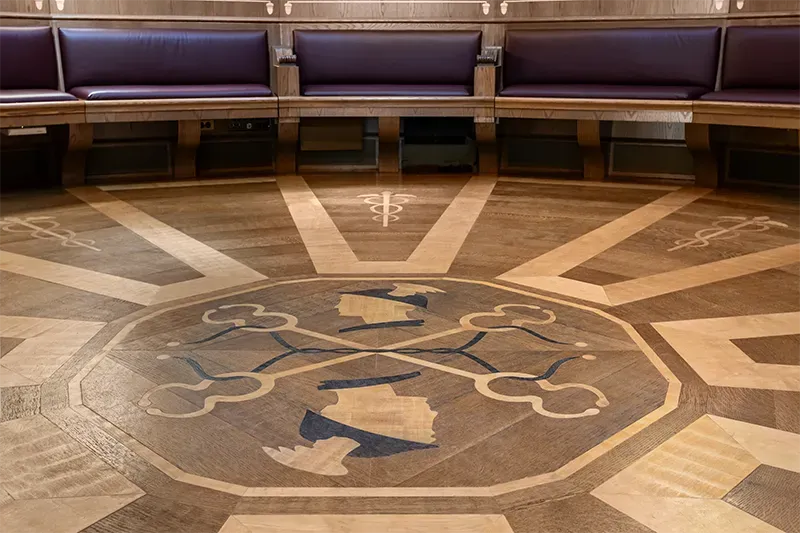
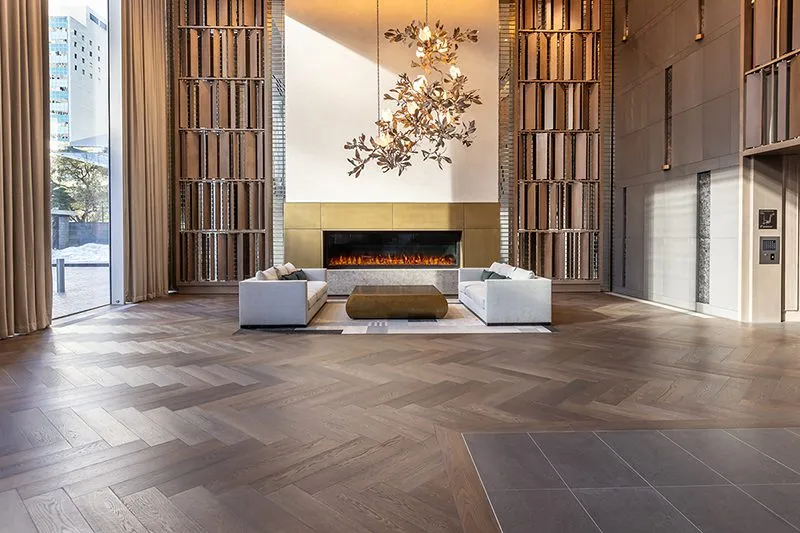
Achieving a high-end look in commercial design often comes down to the elimination of visual clutter. By extending your flooring material onto the vertical plane, you create a seamless wraparound effect that feels custom and cohesive. This use of a wood plank accent wall to mirror the ground plane is a powerful way to simplify a complex material palette.
Here are a few ways to manage continuity and transitions in your design:
- Specify the same cut and grade for both the floor and the wall to ensure the grain pattern remains consistent as it travels upward.
- Source from a single manufacturer to synchronize the species and finish, ensuring your wood plank accent wall does not clash with the horizontal surfaces.
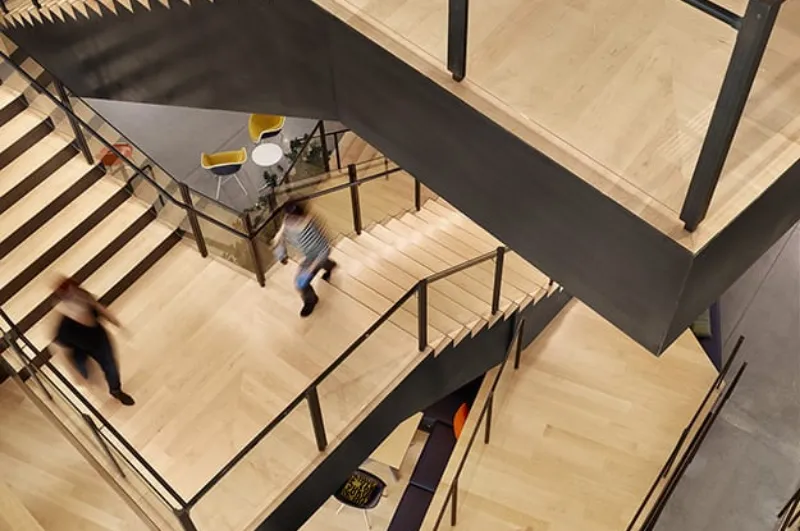
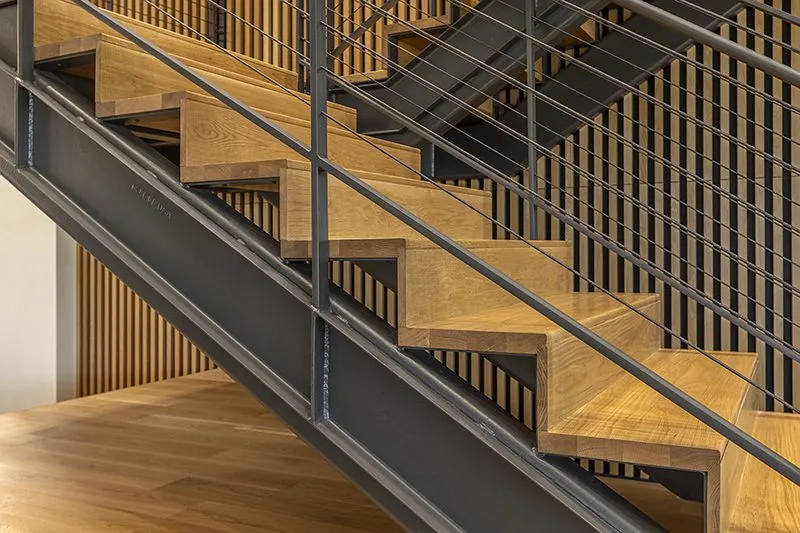
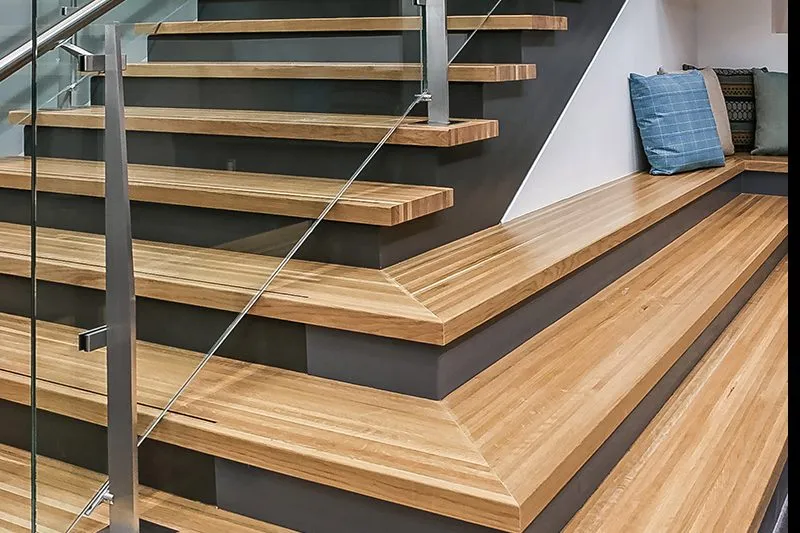
- Use matching stair treads to bridge the gap between floors and vertical accents, creating a unified architectural spine through the building.
- Detail clean terminations where the wood meets other materials like glass or stone to maintain a minimalist, modern aesthetic.
- Coordinate factory-applied finishes to ensure the color on the wall perfectly reflects the color on the floor regardless of site lighting.
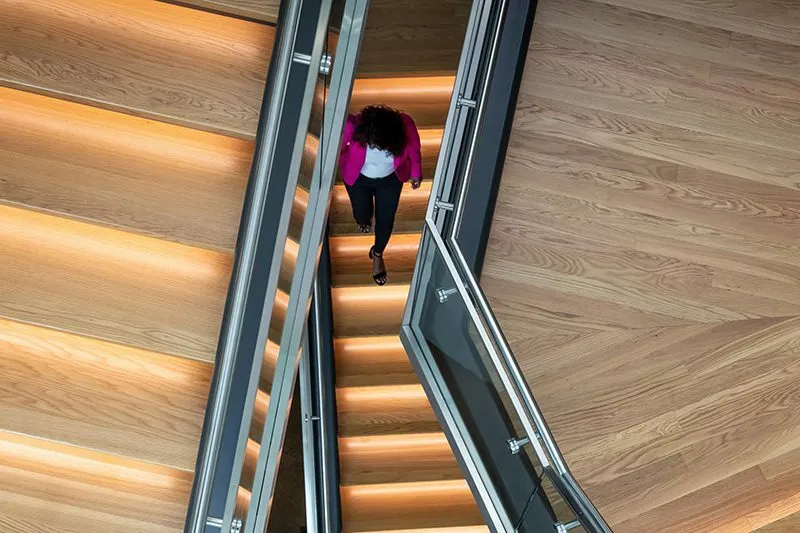
- Align plank widths across all surfaces to create a rhythmic, linear flow that guides the eye through every transition in the room.
- Match the sheen levels of your wood plank accent wall to your flooring to prevent distracting light reflections that break the visual continuity.
Strategic coordination ensures that every element of the interior feels intentional and architecturally sound. This level of detail is essential when designing integrated interiors with architectural woodwork where every surface must work in harmony.
Play with Orientation: Influence the Perception of the Space
The direction of your planks acts as a visual shorthand that can completely alter the perceived dimensions of a room. Whether you are working with a narrow corridor or a cavernous lobby, the way you install a wood plank accent wall dictates how the eye travels through the space. This geometric strategy allows architects to correct or enhance structural proportions without changing the footprint.
Consider these strategies for using orientation to shape your space:
- Install planks vertically to draw the eye upward, emphasizing ceiling height and adding a sense of modern grandeur to a foyer or atrium.
- Opt for a horizontal layout on your wood plank accent wall to broaden a room, making tight corridors or small waiting areas feel more expansive and grounded.
- Utilize diagonal patterns to create a sense of movement and energy in high-traffic transition zones like student unions or creative agencies.
- Align the plank direction with primary light sources to highlight the natural grain and depth of the material.
Experiment with Textures and Patterns: Create Architectural Interest
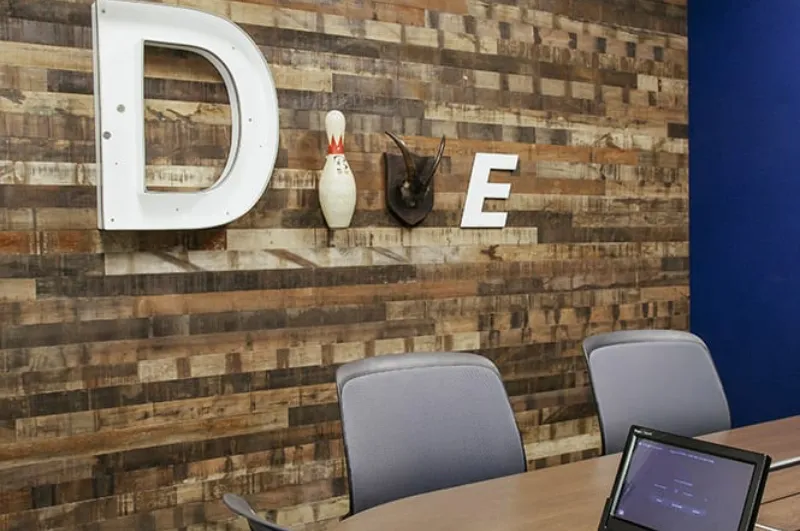
Texture adds a layer of sophistication that transforms a flat surface into a multi-dimensional feature. By moving beyond smooth finishes, you can use a wood plank accent wall to introduce shadow and depth into a commercial environment. This tactile approach encourages engagement and provides a high-end feel that standard wall coverings cannot replicate.

Here are a few ways to introduce texture into your design:
- Utilize CNC and laser-cut techniques to carve intricate patterns or branding directly into the surface of the planks.
- Incorporate wire-brushed finishes to highlight the natural grain of species like White Oak, providing a rugged yet refined texture.
- Use end-grain blocks or specialized milling to create a focal point that serves as a conversation piece in high-traffic lobbies.
Experimenting with the tactile nature of wood allows you to create a space that feels curated rather than manufactured. When you prioritize texture, your wood plank accent wall becomes a compelling architectural element that defines the character of the entire interior.
Make Your Space Stand Out
A well-executed wood plank accent wall is a powerful tool for any designer. It bridges the gap between raw architectural structure and high-end interior finishing. By focusing on continuity, orientation, and texture, you can create a feature space that is both functional and visually stunning. Woodwright is here to help you bring that vision to life with precision and expertise.
Make your space stand out with made to order solutions from Woodwright. Get in touch with our representatives today for more information.