
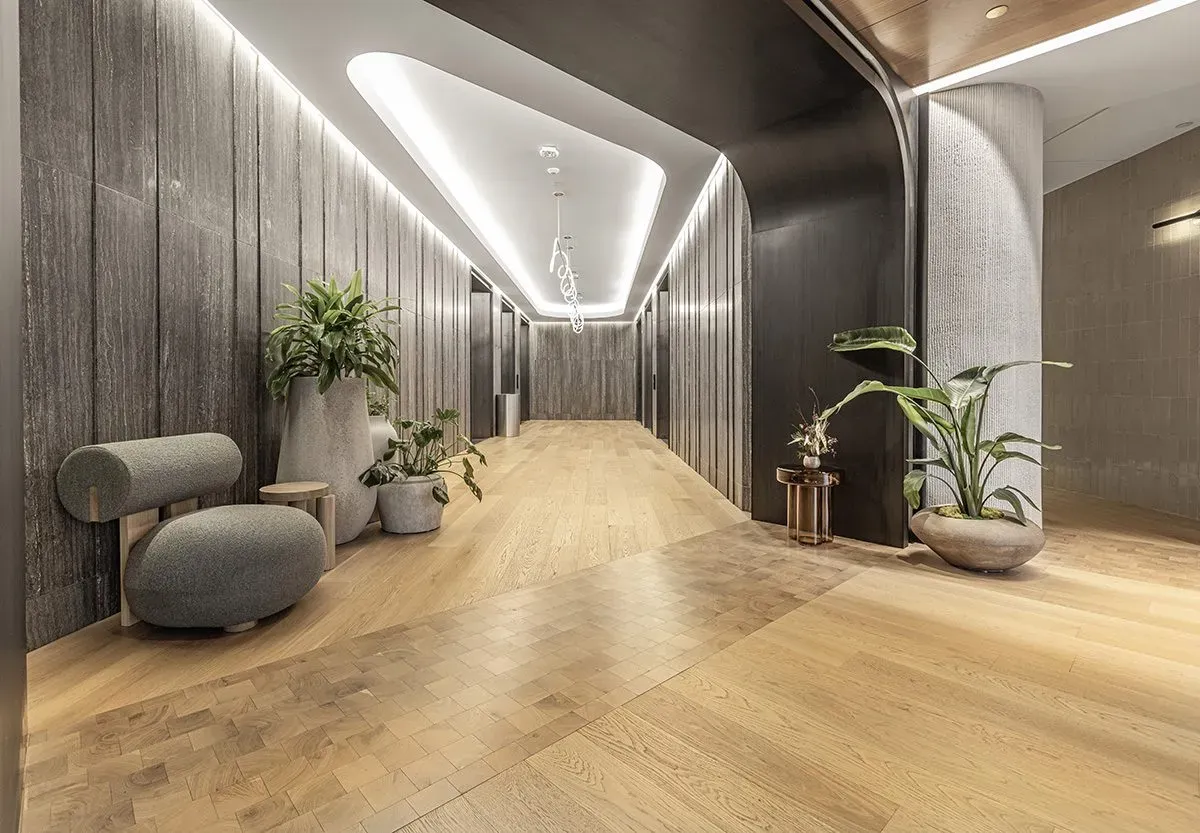
How White Oak Engineered Wood Flooring Performs in Commercial Interiors
White Oak engineered wood flooring combines a hardwood wear layer with a layered core designed to improve dimensional stability. That construction gives it an edge in commercial spaces, where flooring needs to handle heavy foot traffic without losing its warmth or character. The result is a floor that holds its own in high-visibility interiors.
However, choosing the right flooring means understanding what actually makes it perform well over time. So, to help you out, this article walks through the core characteristics of White Oak engineered flooring and how architects and designers can put them to work in commercial projects.
Key Characteristics of White Oak Engineered Wood Flooring
Not all wood flooring is built for the demands of a commercial interior. White Oak engineered wood flooring stands up to the job because of how it is constructed, not just how it looks. Its layered core and durable surface make it a reliable pick for spaces that need to perform, and the species brings its own advantages to contemporary interiors beyond just structure.
Here is what sets it apart:
Dimensional Stability. The cross-layered core resists the expansion and contraction that solid wood is prone to. That means fewer gaps, less cupping, and a floor that holds its shape across large commercial footprints.
Adaptability Across Design Applications. It works with a wide range of finishes, plank widths, and grain patterns. Designers can shift the look from warm and traditional to sleek and modern without changing the species.
Compatibility with Concrete Slabs and Radiant Heat Systems. North American Oak is known for its inherent stability, which makes it a strong candidate for radiant heat applications when installed within NWFA-recommended surface temperature limits. That opens up flooring options in buildings where solid wood would be too risky.
Precision Manufacturing for Consistent Performance at Scale. Factory-controlled milling keeps plank dimensions and finish consistent across hundreds of boards. On a commercial floor, that consistency prevents mismatched panels from standing out.
A Wear Layer Built to Be Refreshed, Not Replaced. The engineered wear layer allows the floor to be sanded and refinished multiple times over its life. That extends the floor's usable life well beyond its original finish.
Together, these characteristics explain why White Oak engineered flooring performs differently than a standard hardwood product. Its value goes beyond surface appearance. The engineered construction is designed to perform reliably in demanding, high-traffic environments.
Maximizing White Oak Engineered Flooring in Commercial Design
Specifying White Oak engineered flooring is only half the equation. How it gets planned, matched, and installed determines whether it actually performs the way it should in a commercial space, particularly in flexible commercial workspaces where layouts and use cases shift over time. A few strategic decisions early in the design process make a real difference down the line.

Keep these strategies in mind:
Specifying the Right Wear Layer Thickness for Project Lifespan. A thicker wear layer supports more refinishing cycles over time. Matching that thickness to the expected traffic and lifespan of the space avoids premature replacement.
Coordinating Plank Widths and Grades with the Overall Design Palette. Wider planks read as more contemporary, while tighter grades create a more uniform, formal look. Choosing width and grade early keeps the material aligned with the rest of the design.
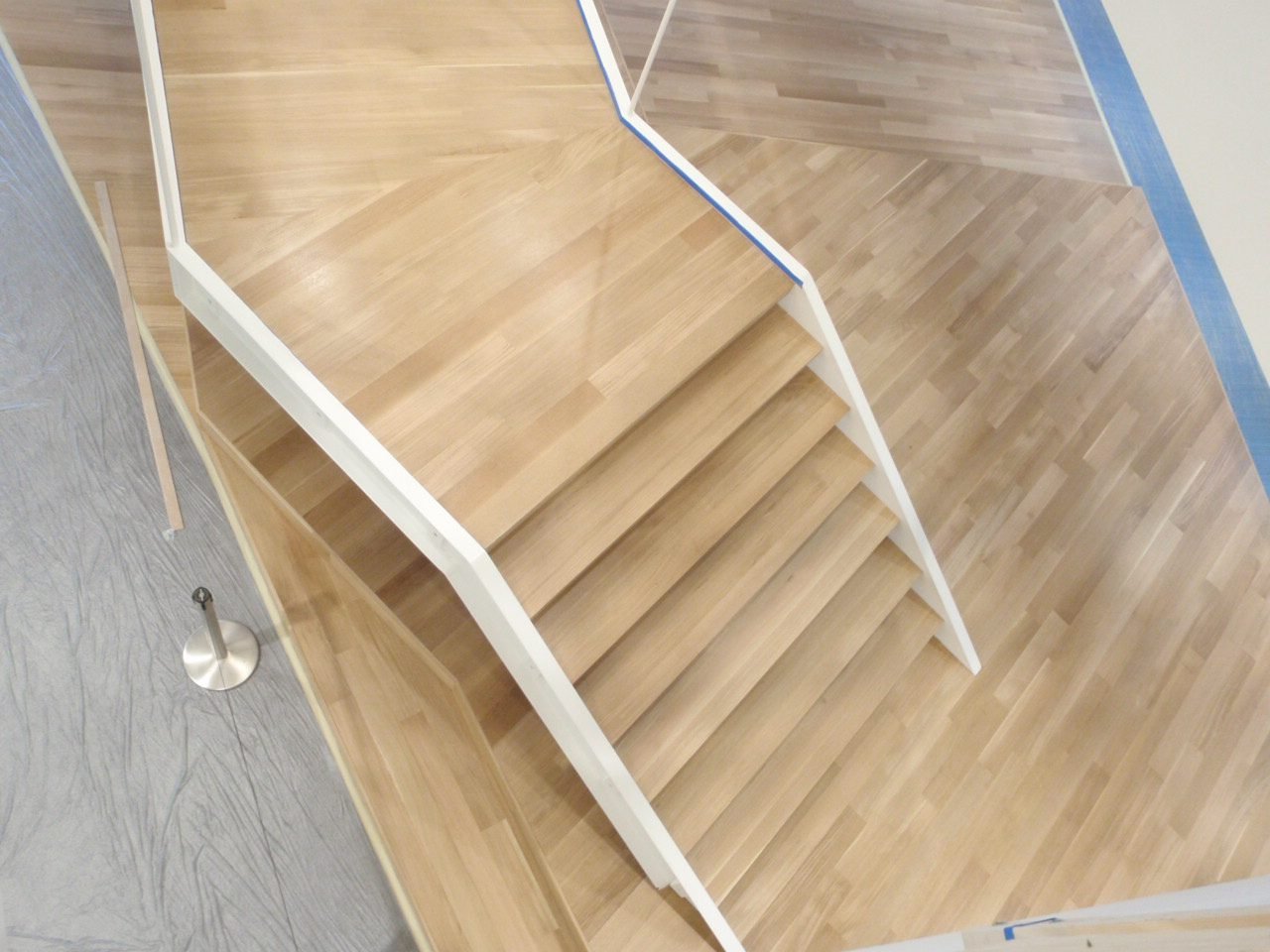
Pairing Flooring with Wall, Ceiling, and Stair Applications for a Cohesive Look. Matching flooring with wood on walls, ceilings, or stairs ties a space together instead of treating each surface separately. This approach is especially effective when specifying European White Oak flooring for contemporary interiors, where material continuity carries the design.
Planning for Acclimation and Installation Timelines on Commercial Schedules. Engineered flooring generally acclimates faster than solid wood, but it still needs to be factored into the project timeline. Building that window early keeps installation on schedule.
When these decisions are made with intention, White Oak engineered flooring does more than cover a floor. It becomes part of how a commercial interior is designed to feel finished and considered from the ground up.
See What White Oak Can Do for Your Project
White Oak engineered wood flooring gives commercial interiors a floor that looks refined and holds up to real demands. Its construction, adaptability, and long-term performance make it a smart choice for architects and designers working on high-traffic spaces. When specified and installed thoughtfully, it becomes a lasting part of the design.
At Woodwright, we manufacture White Oak engineered flooring made to order for commercial projects across the country, and we help coordinate it with matching wall, ceiling, and stair applications for a cohesive result. Our team works directly with architects and designers to bring that vision to life. Find a representative today to start the conversation.