
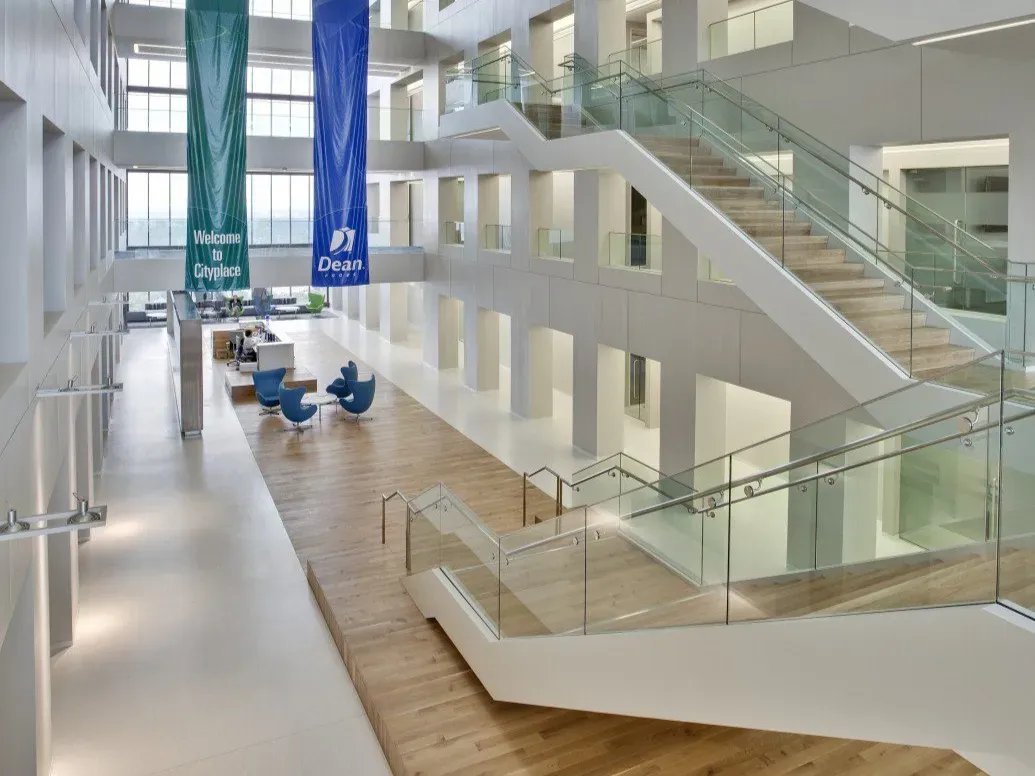
How White Oak Stair Treads Support a Consistent Material Palette
Consistency is one of the first things people notice in a commercial interior, even if they cannot name why a space feels put together. A lobby can have great finishes throughout, but the moment the stair treads look mismatched, the whole design starts to feel disjointed. White Oak stair treads solve that problem more reliably than almost any other species on the market.
What keeps a space from feeling disjointed usually comes down to a few practical qualities, not just good looks. This article breaks down what makes White Oak stair treads such a dependable choice for architects and interior designers building a cohesive palette from the ground up, stair by stair.
Naturally Uniform Look That's Easy to Match
Matching new stair treads to existing flooring is one of the trickier parts of a commercial buildout. Species with wild color swings can throw off an otherwise tight palette the moment they sit next to flooring from a different batch. White Oak stair treads help minimize variation from board to board, making it easier to maintain a consistent appearance across the stair.
That consistency comes down to a few specific traits.
Tight, even grain structure. White Oak grows with a denser, more uniform grain than many domestic hardwoods, so boards from the same order look nearly identical. That uniformity holds even when treads and flooring come from separate production runs.
Predictable color response. The wood's natural tone sits in a narrow range, giving designers a dependable starting point before stain even enters the picture.
Fewer visible outliers. White Oak's grain keeps heavy streaking and color spikes to a minimum. This matters most in commercial applications where every tread needs to look like it’s part of the same material.
That kind of predictability is exactly why architects and designers treat White Oak stair treads as the safer bet for a palette that needs to hold together at every turn.
Grain Patterns Flexible Enough to Fit Any Design Direction
Every project comes with its own design language, and stair treads need to fit into that vision without forcing a compromise. White Oak stair treads offer enough variation in cut and grain pattern to support a wide range of aesthetics, all from a single species. That range is what makes White Oak useful across such different project types.
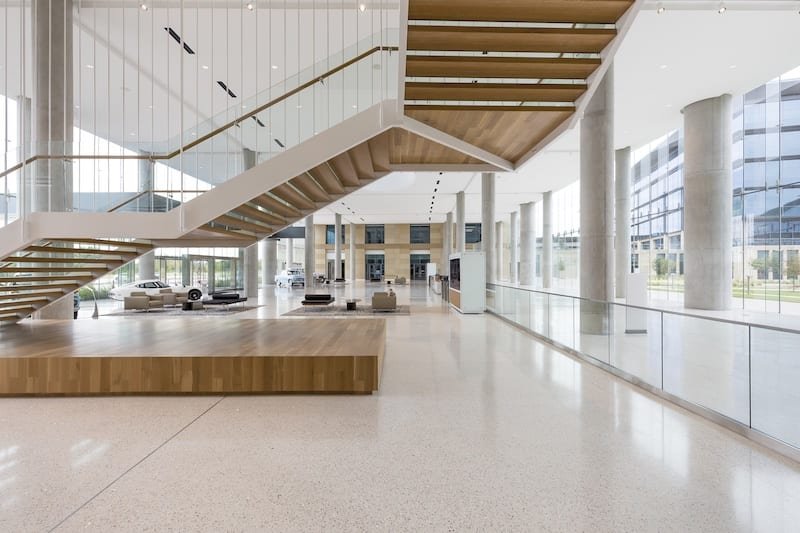
Here are some of the cut options for White Oak that account for most of that flexibility:
Plain sawn. This cut produces the cathedral grain pattern most people associate with Oak, with bold arches and movement that suit warmer, more traditional interiors.
Rift sawn. Milled to minimize flake and grain figure, rift cut boards produce a straighter, more linear look that fits sleek, contemporary spaces.
Quarter sawn. This cut highlights the wood's natural ray fleck and adds a subtle texture, giving designers a middle ground between the other two options.
Choosing the right cut is one of several decisions that shape how bespoke stairs come together, alongside species, finish, and construction method.
That range of grain options means a single species can support very different design directions without ever breaking from the palette. Designers get room to explore aesthetically while staying anchored to a material that behaves the same way from project to project.
Durable Enough to Perform Like the Rest of the Palette
A material palette only stays consistent if every element in it wears at roughly the same rate. If the stair treads scratch and dull faster than the surrounding flooring, the mismatch shows up fast, no matter how well everything matched on day one. White Oak holds up well enough to keep pace with the rest of a commercial interior.
Outlined below are some of the performance factors of White Oak that make it durable:
High hardness rating. White Oak carries a Janka hardness rating of 1,350 pounds-force, putting it well above many domestic species used in commercial interiors.
Resistance to everyday wear. That density translates into fewer dents, scuffs, and scratches from daily foot traffic, keeping treads looking closer to new for longer.
Compatibility with commercial finishes. White Oak accepts the same protective topcoats used across commercial stair specifications, so treads and flooring can share a comparable wear layer.
When one material in a space ages faster than the rest, it draws the eye for the wrong reasons. White Oak's durability keeps that from happening, letting the palette stay intact well past installation day.
Finishes That Adapt to Any Adjacent Wood Element
Getting a species right only solves part of the palette equation. Two boards of the same wood can still look mismatched if the stain formulas do not line up, which puts real pressure on how a finish gets specified and applied. White Oak makes that part of the process far more manageable.
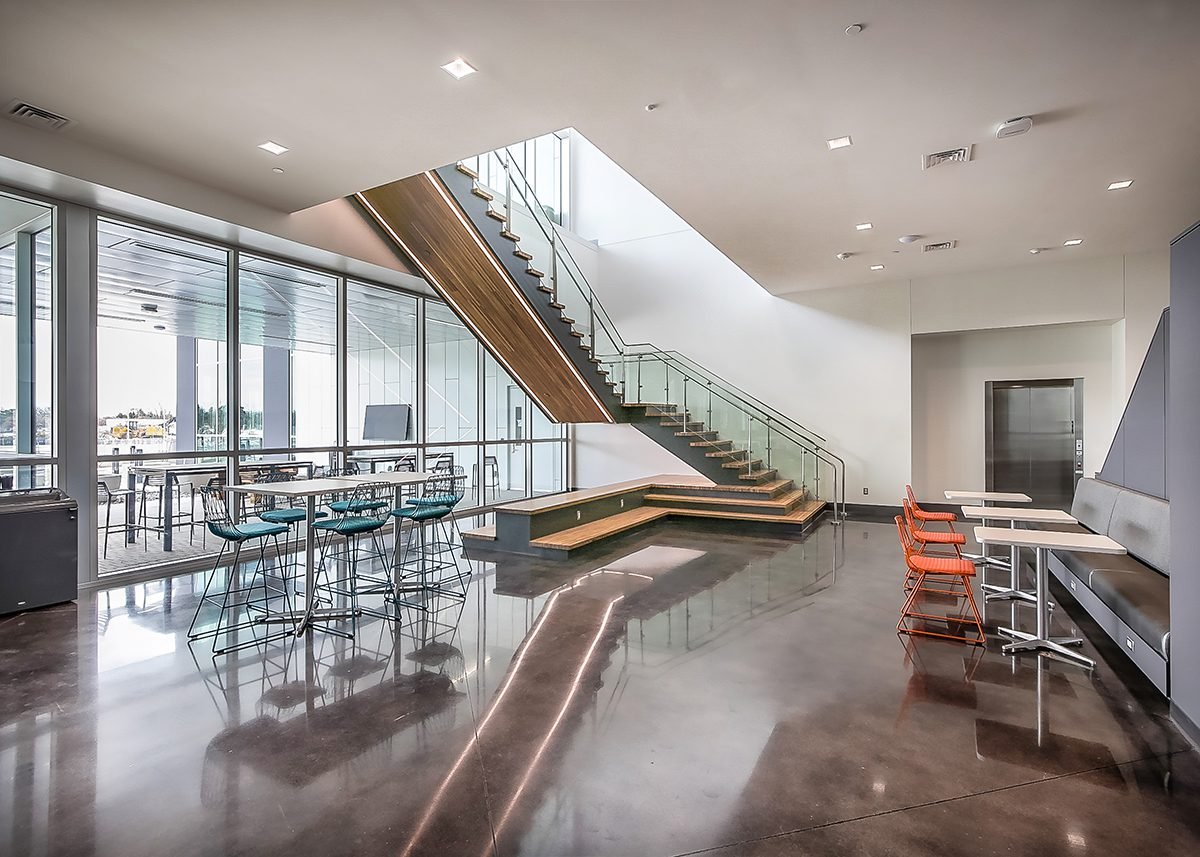
That flexibility comes from how the wood interacts with stain and finish, such as:
Even stain absorption. White Oak's open, consistent grain takes color evenly across a board, so custom formulas translate predictably from a sample to a finished tread.
Match capability across surfaces. Because the same species is often used for flooring, treads, and wall or ceiling plank, a single stain formula can be applied across every surface for a true match.
Factory-controlled consistency. Shop-applied finishes, a hallmark of made-to-order stair treads, remove the variability that comes with finishing multiple elements on different job sites or timelines.
A palette can only be as consistent as its weakest match, and finish is often where that match breaks down. White Oak's predictable response to stain closes that gap, keeping every wood element in a space reading as one continuous material story.
Specify White Oak Stair Treads for Your Next Commercial Project
A consistent material palette starts with a species that behaves the same way everywhere it is used, and White Oak delivers on that reliably. At Woodwright, we manufacture made-to-order White Oak stair treads alongside flooring, wall, and ceiling planks. Every element is milled and finished under one roof to keep color and grain aligned.
Our team partners with architects and interior designers nationwide to coordinate wood elements across commercial projects. Find a representative today to start your next specification.