

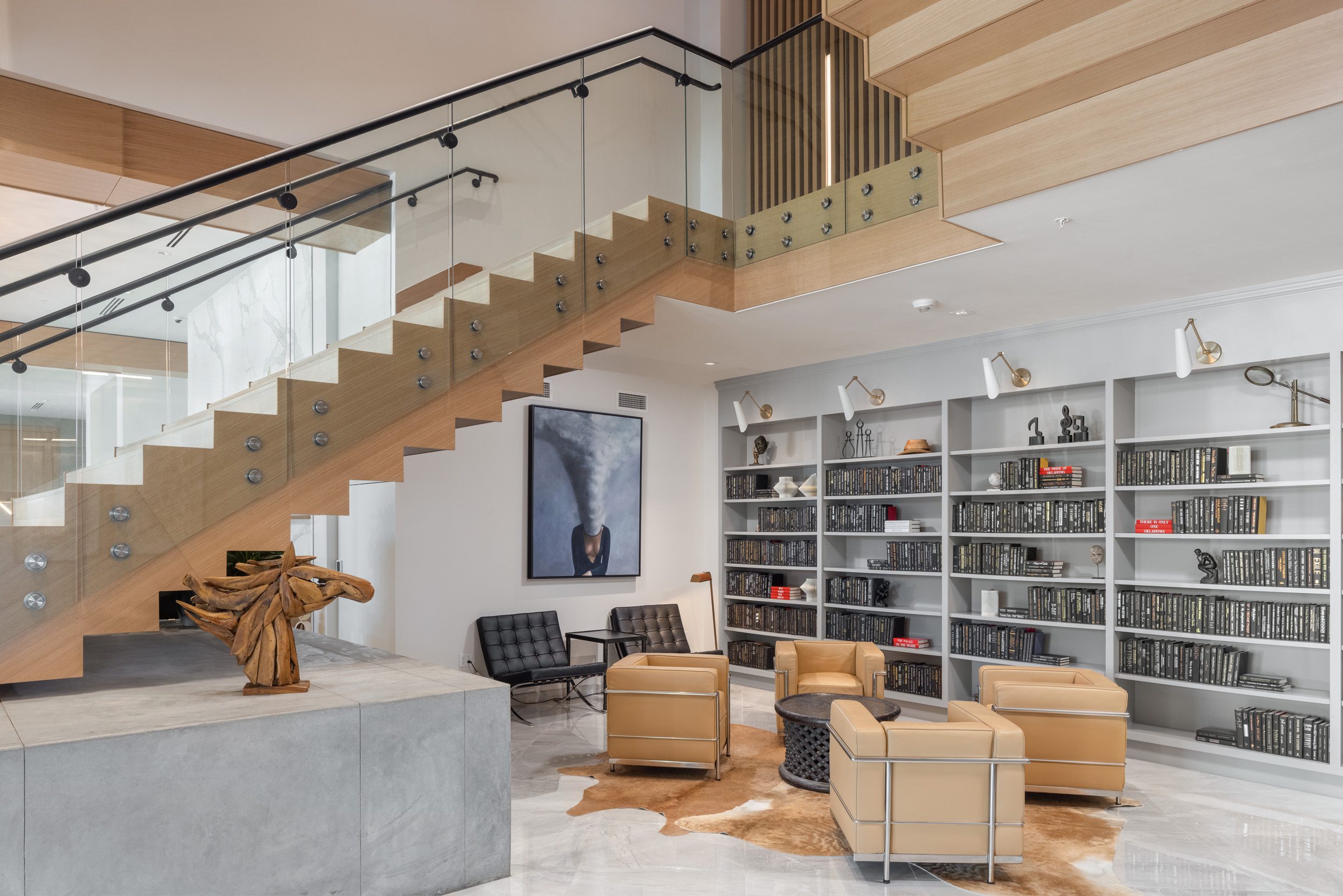
Stairs are one of the first things people notice in a commercial building. They set the tone before anyone even reaches the lobby desk. Solid wood stair treads are a great choice to achieve a design aesthetic that makes a statement.
For architects and designers, that first impression matters. A well-specified staircase can turn a functional path into a showpiece. But solid wood isn't always the right call for every project or budget.
Here's a look at when solid wood stair treads make sense, how to specify them, and what to consider along the way.
What Types of Projects Benefit from Solid Wood Stair Treads
Solid wood stair treads can be a beautiful addition to a design, but they're not always the right fit for every commercial project. Budget, timeline, and design intent all play a role in that decision. It also helps to think about the space the same way you would with hardwood flooring, since the grade and character selected can shape the overall feel of a project.

That said, certain project types tend to get the most value from solid wood stair treads. Here's where they tend to shine:
- Corporate Headquarters and Offices. Solid wood treads add warmth to lobbies and open stairwells. They help balance out glass, steel, and concrete finishes common in office design.
- Hospitality Projects. Hotels and restaurants often want a memorable first impression. Solid wood stairs bring a level of craftsmanship guests notice right away.
- Higher Education Buildings. Campus stairwells often double as informal gathering spots between classes. Solid wood treads add a sense of permanence that fits a school's legacy and reputation.
- Mixed-Use and Multifamily Lobbies. These spaces compete for tenants who expect a residential-grade experience. Solid wood treads help the lobby feel more like a boutique hotel than a standard apartment building.
- Adaptive Reuse Projects. Older buildings with existing wood details often call for a material that matches that character. Solid wood treads blend more naturally into these spaces than manufactured alternatives.
How to Specify Solid Wood Stair Treads for Commercial Projects
Specifying solid wood stair treads for a commercial project takes more than picking a species you like. Code requirements, traffic levels, and finish durability are all important considerations before locking down your choice of stair treads. Getting these details right early on saves headaches down the line.
There's a bit of a learning curve when it comes to specifying wood on commercial stairs, especially compared to flooring. Here's what to keep in mind:
- Species Selection. Oak, Maple, and Pecan/Hickory are popular choices for stair treads because of their durability and grain character. Each species brings a different look, so it helps to match the tread species to the tone of the overall design.
- Finish and Sheen Level. A higher sheen on stair treads shows wear more easily in high-traffic stairwells. Matte and satin finishes tend to hold up better over time.
- Coordination with Flooring and Millwork. Stair treads should feel like a natural extension of nearby wood flooring or millwork. Matching species and tone across surfaces creates a more cohesive design.
- Fire Rating and Code Compliance. Commercial stair treads often need to meet a Class A or B fire rating under ASTM E84. Check with the local building code and fire marshal early, since requirements vary by occupancy type. Your wood supplier can help confirm which finishes and treatments meet the required rating.
- Slip Resistance and Americans with Disabilities Act (ADA) Requirements. Nosing profiles and finishes on stair treads need to meet slip-resistance standards. This keeps the stairs safe without sacrificing the design.
Considerations When Using Solid Wood in Commercial Spaces
Once you've decided solid wood stair treads are the right fit, a few practical factors still need attention. These go beyond the technical specs and get into how the stairs perform over time. Here's what to keep in mind:
- Lead Time for Made-to-Order Product. Solid wood stair treads are often manufactured to order, which takes longer than off-the-shelf options. Confirm timelines with your supplier early so it doesn't hold up installation.
- Maintenance Plans. High-traffic stairs will need to be refreshed over time. Talk to facilities teams early about how often this will happen and who handles it.
- Moisture and Humidity Exposure. Stairs near entryways or in humid climates need extra preparation. Make sure the treads are properly acclimated and finished before installation to prevent warping.
- Budget Planning for Long-Term Value. Solid wood costs more upfront than some alternatives. Factor lifecycle cost into the budget conversation, not just the initial price tag.
- Designing a Coordinated Look. Stair treads are often just one piece of a larger coordinated interior. Loop in your wood supplier early to align species and finish across flooring, treads, and millwork.
Specify Solid Wood Stair Treads for Your Next Project
Solid wood stair treads can turn a simple staircase into one of the most memorable parts of a commercial space. Woodwright makes that easier to get right. We manufacture solid wood stair treads to order, right alongside coordinating wood flooring, wall, and ceiling applications.
That means one supplier, one cohesive look, and fewer details to manage. Find a representative to bring solid wood stair treads into your next commercial project.